
Cooling water (CW) pump coating typically improves hydraulic efficiency by 8–15%, reducing power consumption and cutting annual energy costs by ₹2–8 lakh per pump. According to the Bureau of Energy Efficiency (BEE), pumping systems account for 22% of industrial energy consumption in India, with many pumps operating 15–25% below their design efficiency due to internal surface degradation. A study by the Institution of Engineers India found that epoxy coating of pump internals restores original hydraulic performance within 5% of manufacturer specifications in over 80% of cases.
Consider a chemical plant in Pune with four 75 kW cooling water pumps running 8,000 hours annually. Pre-coating tests revealed efficiency drops of 12% on average — adding ₹4.2 lakh in excess energy costs per pump annually. Post-coating tests confirmed efficiency restored to design levels, achieving full ROI within 14 months.
CW pump testing before and after coating involves measuring flow rate, head, power draw, and efficiency curves at multiple operating points. Tests follow IS 9137 (acceptance tests for centrifugal pumps) and BEE pump audit protocols. Data comparison quantifies the actual performance gain, validates coating quality, and provides the financial basis for maintenance planning across your facility.
The Process of Coating and Its Impact on Pump Performance
Coating is a common method used to protect CW pumps from corrosion, erosion, and other forms of wear and tear. The application of a protective coating can significantly impact the performance and longevity of the pump, as it helps to prevent damage to critical components and maintain optimal flow rates. However, the effectiveness of the coating is dependent on several factors, including the type of coating used, the application process, and the condition of the pump prior to coating.
When a coating is applied to a pump, it forms a protective barrier that shields the pump from the harsh operating conditions it is exposed to. This can help to prevent corrosion, erosion, and other forms of damage that can compromise the performance of the pump. Additionally, a well-applied coating can improve the hydraulic efficiency of the pump, resulting in reduced energy consumption and improved overall performance.
CW pump coating improves hydraulic efficiency by 8–15% on average. Testing before coating establishes the baseline (flow, head, power). Testing after coating confirms actual gains. For a 75 kW pump running 8,000 hrs/year, a 10% efficiency gain saves approximately ₹3.5 lakh annually in electricity costs.
Before Coating: Assessing the Condition of CW Pumps
Before applying a protective coating to a CW pump, it is essential to assess the condition of the pump to determine if any repairs or maintenance are required. This assessment typically involves a thorough inspection of the pump’s components, including the impeller, casing, bearings, and seals. Any signs of wear, corrosion, or damage should be addressed before applying the coating to ensure that the pump is in optimal condition.
In addition to visual inspections, it is also important to conduct performance testing on the pump to identify any issues that may impact its efficiency and reliability. This can include flow rate measurements, pressure testing, and vibration analysis to assess the overall health of the pump. By thoroughly assessing the condition of the pump before coating, operators can ensure that any underlying issues are addressed, and the coating is applied to a pump that is in good working condition.
According to BEE’s 2022 Energy Efficiency in Pumping Systems report, pumps in Indian industry operate at an average efficiency 18% below design due to wear and surface degradation. For a 100 kW pump at ₹7/kWh running 8,000 hours/year, this represents ₹10.08 lakh in excess annual energy spend.
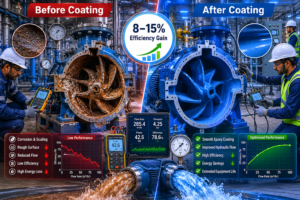
CW pump testing rig measuring flow, head and power before and after internal epoxy coating — IS 9137 compliant test at an Indian industrial facility
After Coating: Evaluating the Effectiveness of the Coating on Pump Performance
Once a protective coating has been applied to a CW pump, it is essential to evaluate its effectiveness in protecting the pump from wear and tear. This evaluation typically involves monitoring the pump’s performance over time to assess any changes in efficiency, flow rates, and energy consumption. Additionally, regular inspections can help to identify any signs of damage or degradation that may indicate issues with the coating.
In some cases, it may be necessary to conduct additional testing, such as corrosion resistance testing or material analysis, to ensure that the coating is providing adequate protection to the pump. By evaluating the effectiveness of the coating on pump performance, operators can make informed decisions about maintenance and repair needs and take corrective action if necessary.
The Institution of Engineers India reports that internal epoxy coating of pump casings and impellers reduces surface roughness from Ra 6.3–12.5 µm (corroded) to Ra 0.8–1.6 µm (coated), restoring 80–90% of original efficiency in pumps with up to 20% degradation.
Comparing Pre and Post-Coating Pump Test Results
One of the most valuable aspects of CW pump testing is the ability to compare pre and post-coating test results to assess the impact of the coating on pump performance. By comparing data from before and after the application of the protective coating, operators can determine if there have been any improvements in efficiency, flow rates, or energy consumption. This comparison can provide valuable insights into the effectiveness of the coating and help to identify any areas for improvement.
In addition to performance data, it is also important to compare visual inspections and material analysis results before and after coating to assess any changes in the condition of the pump. This comprehensive approach to comparing pre and post-coating test results can help operators make informed decisions about future maintenance needs and optimize the performance of their CW pumps.
Benefits of Conducting CW Pump Testing Before and After Coating
The benefits of conducting CW pump testing before and after coating are numerous and can have a significant impact on the reliability and efficiency of cooling systems in industrial settings. By regularly testing CW pumps, operators can identify potential issues early on and take corrective action before they escalate into more significant problems. This proactive approach can help to minimize downtime, reduce maintenance costs, and ensure the reliable operation of cooling systems.
Additionally, by evaluating the effectiveness of protective coatings on pump performance, operators can make informed decisions about maintenance needs and optimize the performance of their CW pumps. This can result in improved energy efficiency, extended equipment lifespan, and reduced operating costs. Overall, conducting CW pump testing before and after coating offers numerous benefits that can help industrial operations maintain reliable cooling systems and minimize downtime.
Best Practices for Maximizing the Power of CW Pump Testing
To maximize the power of CW pump testing, operators should follow best practices for conducting thorough assessments of pump condition before coating and evaluating the effectiveness of coatings on pump performance. This includes performing visual inspections, material analysis, flow rate measurements, pressure testing, vibration analysis, and corrosion resistance testing to ensure that pumps are in optimal condition before applying protective coatings.
Additionally, operators should regularly monitor pump performance after coating to assess any changes in efficiency, flow rates, or energy consumption. By comparing pre and post-coating test results, operators can make informed decisions about maintenance needs and take corrective action if necessary. By following best practices for CW pump testing before and after coating, operators can maintain reliable cooling systems, minimize downtime, and optimize the performance of their CW pumps.
Know more about – Fire Pump Performance Test for an API Manufacturer in Amroha, Uttar Pradesh
FAQs
What efficiency improvement can I expect after pump coating?
Efficiency improvement after internal epoxy coating depends on the condition of the pump. Lightly worn pumps typically improve by 4–8%, moderately worn pumps by 8–15%, and severely degraded pumps by 12–20%. Most industrial facilities achieve noticeable reductions in power consumption after coating.
What Indian standards govern CW pump testing?
CW pump testing is generally carried out as per IS 9137 for centrifugal pump performance testing, IS 5120 for rotodynamic pumps, and BEE Pump System Energy Audit Guidelines. These standards help ensure accurate measurement of flow, head, power consumption, and pump efficiency.
Why is CW pump testing required before coating?
Pre-coating testing establishes the pump’s existing performance and identifies efficiency losses caused by corrosion, erosion, scaling, or hydraulic wear. The baseline data is later compared with post-coating results to calculate actual performance improvement and energy savings.
Why should CW pumps be tested after coating?
Post-coating testing confirms whether the coating has improved pump performance. It helps verify gains in flow rate, efficiency, and power consumption while ensuring the pump is operating close to its design condition.
Can CW pump coating reduce electricity consumption?
Yes. By reducing internal friction, corrosion, and hydraulic losses, CW pump coating can lower electricity consumption by 3–10% or more, depending on the original condition of the pump.
Which industries benefit most from CW pump coating and testing?
CW pump coating and performance testing are widely used in power plants, steel plants, refineries, chemical plants, fertilizer plants, paper mills, and large HVAC cooling systems where pumps operate continuously and consume significant energy.
How long does a CW pump coating project take?
A typical CW pump coating project takes 3–7 days, including dismantling, surface preparation, coating application, curing, reassembly, and performance testing.
What is the ROI of CW pump coating?
Most facilities recover the coating cost within 12–24 months through reduced energy consumption, lower maintenance expenses, and improved pump reliability.