Training Coordinator, Industrial Paint Manufacturer
“The safety induction for new hires was handled smoothly. Elion brought their own AV equipment and kept the session engaging. We’re thinking of repeating this monthly.”

And Consulting Private Limited
And Consulting Private Limited
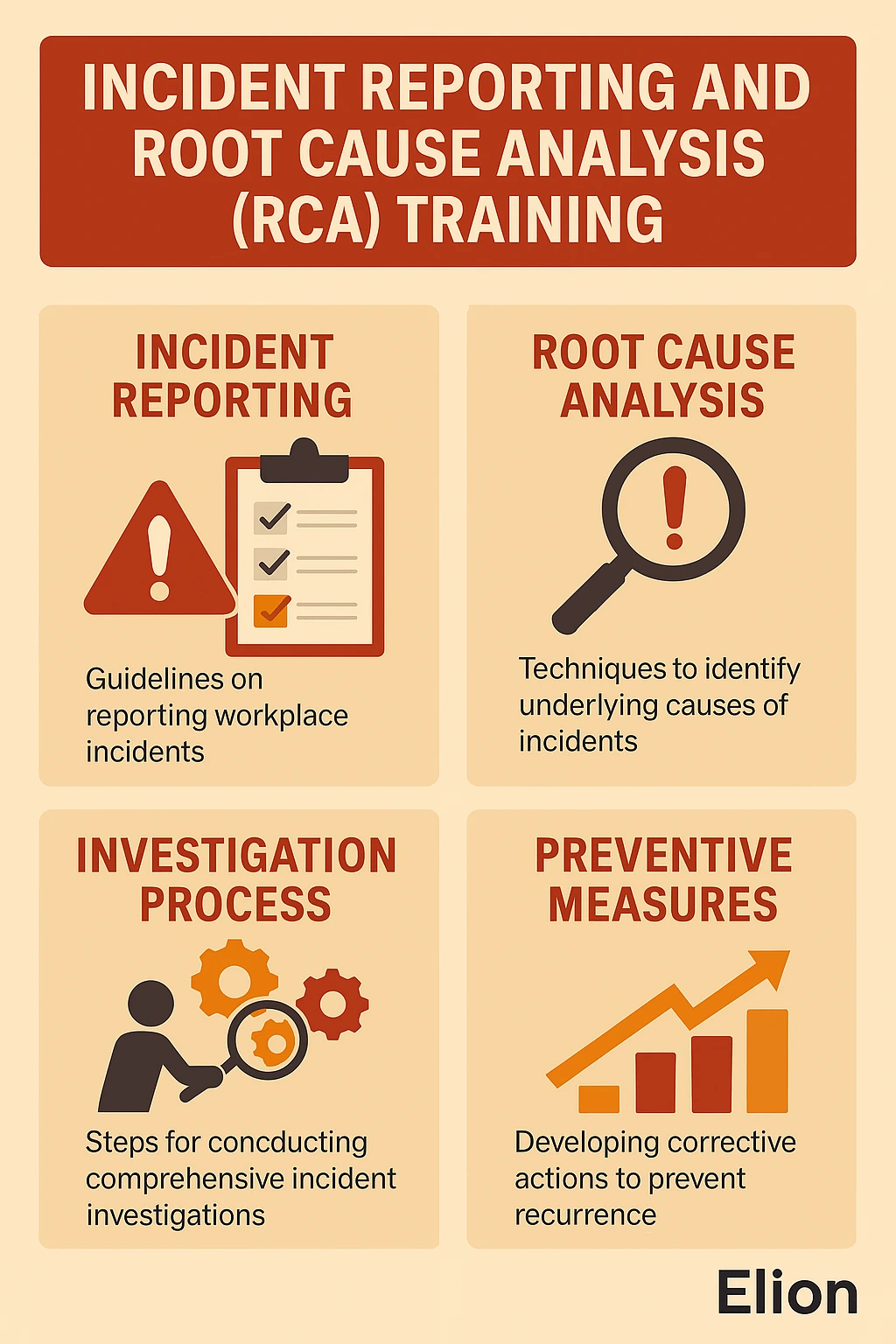
Most organizations report incidents, but few truly learn from them. Proper incident reporting combined with structured Root Cause Analysis (RCA) prevents recurrence, reduces risk, and improves accountability. This training helps build a systematic approach for investigating near misses, injuries, and unsafe conditions.
Elion provides custom RCA training aligned with your safety reporting formats, hierarchy of approvals, and investigation practices. Whether you need to strengthen basic awareness or train teams on formal RCA methods like 5-Whys and Fishbone analysis, the content is tailored to your industry.
Participants receive a Certificate of Participation from Elion Technologies. The training aligns with:
Want to improve incident reporting and eliminate repeat incidents?
Request a Quote or contact us at [email protected].
“The safety induction for new hires was handled smoothly. Elion brought their own AV equipment and kept the session engaging. We’re thinking of repeating this monthly.”
“Good response from our team for the chemical spill drill and awareness session. We had a minor leak last year and this training was timely. They even explained the MSDS sheet details clearly.”
“Elion conducted ergonomics training for our office support staff. They gave tips that don’t need any budget—just posture, breaks, and seating angles. Everyone found it useful.”
“Warehouse safety training was organized at our distribution center. The module covered stacking, material flow, and emergency handling. One or two team leads found the content basic, but the newcomers appreciated it.”
“The hot work and gas cutting safety training helped us address some recent near-misses. Our fabrication contractors said it was the first time anyone explained why permits matter, not just how to fill them.”
“We held a training on ergonomics and workstation safety. Elion’s speaker had a practical approach—suggested small furniture changes and posture tips that didn’t cost much but helped our office staff.”
“Elion covered cold storage safety and ammonia handling well. Some of our technicians said it was the first time they understood how to respond to leaks. We may request them for a follow-up drill.”
“Our garment unit required machine safety awareness for new joiners. Elion kept it interactive and used visuals from our own plant, which the workers related to.”
“The crane and material handling training helped reduce near misses in our yard. The trainer also gave tips that were not in the slides, based on their field experience. That made a difference.”
“We requested a training module on emergency evacuation procedures. Elion included site-specific examples which helped. The mock drill later was well-coordinated too. Our fire wardens felt more confident after the session.”
Training focused on teaching participants how to properly report workplace incidents and analyze root causes to prevent recurrence.
Safety officers, supervisors, incident investigators, and management teams.
Incident classification, reporting procedures, investigation techniques, RCA tools like 5-Whys and Fishbone diagrams.
Typically 1 day.
Yes, a certificate is awarded upon completion.
Yes, content can be tailored to your organization’s reporting systems and needs.
Fields marked with an asterisk (*) are required
Elion’s Safety Training Program is a comprehensive initiative designed to enhance workplace safety and promote a culture of awareness among employees. In an era where industrial safety is paramount, Elion has taken significant strides to ensure that its workforce is not only aware of potential hazards but is also equipped…
Process safety gap analysis is a critical component of any organization’s risk management strategy. It involves identifying potential gaps in safety processes and procedures that could lead to accidents, injuries, or environmental damage. By conducting a thorough analysis of current safety practices, organizations can proactively identify and address potential weaknesses,…
Behavior Based Safety Training (BBS) is a proactive approach to workplace safety that focuses on changing employee behavior to prevent accidents and injuries. This type of training is based on the idea that most workplace accidents are caused by unsafe behaviors, and by addressing these behaviors, organizations can significantly reduce…
Chemical risk assessment is a crucial process that involves the evaluation of the potential adverse effects of chemical substances on human health and the environment. It is a systematic approach that aims to identify, characterize, and quantify the risks associated with exposure to chemicals, in order to make informed decisions…
Fire drills and safety training are crucial for any organization to ensure the safety and well-being of its employees. In the event of a fire or other emergency, it is essential that employees know how to respond quickly and effectively to minimize the risk of injury or loss of life.…
First aid training is an essential skill set that equips individuals with the knowledge and techniques necessary to respond effectively in emergencies. The ability to provide immediate care can significantly impact the outcome of various medical situations, from minor injuries to life-threatening conditions. In many cases, the first few minutes…
Road safety training is an essential aspect of ensuring the safety of all road users, including pedestrians, cyclists, and motorists. It is crucial to educate individuals on the importance of following traffic rules and regulations, understanding road signs, and practicing safe driving behaviors. By providing comprehensive road safety training, individuals…
External safety audits play a crucial role in ensuring the safety and well-being of employees, customers, and the general public in India. These audits are essential for identifying potential hazards, evaluating safety protocols, and ensuring compliance with regulatory standards. By conducting external safety audits, organizations can proactively address safety concerns,…
Gender-driven safety audits are a crucial tool in empowering women in the workplace. These audits are designed to specifically address the unique safety concerns and challenges that women face in their work environments. By conducting gender-driven safety audits, organizations can identify and address potential hazards and risks that may disproportionately…
Cement factories are critical components of the construction industry, providing the essential material for building infrastructure, homes, and commercial properties. However, the production of cement involves complex processes that can pose significant risks to workers if not managed properly. Therefore, training in cement factories is not merely a regulatory requirement;…