
Introduction
In large industrial setups like integrated sugar complexes, electrical systems operate under continuous load, often in harsh environmental conditions involving heat, moisture, and dust. These factors significantly increase the risk of hidden electrical faults, which can lead to unexpected failures, production downtime, or even fire hazards.
To proactively identify such risks, infrared thermography audits play a critical role by detecting abnormal temperature variations in electrical components—long before failures occur.
In this case study, Elion Technologies conducted a detailed thermography audit at an integrated sugar complex in Karnataka, uncovering critical hotspots and enabling preventive action.
Methodology – Thermography Audit Approach
Elion follows a systematic and standards-driven thermography methodology aligned with industrial best practices and international standards.
Instrumentation Used
- High-resolution Infrared (IR) Thermal Imaging Cameras
- Temperature range: -20°C to 650°C
- Thermal sensitivity: ≤0.05°C
- Accuracy: ±2°C or ±2%
- Real-time image capture with radiometric analysis
Inspection Scope
The audit covered all critical electrical systems, including:
- Main LT & HT Panels
- MCC (Motor Control Centers)
- Distribution Boards (DBs)
- Power & Control Cables
- Busbars & Terminations
- Electric Motors & Drives
Survey Conditions
- Equipment inspected under normal operating load conditions
- Ambient temperature and emissivity values recorded for accuracy
- Comparative analysis between similar phases/components conducted
Standards Followed
- IS 13364 – Infrared Thermography Guidelines
- NFPA 70B – Electrical Equipment Maintenance
- OEM guidelines and industry best practices
Key Findings & Recommendations
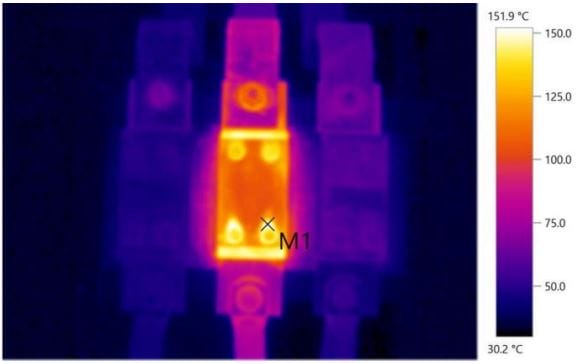
The thermography audit identified multiple hotspots indicating loose connections, overloading, and insulation degradation.
Critical Hotspot Observations
| Location | Measured Temp (°C) | Permissible Limit (°C) | Probable Cause | Recommendation |
|---|---|---|---|---|
| LT Panel – Feeder 3 | 145°C | 90°C | Loose termination | Tightening and re-termination |
| MCC Panel – Motor Line | 132°C | 85°C | Overloading | Load balancing |
| Busbar Joint – Section B | 158°C | 95°C | Oxidation & poor contact | Cleaning and proper tightening |
| Cable Termination – Boiler Area | 120°C | 90°C | Insulation degradation | Replace termination |
| Distribution Board – Mill House | 110°C | 85°C | Loose contact | Tightening |
Major Risk Highlights
- Busbar Joint (158°C): Immediate fire risk avoided through corrective maintenance
- LT Feeder (145°C): Prevented potential feeder failure and shutdown
- MCC Motor Line (132°C): Reduced risk of motor burnout and production loss
These corrections prevented unplanned outages and major equipment damage
Recommendations Summary
- Tightening of all loose electrical connections
- Replacement of damaged cable terminations
- Load redistribution across phases
- Periodic thermography monitoring
- Improved ventilation in panel rooms
Cost–Benefit & ROI Analysis
Implementing corrective actions based on thermography findings delivered measurable financial and operational benefits:
Estimated Impact
- ⚡ Energy Savings: 3–5% reduction due to minimized losses
- ⏱️ Downtime Avoided: ~40–60 hours/year
- 🔧 Maintenance Cost Avoided: ₹8–12 Lakhs (approx.)
- 🔥 Failure Risk Reduction: Significant (avoided major fire/equipment damage)
Payback Period
- Less than 3–6 months through avoided breakdowns and energy savings
Why Thermography is Critical – Expert Insight
With over 30,000+ audits conducted across India, Elion has consistently identified thermography as one of the most powerful tools in predictive maintenance.
“Thermography allows us to see what the human eye cannot—hidden thermal anomalies that can lead to catastrophic failures. It is not just an inspection tool, but a preventive strategy that saves industries from major losses.”
— Elion Engineering Team
Frequently Asked Questions (FAQs)
1. What is a thermography audit?
A thermography audit (infrared thermographic inspection) is a non-contact condition monitoring technique that uses thermal imaging cameras to detect temperature variations in electrical and mechanical systems. It helps identify hotspots, loose connections, overloads, insulation failures, and potential faults before they lead to breakdowns or fire hazards.
2. How does thermal imaging work?
Thermal imaging works by detecting infrared radiation emitted by objects and converting it into a visual image (thermogram).
- Higher temperatures appear as hotspots
- Cooler areas appear in contrasting colors
This allows early detection of abnormal heat patterns without shutting down equipment.
3. Why is thermography critical for sugar mills?
Thermography is especially critical for sugar mills due to:
- Continuous operations during crushing season (no downtime tolerance)
- High electrical loads in motors, drives, and panels
- Dust and fibrous environment, increasing fire risk
- Critical rotating equipment like turbines, conveyors, and gearboxes
It helps prevent unexpected failures, reduce fire risks, and ensure uninterrupted production.
4. Which standards apply to thermography audits?
Thermography audits are conducted in line with:
- ISO 18434 – Condition monitoring and diagnostics using thermography
- NFPA 70B – Recommended practice for electrical equipment maintenance
- IEC standards for electrical systems
- ISO 9001 / maintenance best practices (for documentation and process control)
These ensure accuracy, reliability, and acceptance of reports.
5. How to select a thermography provider?
When selecting a thermography service provider, consider:
- Certified thermographers (Level I / II / III)
- Experience in industrial sectors (especially sugar, manufacturing)
- Use of calibrated, high-resolution thermal cameras
- Ability to provide detailed reports with severity classification
- Pan-India presence and quick response capability
- Vendor-neutral recommendations
Related Services
- Explore our thermography services
- Learn more about our electrical safety audit
- Read our insights on predictive maintenance strategies
Conclusion
The thermography audit at this integrated sugar complex clearly demonstrated how early detection of thermal anomalies can prevent costly failures, improve safety, and enhance operational efficiency.
Infrared thermography is not just a compliance requirement—it is a strategic maintenance tool for industries operating under continuous load conditions.
Request a Thermography Audit
Want to detect hidden electrical risks before they turn into failures?
👉 Get in touch with Elion Technologies today for a professional thermography audit or consultation.
- 📧 Email: [email protected]
- 📞 Call/WhatsApp: 8852085208 | 9013890526