Training Coordinator, Industrial Paint Manufacturer
“The safety induction for new hires was handled smoothly. Elion brought their own AV equipment and kept the session engaging. We’re thinking of repeating this monthly.”

And Consulting Private Limited
And Consulting Private Limited
Compressed air systems are vital in industrial operations but can suffer significant energy losses due to leaks. Compressed Air Leak Detection involves identifying and quantifying air leaks to reduce energy wastage, lower operational costs, and enhance system efficiency.
Elion offers advanced Compressed Air Leak Detection services across India using state-of-the-art acoustic imaging technology, allowing rapid and precise identification of leaks, even in noisy industrial environments.
Compressed air system losses typically account for 25-30% of compressor energy. This service is included in Elion’s comprehensive industrial energy audit scope for manufacturing plants.
Elion uses acoustic imaging technology capable of detecting sound frequencies beyond human hearing, visualizing leak locations as clear images overlaid on live camera feeds. This method:
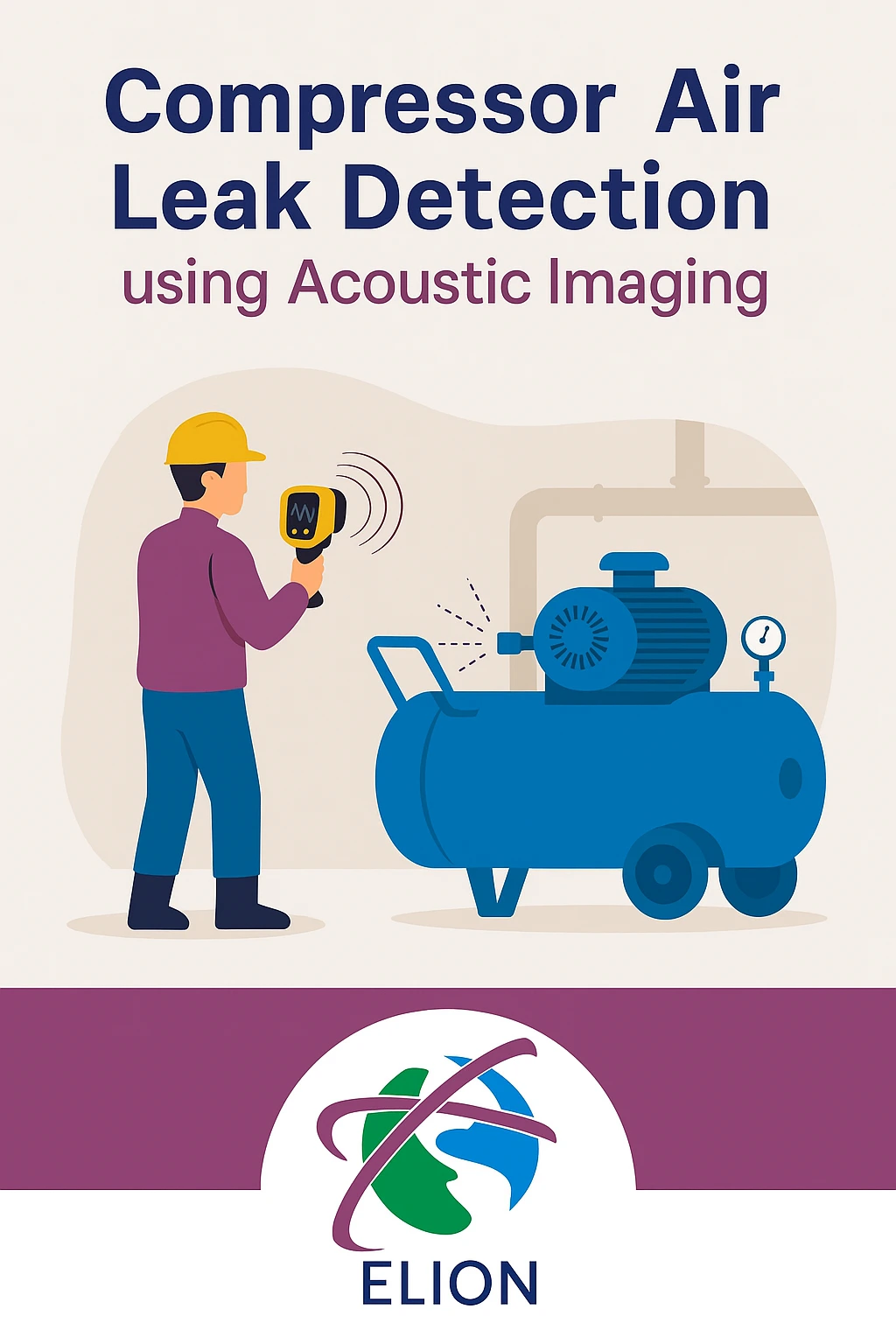
Compressed Air Leak Detection is a diagnostic service that identifies and locates leaks in a compressed air system using specialised ultrasonic detection equipment. Compressed air leaks are usually invisible, waste energy, increase operating costs, and reduce system efficiency. Using advanced tools, we detect ultrasonic sound signatures of leaks, pinpoint their exact location, quantify the air loss, and provide corrective recommendations — helping your plant run safer, more efficiently, and at a lower cost.
Reduce your compressed air system costs and improve energy efficiency with Elion’s advanced Compressed Air Leak Detection services.
Request a Quote or contact us at [email protected].
“The safety induction for new hires was handled smoothly. Elion brought their own AV equipment and kept the session engaging. We’re thinking of repeating this monthly.”
“Good response from our team for the chemical spill drill and awareness session. We had a minor leak last year and this training was timely. They even explained the MSDS sheet details clearly.”
“Elion conducted ergonomics training for our office support staff. They gave tips that don’t need any budget—just posture, breaks, and seating angles. Everyone found it useful.”
“Warehouse safety training was organized at our distribution center. The module covered stacking, material flow, and emergency handling. One or two team leads found the content basic, but the newcomers appreciated it.”
“The hot work and gas cutting safety training helped us address some recent near-misses. Our fabrication contractors said it was the first time anyone explained why permits matter, not just how to fill them.”
“We held a training on ergonomics and workstation safety. Elion’s speaker had a practical approach—suggested small furniture changes and posture tips that didn’t cost much but helped our office staff.”
“Elion covered cold storage safety and ammonia handling well. Some of our technicians said it was the first time they understood how to respond to leaks. We may request them for a follow-up drill.”
“Our garment unit required machine safety awareness for new joiners. Elion kept it interactive and used visuals from our own plant, which the workers related to.”
“The crane and material handling training helped reduce near misses in our yard. The trainer also gave tips that were not in the slides, based on their field experience. That made a difference.”
“We requested a training module on emergency evacuation procedures. Elion included site-specific examples which helped. The mock drill later was well-coordinated too. Our fire wardens felt more confident after the session.”
It is the process of identifying and quantifying air leaks in compressed air systems.
To reduce energy waste and operational costs.
Typically 20–30% of compressed air can be lost through leaks.
Using non-contact acoustic imaging technology.
A technology that visualizes sound to locate leaks precisely.
Yes, it is non-invasive and does not require shutdown.
Yes, using frequency isolation technology.
Compressed air, inert gases, steam, and vacuum leaks.
Yes, with estimated energy and cost savings.
Duration depends on plant size and system complexity, but most facilities are surveyed within a few hours to a full day.
You’ll receive a detailed report showing all leaks found, their exact location, severity level, estimated annual savings, and recommended fixes.
Yes — by stopping wasted air, your compressors run less, energy bills drop, and the system operates more efficiently — often paying back the service cost quickly.
Fields marked with an asterisk (*) are required
Emergency response training is a crucial aspect of ensuring the safety and well-being of individuals in any setting, whether it be in the workplace, at home, or in public spaces. This type of training equips individuals with the knowledge and skills necessary to effectively respond to a wide range of…
Elion’s Mock Drill Training program is a systematic safety initiative that develops emergency response capabilities in manufacturing facilities. Manufacturing environments present significant safety risks, including potential equipment malfunctions, chemical exposures, and fire hazards, making comprehensive emergency preparedness essential for worker protection and operational continuity. The program utilizes simulation-based training to…
Emergency preparedness training is crucial for any industrial setting as it ensures the safety and well-being of employees, as well as the protection of valuable assets. In the event of an emergency, having a well-trained workforce can mean the difference between a minor incident and a major catastrophe. By providing…
Workplace safety is a critical aspect of any organization, as it not only ensures the well-being of employees but also contributes to the overall success of the business. Implementing safety measures and protocols can significantly reduce the risk of accidents and injuries, creating a safer and more secure work environment…
At Elion, we recognize that the safety of our employees is paramount, especially in high-risk environments such as hydropower plants. Our Safety Training Program is meticulously designed to equip our workforce with the necessary skills and knowledge to navigate the complexities of their roles while prioritizing their well-being. This program…
Industrial safety training programs are essential for ensuring the well-being of employees and the success of a business. These programs provide employees with the knowledge and skills they need to identify and mitigate potential hazards in the workplace, ultimately reducing the risk of accidents and injuries. By investing in industrial…
Industrial safety training is a crucial aspect of any workplace, as it helps to ensure the safety and well-being of employees. It is essential for employers to understand the importance of providing comprehensive safety training to their workers in order to prevent accidents, injuries, and even fatalities. By investing in…
Mohali, Punjab has emerged as a hub for call center operations in recent years, with a growing workforce dedicated to providing customer support and sales services to clients around the world. The call center industry in Mohali has seen significant growth due to the availability of a skilled workforce, cost-effective…
In an era where health and safety have become paramount, especially in educational institutions, Team Elion has emerged as a pivotal force in promoting a culture of safety on university campuses. Their comprehensive training programs are designed to equip students and staff with the necessary skills and knowledge to navigate…
Behavioral safety training is a proactive approach to workplace safety that focuses on changing employee behaviors to reduce the risk of accidents and injuries. This type of training is based on the idea that most workplace accidents are caused by unsafe behaviors rather than unsafe conditions, and that by addressing…