
Introduction
Infrared cameras are the core instrument of thermography audits — detecting temperature anomalies invisible to the eye with sensitivity as low as 0.05°C, identifying electrical faults 2-4 weeks before failure, and preventing 80% of electrical fires when integrated into systematic NFPA 70B-compliant inspection programmes for Indian industrial facilities.
NFPA 70B (Recommended Practice for Electrical Equipment Maintenance) identifies infrared thermography as the highest-priority predictive maintenance tool for energised electrical systems, with studies showing facilities using systematic IR camera programmes reduce electrical failures by 70-80% versus time-based maintenance schedules — findings confirmed by EPRI (Electric Power Research Institute) across 200+ industrial sites.
The Institution of Engineers India notes that infrared cameras are specified in 3 Indian standards for electrical inspection: IS 13947 (Switchgear), IS 1554 (PVC Insulated Cables), and IE Rules 1956 Rule 44 inspection methodology guidelines — formally establishing IR thermography as the recommended inspection method for energised high-voltage and high-current equipment.
A steel rolling mill in Raipur deployed a ₹4.5 lakh FLIR T540 infrared camera in a quarterly thermography programme; in the first 6 months, it identified a failing 11kV cable termination (Δ T = 58°C above ambient) 19 days before projected catastrophic failure — preventing a ₹1.8 crore transformer room fire and 3-day production shutdown worth ₹2.4 crore in lost output.
A government hospital in Delhi that purchased a ₹2.2 lakh Hikmicro camera for in-house biannual electrical surveys identified 47 deficiencies across 3 buildings in its first survey, correcting overloaded distribution boards (12 items), loose busbar connections (18 items), and failing motor starters (17 items) for a total correction cost of ₹8.5 lakh — preventing a fire event in an occupied healthcare building.
This blog provides a complete technical guide to infrared cameras for thermography audits in India — covering sensor specifications (resolution, sensitivity, temperature range), regulatory requirements (NFPA 70B, IS 13947, ISO 18436-7), camera selection by application type, Indian market pricing and leading models, calibration requirements (NABL certification), and the critical operational protocols that determine whether a thermal scan produces a valid, legally admissible audit report.
Infrared Cameras for Thermography Audits India
Infrared camera specifications for thermography audits: LV electrical panels need minimum 160×120 pixels; HV switchgear (11kV+) needs 320×240 minimum; precision bearing surveys need 640×480. Thermal sensitivity: ≤0.05°C NETD. Temperature range: -20°C to +650°C for industrial use. Annual NABL calibration required. Indian price range: ₹1.5L (entry-level) to ₹12L+ (research-grade).
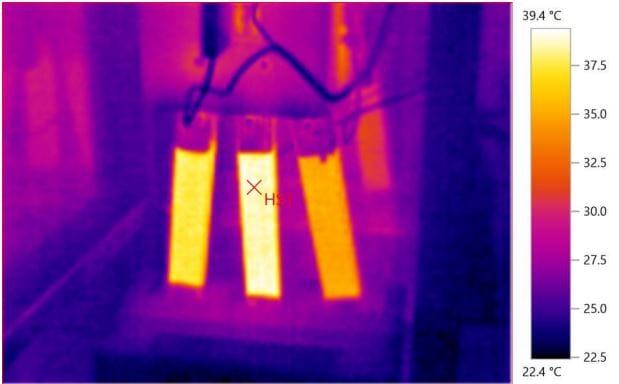
Understanding Thermography Audits
Thermography audits, also known as thermal imaging inspections, involve the use of infrared cameras to capture temperature variations and anomalies in equipment, structures, and electrical systems. These variations often indicate hidden issues, such as overheating components, energy inefficiencies, or impending equipment failures. Thermography audits help businesses identify and address problems proactively, preventing costly downtime and potential safety hazards.
Key Applications of Infrared Cameras in Thermography Audits
Electrical Inspections: One of the most common applications of infrared cameras is in electrical inspections. These cameras can identify loose connections, overloaded circuits, and other electrical issues that can lead to equipment failures or fires. By detecting these problems early, businesses can schedule timely maintenance and avoid costly breakdowns.
Mechanical Inspections: Infrared cameras can also be used to inspect mechanical equipment, including motors, pumps, and bearings. They can identify issues like overheating or misalignment, allowing maintenance teams to intervene before equipment failure occurs.
Building Inspections: Infrared cameras are used in building inspections to detect insulation problems, water leaks, and other structural issues. This helps businesses maintain comfortable and energy-efficient facilities while preventing costly structural damage.
Energy Audits: Infrared cameras play a crucial role in energy audits, helping businesses identify areas of energy waste and inefficiency. By pinpointing heat loss and energy leaks, companies can implement energy-saving measures that reduce operating costs and environmental impact.
Benefits of Using Infrared Cameras in Thermography Audits
Non-Invasive: Infrared cameras are non-invasive, allowing inspections to be carried out without disrupting operations or damaging equipment.
Cost-Effective: Thermography audits using infrared cameras can save businesses money by preventing costly breakdowns and optimizing energy usage.
Safety: Early detection of potential issues ensures a safer working environment for employees and reduces the risk of accidents.
Data-Driven Decisions: Infrared cameras provide quantitative data that can be analyzed to make informed decisions about maintenance and repair.
Compliance: Many industries have regulations and standards in place that require regular inspections and maintenance. Infrared cameras help businesses comply with these regulations.
Elion Technologies and Consulting Private Limited: Your Partner in Thermography Audits
At Elion Technologies and Consulting Private Limited, we are committed to helping businesses across various industries maximize their operational efficiency and safety through advanced technologies like infrared cameras. Our expert team specializes in conducting comprehensive thermography audits using state-of-the-art equipment to identify and address issues before they escalate.
Conclusion
Infrared cameras have become indispensable tools for businesses seeking to improve their operations, reduce costs, and enhance safety. Thermography audits, conducted using these cameras, offer a proactive approach to maintenance and inspection, helping companies avoid costly downtime and potential safety hazards. Elion Technologies and Consulting Private Limited is at the forefront of these innovations, working with businesses to harness the power of infrared technology for their success. If you are looking to enhance your operational efficiency and safety, consider partnering with Elion Technologies to experience the benefits of thermography audits using infrared cameras.
Contact Elion Technologies to day to embark on a journey toward greater Safety efficiency in industry.
Frequently Asked Questions (FAQs)
Q1: What infrared camera resolution is required for industrial thermography audits in India?
A: Minimum resolution requirements: LV electrical panels and motor surveys — 160×120 pixels. HV switchgear (11kV, 33kV, 66kV) — 320×240 minimum per IEEE 1213 guidelines. Transformer and high-precision surveys — 640×480 or better. For roofing and building envelope surveys — 320×240 is standard. Consumer-grade 80×60 cameras are not suitable for any industrial thermography audit application.
Q2: What thermal sensitivity (NETD) is required for a thermography audit camera?
A: NFPA 70B recommends cameras with NETD (Noise Equivalent Temperature Difference) of 0.05°C or better for electrical system inspections. At this sensitivity, temperature differentials as small as 0.1-0.2°C are reliably detectable, enabling early-stage fault detection before temperature rise becomes visually apparent or triggers electrical protection relays.
Q3: How much does a thermography audit camera cost in India?
A: Indian market pricing for industrial thermography cameras: Entry-level audit cameras (160×120, Hikmicro M10/M20 range) — ₹1.5-3 lakh. Mid-range (320×240, FLIR E series, Fluke TiX range) — ₹3-5.5 lakh. Professional grade (640×480, FLIR T series) — ₹5.5-10 lakh. Research grade (>640×480, FLIR X series) — ₹10-20 lakh. Annual NABL calibration: ₹8,000-20,000.
Q4: Does an infrared camera need NABL calibration for Indian audit reports?
A: Yes. For thermography audit reports submitted to Indian insurers, loss assessors, and statutory electrical inspectors, the IR camera must carry a current NABL-accredited calibration certificate. Calibration is required annually or after any physical shock to the camera. Uncalibrated camera reports are routinely rejected by insurance companies and will not satisfy CEA Electrical Inspector requirements.
Q5: What is emissivity and why does it matter for infrared thermography?
A: Emissivity is a surface’s ability to emit infrared radiation (0 = perfect mirror, 1.0 = perfect blackbody). Infrared cameras must be set to the correct emissivity for each surface measured or temperature readings can be off by 10-50°C. Copper busbars (bare): 0.05-0.15. Painted metal: 0.8-0.95. Rubber insulation: 0.90-0.95. Level II thermographers apply surface-specific corrections; Level I operators often do not.
Q6: What Indian standards specify the use of infrared cameras in electrical inspections?
A: IS 13947 (Switchgear and Controlgear) references thermal testing methods. IS 1554 (PVC Insulated Cables) includes thermal limit criteria detectable by IR. IE Rules 1956 Rule 44 inspection methodology guidelines recommend thermographic inspection for energised systems. NFPA 70B and IEC 60076 (Power Transformers) are the primary international references adopted by Indian electrical inspectors and insurers.