Training Coordinator, Industrial Paint Manufacturer
“The safety induction for new hires was handled smoothly. Elion brought their own AV equipment and kept the session engaging. We’re thinking of repeating this monthly.”

And Consulting Private Limited
And Consulting Private Limited
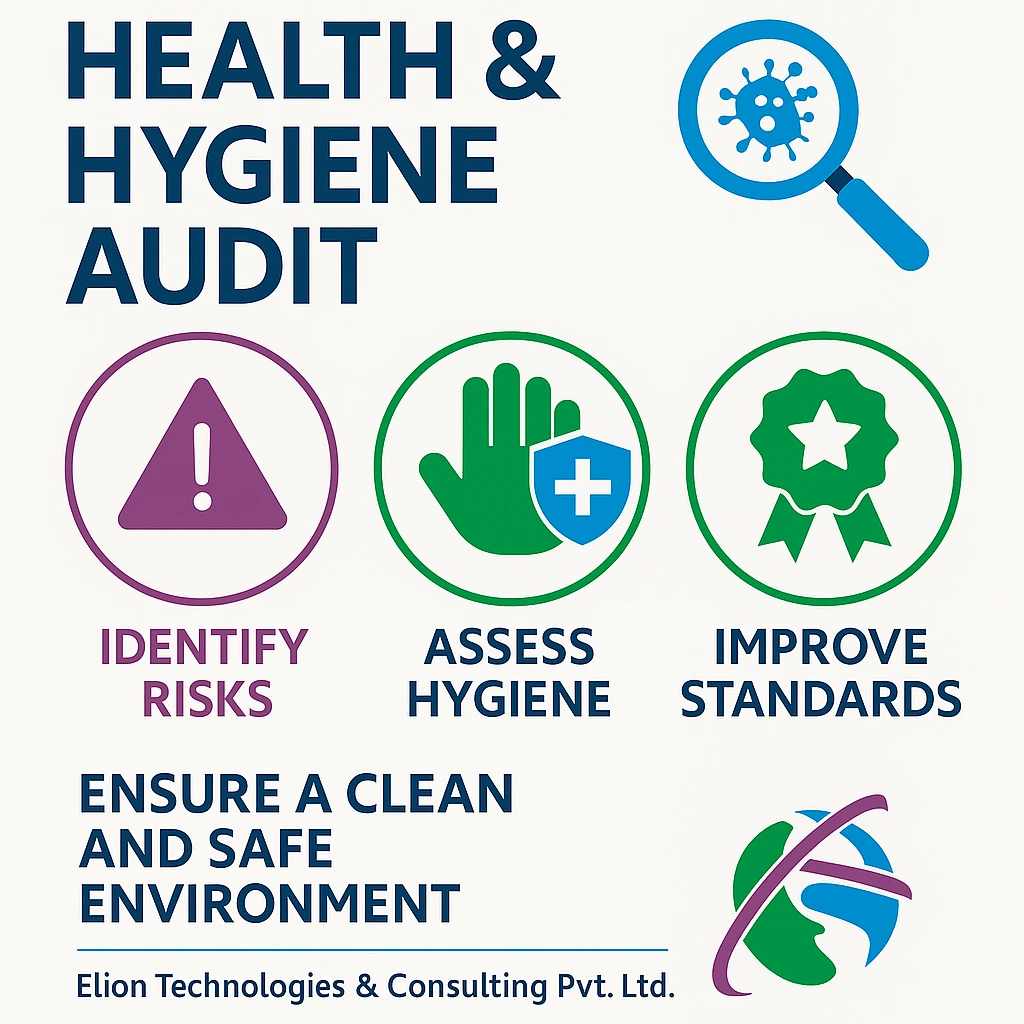
A Health & Hygiene Audit is a systematic evaluation of workplace sanitation, cleanliness standards, food safety practices (where applicable), employee hygiene, and environmental health controls to ensure a safe and healthy environment for employees, visitors, and customers.The audit identifies potential contamination risks, sanitation gaps, and non-compliance with public health regulations. It helps organizations maintain hygienic operations, reduce infection risks, and meet regulatory and industry standards. Health & Hygiene Audits are generally aligned with:
Food Safety and Standards Authority of India (for food handling establishments)
Factories Act 1948 sanitation provisions
World Health Organization hygiene best practices
Local municipal health department regulations
A Health & Hygiene Audit is a structured inspection and compliance assessment conducted by qualified professionals to evaluate sanitation systems, workplace cleanliness, infection control measures, waste management practices, and employee hygiene procedures to ensure adherence to health and safety regulations.
Maintaining high health and hygiene standards is not just regulatory compliance but a strategic necessity for businesses today. Poor workplace hygiene can lead to employee illness, regulatory penalties, and damage to brand reputation.
Elion’s Health & Hygiene Audit services are designed to evaluate, improve, and ensure the highest levels of hygiene within your facility, aligned with Indian standards, international best practices, and your industry requirements.
Our audits are conducted by experienced auditors using calibrated instruments and include:
Contact Elion today to book your Health & Hygiene Audit and take a step towards a cleaner, compliant, and healthier workplace.Request a Quote or contact us at [email protected].
“The safety induction for new hires was handled smoothly. Elion brought their own AV equipment and kept the session engaging. We’re thinking of repeating this monthly.”
“Good response from our team for the chemical spill drill and awareness session. We had a minor leak last year and this training was timely. They even explained the MSDS sheet details clearly.”
“Elion conducted ergonomics training for our office support staff. They gave tips that don’t need any budget—just posture, breaks, and seating angles. Everyone found it useful.”
“Warehouse safety training was organized at our distribution center. The module covered stacking, material flow, and emergency handling. One or two team leads found the content basic, but the newcomers appreciated it.”
“The hot work and gas cutting safety training helped us address some recent near-misses. Our fabrication contractors said it was the first time anyone explained why permits matter, not just how to fill them.”
“We held a training on ergonomics and workstation safety. Elion’s speaker had a practical approach—suggested small furniture changes and posture tips that didn’t cost much but helped our office staff.”
“Elion covered cold storage safety and ammonia handling well. Some of our technicians said it was the first time they understood how to respond to leaks. We may request them for a follow-up drill.”
“Our garment unit required machine safety awareness for new joiners. Elion kept it interactive and used visuals from our own plant, which the workers related to.”
“The crane and material handling training helped reduce near misses in our yard. The trainer also gave tips that were not in the slides, based on their field experience. That made a difference.”
“We requested a training module on emergency evacuation procedures. Elion included site-specific examples which helped. The mock drill later was well-coordinated too. Our fire wardens felt more confident after the session.”
A systematic evaluation of your facility’s hygiene and sanitation practices against regulatory standards and best practices.
It helps prevent disease outbreaks, improves employee health, and ensures regulatory compliance.
Sanitation, water quality, air quality, pest control, food hygiene, and compliance checks.
While not always mandatory, many industries are required to maintain hygiene standards under FSSAI and IS norms.
At least annually, or more frequently for high-risk facilities like hospitals and food units.
IS standards, FSSAI guidelines, WHO recommendations, and applicable industry norms.
Yes, we provide a detailed report with findings, photographs, and corrective action recommendations.
Yes, we provide post-audit support and guidance for improvements.
Depending on facility size, 1–3 days on-site.
We conduct audits with minimal disruption, often during regular operations.
Poor hygiene can lead to infections, contamination, legal penalties, reputational damage, and operational shutdowns. A professional audit ensures preventive action before issues escalate.
The audit typically covers:
✔ Housekeeping & sanitation standards
✔ Drinking water quality verification
✔ Food handling practices (if applicable)
✔ Waste management systems
✔ Pest control measures
✔ Toilets & washroom hygiene
✔ Ventilation & indoor air quality
✔ Employee personal hygiene compliance
In food and healthcare sectors, hygiene compliance is mandatory under regulatory authorities. Other industries may require it under health department rules, CSR policies, or internal EHS programs.
Yes. The deliverables typically include:
Fields marked with an asterisk (*) are required
Mohali, Punjab has emerged as a hub for call center operations in recent years, with a growing workforce dedicated to providing customer support and sales services to clients around the world. The call center industry in Mohali has seen significant growth due to the availability of a skilled workforce, cost-effective…
Gender-driven safety audits are a crucial tool in empowering women in the workplace. These audits are designed to specifically address the unique safety concerns and challenges that women face in their work environments. By conducting gender-driven safety audits, organizations can identify and address potential hazards and risks that may disproportionately…
Safety training in the workplace is a critical component of organizational success and employee well-being. It serves as a proactive measure to prevent accidents, injuries, and fatalities, which can have devastating effects not only on individuals but also on the overall productivity and morale of a company. By equipping employees…
Power transmission systems serve as the backbone of modern electrical infrastructure, enabling the efficient transfer of electricity from generation sources to end-users. These systems encompass a vast network of components, including transmission lines, substations, transformers, and distribution networks. As we delve into the intricacies of power transmission, we recognize that…
Mock drill training is an essential element of organizational preparedness, especially in industries where safety and emergency response are critical. Mock drills replicate real-world emergency situations, enabling employees to practice their responses in a safe, controlled setting. This practical training improves individual competencies while strengthening team coordination and communication skills.…
Emergency response training is a crucial aspect of ensuring the safety and well-being of individuals in any setting, whether it be in the workplace, at home, or in public spaces. This type of training equips individuals with the knowledge and skills necessary to effectively respond to a wide range of…
In the rapidly evolving landscape of information technology, the safety and security of personnel and infrastructure have become paramount. Elion, a leader in safety training and emergency preparedness, has taken significant strides in enhancing the safety protocols within IT parks through its comprehensive mock drill training programs. These drills are…
Fire safety training is a critical component in the textile manufacturing industry, where the combination of flammable materials, machinery, and human activity creates a heightened risk for fire incidents. The textile sector is characterized by its use of various combustible materials, such as cotton, polyester, and other synthetic fibers, which…
Elion, a leader in industrial safety training, has established a reputation for delivering comprehensive programs that address the unique challenges faced by various industries, particularly in high-risk environments such as refineries. The company recognizes that the nature of industrial work, especially in sectors dealing with hazardous materials and complex machinery,…
Elion’s Road and Traffic Safety Training program is a comprehensive initiative designed to address the pressing need for enhanced safety measures in logistics operations. With the rapid growth of e-commerce and the increasing volume of goods transported across urban landscapes, the importance of effective road safety training cannot be overstated.…