
Fire pump testing is the systematic evaluation of fire pump performance according to NFPA 25 standards, required weekly for diesel pumps, monthly for most electric pumps, and annually for all pump types. According to documented fire incidents, 40% of pump failures occurred because manual pumps weren’t started or experienced delayed starts, while 30% failed due to automatic pump impairments before the loss event. Consider a high-rise building’s fire pump that sits unused for three years—without regular testing, corroded connections, degraded diesel fuel, or stuck valves remain hidden until a fire breaks out, when it’s already too late. Annual flow testing verifies pumps can deliver required water pressure and flow rates at no-flow (churn), 100% rated capacity, and 150% overload conditions, with results plotted against factory pump curves to confirm performance meets NFPA 25 acceptance criteria. Property owners who skip testing face regulatory fines, increased insurance premiums, denied fire claims, and most critically, system failures during emergencies when occupants depend on functional fire protection.
Fire pump testing evaluates fire pump performance per NFPA 25 standards. Diesel pumps require weekly 30-minute tests, electric pumps need monthly 10-minute tests, and all pumps must undergo annual flow testing at churn, 100%, and 150% capacity to verify they deliver required pressure and flow rates. Learn how testing frequencies, procedures, and compliance requirements protect your facility below.
What is Fire Pump Testing and Why Does It Matter?
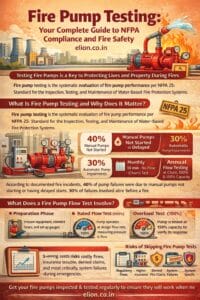
Fire pump testing is the systematic evaluation of fire pump performance according to NFPA 25: Standard for the Inspection, Testing, and Maintenance of Water-Based Fire Protection Systems. Think of it as a health checkup for equipment that sits idle most of its life but must perform flawlessly during emergencies.
Here’s the reality: fire pumps can deteriorate over time even when not in use. Mechanical components wear down, fuel degrades, and electrical connections corrode. Without regular testing, these issues remain hidden until a fire breaks out—and by then, it’s too late.
Annual fire pump testing helps identify deterioration or water supply impairments before they develop into bigger problems. The testing process verifies that pumps can still deliver the required water pressure and flow rates to sprinkler systems, standpipes, and fire department connections.
Insurance companies and local fire marshals require regular testing for good reason. Properties with well-maintained fire protection systems often qualify for lower insurance premiums. More importantly, testing ensures your building’s last line of defense actually works.
How Often Should Fire Pumps Be Tested?
NFPA 25 establishes minimum requirements for testing frequency that property owners, facility managers, and fire protection contractors must follow. The schedule varies based on your pump type and specific building circumstances.
Weekly Testing Requirements
Diesel engine-driven fire pumps require weekly no-flow testing for 30 minutes. This keeps the engine lubricated, verifies battery functionality, and prevents fuel degradation.
Electric motor-driven pumps serving certain buildings require weekly 10-minute no-flow tests, including pumps in buildings beyond fire department pumping capacity, pumps taking suction from ground-level tanks, or pumps serving vertical turbine systems.
Monthly Testing Schedule
Electric pumps not meeting the weekly criteria still need monthly testing. The monthly test runs the pump for a minimum of 10 minutes while recording starting pressure, suction pressure, discharge pressure, and checking pump packing glands.
Annual Flow Testing
Fire pumps must be tested annually at full capacity to confirm they can generate the necessary water pressure. This comprehensive evaluation is non-negotiable regardless of pump type.
Some facilities benefit from more frequent testing based on building type, pump age, or insurance carrier requirements. High-risk facilities like hospitals or data centers often implement stricter schedules than NFPA minimums.
What Does a Fire Pump Flow Test Involve?
The annual flow test is where things get technical. Fire pumps are tested at a minimum of three different flow conditions: no-flow (churn), 100 percent of rated flow capacity, and 150 percent of rated flow capacity.
Here’s what happens during testing:
Preparation Phase
Contractors arrive with calibrated flow meters, pressure gauges, and discharge equipment. The system connects hoses to flow test devices or discharge points to safely handle large water volumes.
No-Flow (Churn) Test
The pump runs without water flowing while technicians monitor pressure readings. This establishes the pump’s shutoff head—the maximum pressure it can generate.
Rated Flow Test (100%)
The pump operates at its design capacity while measuring discharge pressure and flow rate. Readings should match the manufacturer’s pump curve specifications.
Overload Test (150%)
Testing at 150 percent rated capacity ensures the pump can handle peak demand scenarios. Not all pumps can achieve this if water supply limitations or safety restrictions exist.
Data Analysis
Results get plotted against the original factory pump curve. Performance must meet specific criteria to pass. The 2023 edition of NFPA 25 requires the pump to meet flow and pressure requirements based on owner-provided system design information.
Variable speed pumps require additional test points at 25%, 50%, 75%, 100%, 125%, and 150% capacity in variable speed mode, plus the standard three points in fixed speed mode.
“Many commercial insurance carriers offer premium reductions for facilities with documented fire pump testing programs. Contact your insurance provider to learn about available discounts for NFPA 25 compliance.”
What Are the Key Components Checked During Testing?
Fire pump testing extends beyond just flow measurements. Environmental conditions in the fire pump room are tested annually to ensure they won’t impact pump performance, including heating, lighting, and ventilation.
Diesel Engine Components
Diesel fuel requires degradation testing according to ASTM standards, and if found deficient, the fuel must be reconditioned or replaced and the supply tank cleaned internally.
Weekly testing verifies:
- Engine starting reliability
- Cooling system operation
- Battery condition and voltage
- Fuel system pressure
- Exhaust system function
- Governor operation
Electrical System Inspection
Electrical connections are checked annually and repaired as necessary, printed circuit boards are inspected for corrosion, and cable insulation is examined for cracking.
Mechanical Components
Pump packing glands should maintain proper drip rate (approximately one drip per second). Alignment between pump and motor gets verified. Bearings, seals, and lubrication receive inspection.
Control Systems
Automatic start functions must activate correctly when pressure drops. Alarm systems and monitoring signals undergo verification to ensure proper notification during pump activation.
Who Can Perform Fire Pump Testing?
NFPA 25 emphasizes the importance of qualified individuals performing fire pump inspection, testing, and maintenance tasks, meaning those with necessary training, certifications, and experience.
Weekly and monthly no-flow tests can often be handled by trained facilities staff. However, annual flow testing typically requires specialized contractors.
Qualified contractors must possess appropriate licenses, insurance coverage, technical training, and calibrated testing equipment to perform required procedures correctly. Look for contractors who understand pump hydraulics, control system operation, and regulatory requirements.
Some states mandate specific certifications for conducting annual fire pump tests. Verify contractor credentials include:
- Current licenses for fire protection work
- General liability and workers compensation insurance
- Manufacturer certifications and ongoing training
- Properly calibrated test equipment
- References from similar facilities
What Happens If You Skip Fire Pump Testing?
The consequences of neglecting fire pump testing range from financial penalties to life-threatening system failures.
“According to documented fire incidents, 40% of pump failures occurred because manual pumps weren’t started or experienced delayed starts, while 30% failed due to automatic pump impairments before the loss event—demonstrating why regular testing is critical for emergency readiness”
Regulatory Penalties
Regulatory agencies can impose fines for missed inspections or tests, and non-compliance can lead to legal trouble or higher insurance premiums. Local authorities having jurisdiction (AHJs) often enforce NFPA 25 compliance through building codes.
Insurance Implications
Many insurers require documented proof of regular pump testing. Failure to comply can result in:
- Increased premiums
- Loss of coverage
- Denied claims after a fire incident
- Liability issues if negligence is proven
Safety Risks
If a fire pump isn’t properly maintained, it may fail during an emergency, leaving you without crucial fire protection when you need it most, resulting in extensive property damage and increased safety hazards.
Corroded components, degraded fuel, dead batteries, or stuck valves won’t reveal themselves until testing occurs. When fire breaks out, there’s no second chance.
System Failures
Deferred maintenance leads to costly repairs or complete pump replacement. A failed annual test might require immediate corrective action before the building can maintain occupancy.
How Do You Interpret Fire Pump Test Results?
Understanding whether your pump passed requires knowing the acceptance criteria. The 2023 edition added specific requirements including that fire pumps must meet flow and pressure requirements of the most demanding system supplied by the pump.
Test results should show:
- Actual flow rates at each test point
- Discharge and suction pressures recorded
- Pump speed (RPM) during testing
- Corrected values using pump affinity laws
- Comparison against original factory curve
Performance trending over multiple years helps identify gradual degradation. Even pumps meeting minimum criteria may benefit from maintenance if results show consistent decline.
Many building owners struggle to interpret technical pump curves. Some in the industry advocate for simplified grading systems—”Good,” “Fair,” or “Poor” ratings alongside the data to help non-technical stakeholders understand results at a glance.
What Are Common Fire Pump Testing Challenges?
Real-world testing presents practical obstacles that complicate the process.
Water Supply Limitations
If available suction supplies do not allow flowing of 150 percent of the rated pump capacity, the fire pump shall be tested to the maximum allowable discharge. Municipal water restrictions or limited tank capacity can prevent full testing.
Access and Scheduling
Testing requires temporarily taking the system offline and coordinating with building operations. Large water discharges need safe routing away from the building. The process typically takes several hours, including preventative maintenance.
Environmental Factors
Minimum weekly inspections include ensuring the temperature is adequate and above 4°C, checking that ventilating louvers are free to operate, and ensuring excessive water does not collect on the floor.
Cold weather testing presents challenges. Diesel engines may struggle to start. Discharge water must be managed to prevent freezing hazards.
“Emergency fire pump repairs or replacements typically cost significantly more than preventative testing due to expedited parts procurement, emergency labor rates, and potential system downtime. Annual testing costs of $1,000-$5,000 represent a fraction of emergency replacement expenses, which can reach tens of thousands of dollars depending on pump size and system complexity”
Record Keeping
Detailed documentation of all inspections, tests, and maintenance activities must be maintained, including dates, findings, and any corrective actions taken. Poor records complicate compliance verification and performance trending.
What Are the Latest Standards and Updates?
Fire pump testing standards continue evolving to improve safety and efficiency.
NFPA 1901 and NFPA 1906 both include new chapters for ultra-high-pressure fire pumps with discharge pressures of 1,100 psi or greater, introducing new tests specifically for these pumps.
The 2023 Edition of NFPA 20 introduced variable speed fire pump controllers that regulate pump speed to maintain consistent system pressure, enhanced data monitoring allowing remote monitoring of pump status, and integration with building automation systems.
These technological advances enable:
- Real-time performance monitoring
- Automated alert systems for abnormal conditions
- Historical data logging for trend analysis
- Remote diagnostics reducing response time
However, technology doesn’t eliminate hands-on testing requirements. Physical flow tests remain mandatory regardless of monitoring capabilities.
How Much Does Fire Pump Testing Cost?
Testing costs vary based on pump type, facility size, and regional labor rates. The investment in regular testing is far less than the cost of fire pump failure during an emergency.
Typical cost ranges:
- Weekly/monthly no-flow tests (in-house): Staff time only
- Annual flow testing: $1,000 – $5,000+ per pump
- Repairs identified during testing: Variable
Complex systems with multiple pumps or variable speed configurations require more time and larger water volumes, increasing costs. Testing combined with preventative maintenance contracts often provides better value than standalone annual tests.
Factor in the true cost of non-compliance: fines, increased insurance premiums, potential liability exposure, and emergency repairs far exceed regular testing expenses.
What Best Practices Ensure Successful Testing?
Smart facility managers implement strategies beyond minimum compliance.
Develop a Testing Schedule
Create a comprehensive calendar tracking weekly, monthly, and annual requirements. Assign specific responsibilities to qualified personnel. Set reminders well in advance of due dates.
Choose Qualified Contractors
Verify contractors hold current licenses, confirm adequate insurance coverage, and review technician training records and manufacturer certifications.
Maintain Detailed Records
Document every test with:
- Date and time of testing
- Personnel conducting the test
- All pressure and flow measurements
- Any deficiencies or abnormalities noted
- Corrective actions taken
- Comparison to previous results
Address Issues Promptly
Don’t defer repairs identified during testing. Minor problems caught early prevent major failures and costly emergency replacements.
Stay Informed on Standards
Regularly review and stay updated with NFPA 25 and other relevant codes to ensure your fire pump system meets all current requirements. Standards change periodically—what complied last year might not meet this year’s criteria.
Train Your Staff
Ensure facilities personnel understand basic fire pump operation, recognize warning signs, and know proper weekly/monthly testing procedures. Proper training prevents errors and improves early problem detection.
Final Thoughts on Fire Pump Testing
Fire pump testing represents a critical investment in life safety and property protection. According to NFPA 25, diesel fire pumps must be tested weekly, electric fire pumps at least monthly, and all pumps must undergo an annual full flow test.
The testing process verifies that equipment designed to sit idle for years will perform flawlessly during the minutes that matter most. Regular testing identifies problems before they become failures, maintains regulatory compliance, and provides documentation that satisfies insurance requirements.
Whether you manage a single building or oversee multiple facilities, implementing a robust fire pump testing program isn’t optional—it’s essential. Partner with qualified contractors, maintain detailed records, and stay current on evolving standards.
Your fire pump represents the last line of defense when conventional water pressure can’t meet demand. Make sure it’s ready.
Need Fire Pump Testing for Your Facility? Elion Technologies provides comprehensive NFPA 25-compliant fire pump testing services across India. Our qualified engineers conduct weekly, monthly, and annual flow testing with detailed reporting and same-day corrective action recommendations.