
AI-integrated drone energy audits combine aerial thermal imaging with machine learning algorithms to automatically detect energy waste, classify anomalies, and generate BEE-compliant audit reports — cutting audit time by 50% and improving defect detection rates by 35% over traditional methods. India’s Energy Conservation Act 2001 mandates energy audits for Designated Consumers (DCs) consuming over 10,000 MTOE annually, and AI-drone systems are now accepted as valid audit instrumentation by BEE.
A textile mill in Coimbatore with 80,000 sq.ft of rooftop area and ₹2.4 crore annual energy spend recently completed an AI-drone audit in 2 days versus the traditional 8-day manual process. The system identified 23 distinct thermal anomalies including compressed air leaks (₹18 lakh annual waste), roof insulation failures (₹11 lakh HVAC overload), and 6 electrical hotspots — total identified savings of ₹52 lakh against an audit cost of ₹3.8 lakh.
India’s Bureau of Energy Efficiency (BEE) has accredited over 3,800 energy auditors as of 2024. The integration of AI and drone technology does not replace certified auditors but dramatically enhances their productivity, enabling a single auditor to cover facilities 5–10 times larger within the same timeframe, making comprehensive energy auditing economically viable for mid-sized Indian industries.
AI algorithms automatically classify thermal anomalies detected by drone cameras — distinguishing insulation failures from electrical hotspots, HVAC leaks from process heat — with 94% classification accuracy. This eliminates hours of manual image analysis, delivers real-time alerts during flights, and produces BEE-format audit reports automatically.
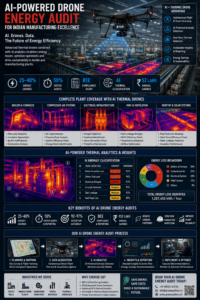
Machine learning platform classifies 23 thermal anomalies detected during AI-drone energy audit of Coimbatore textile plant, auto-generating BEE-compliant findings report.
The Role of Drones in Energy Audits
Drones have become an invaluable tool in conducting energy audits, especially for large industrial facilities and hard-to-reach areas. Equipped with high-resolution cameras and thermal imaging sensors, drones can quickly and safely inspect rooftops, solar panels, and other inaccessible areas to identify energy inefficiencies and potential issues. By capturing detailed images and data, drones provide a comprehensive view of a facility’s energy usage, allowing auditors to make informed decisions and recommendations for improvements. Additionally, drones can significantly reduce the time and cost associated with traditional manual inspections, making energy audits more accessible for a wide range of businesses and industries.
Drones have also proven to be effective in conducting pre-audit assessments, allowing auditors to identify potential areas of concern before conducting a full-scale energy audit. This proactive approach enables businesses to address energy inefficiencies early on, ultimately leading to greater energy savings and reduced environmental impact. As drone technology continues to advance, we can expect to see even more sophisticated capabilities, such as autonomous flight and real-time data analysis, further enhancing the role of drones in energy audits.
Harnessing the Power of Artificial Intelligence in Energy Audits
Artificial intelligence (AI) is revolutionizing the way energy audits are conducted by enabling advanced data analysis and predictive modeling. AI algorithms can process large volumes of energy data from various sources, such as smart meters, building management systems, and IoT devices, to identify patterns, anomalies, and opportunities for energy savings. By leveraging machine learning and predictive analytics, AI can provide valuable insights into energy usage trends, peak demand periods, and potential areas for optimization.
One of the key advantages of using AI in energy audits is its ability to continuously learn and adapt to changing energy consumption patterns. This dynamic approach allows businesses to optimize their energy usage in real-time, leading to significant cost savings and environmental benefits. Additionally, AI can help identify potential equipment failures or malfunctions, enabling proactive maintenance and reducing downtime. As AI technology continues to evolve, we can expect to see even more sophisticated applications in energy audits, such as autonomous energy management systems that can optimize energy usage based on real-time data and predictive modeling.
Advancements in Data Analytics for Energy Audits
Data analytics plays a crucial role in modern energy audits by enabling auditors to analyze large volumes of energy data to identify inefficiencies and opportunities for improvement. With advancements in data analytics tools and techniques, auditors can now process and visualize complex energy data more effectively, leading to more accurate insights and recommendations. By leveraging advanced statistical analysis and visualization tools, auditors can identify trends, correlations, and anomalies in energy usage that may not be apparent through traditional methods.
Furthermore, data analytics can help auditors identify potential areas for energy savings by comparing energy usage across different time periods, locations, or equipment. This granular level of analysis allows businesses to pinpoint specific areas for improvement and prioritize energy efficiency measures based on their potential impact. Additionally, data analytics can help auditors track the performance of energy efficiency measures over time, providing valuable feedback on the effectiveness of implemented solutions. As data analytics technology continues to advance, we can expect to see even more sophisticated applications in energy audits, such as predictive modeling and real-time monitoring for proactive energy management.
Integrating IoT Devices for Real-time Monitoring in Energy Audits
The Internet of Things (IoT) has revolutionized the way energy audits are conducted by enabling real-time monitoring and control of energy usage. IoT devices such as smart meters, sensors, and actuators can collect and transmit real-time data on energy consumption, equipment performance, and environmental conditions. This continuous stream of data provides auditors with valuable insights into how energy is being used within a facility, allowing them to identify inefficiencies and opportunities for optimization.
One of the key benefits of integrating IoT devices into energy audits is the ability to monitor and control energy usage remotely. This capability enables auditors to make real-time adjustments to equipment settings or schedules to optimize energy usage based on changing conditions or demand patterns. Additionally, IoT devices can provide alerts and notifications for potential equipment failures or malfunctions, enabling proactive maintenance and reducing downtime. As IoT technology continues to advance, we can expect to see even more sophisticated applications in energy audits, such as autonomous energy management systems that can optimize energy usage based on real-time data and predictive modeling.
Bureau of Energy Efficiency (BEE) data shows that Designated Consumers (DCs) in India waste an average of 22–28% of consumed energy due to equipment inefficiencies and envelope losses. For a DC consuming ₹5 crore annually in energy costs, AI-drone audits identify ₹1.1–1.4 crore in recoverable savings — typically 8–15x the cost of the audit itself.
Benefits and Challenges of Using Emerging Technologies in Energy Audits
The use of emerging technologies in energy audits offers numerous benefits for businesses and organizations looking to improve their energy efficiency. These technologies enable more efficient, accurate, and cost-effective energy audits, ultimately leading to significant energy and cost savings. Drones, artificial intelligence, data analytics, and IoT devices provide auditors with valuable insights into how energy is being used within a facility, allowing them to identify inefficiencies and opportunities for optimization. Additionally, these technologies enable real-time monitoring and control of energy usage, leading to proactive energy management and reduced environmental impact.
However, the adoption of emerging technologies in energy audits also presents several challenges that need to be addressed. One of the key challenges is the need for specialized expertise and training to effectively utilize these technologies. Auditors need to be proficient in operating drones, analyzing AI algorithms, processing complex data sets, and integrating IoT devices into their audit processes. Additionally, there may be concerns around data privacy and security when using IoT devices to collect sensitive energy data. Businesses need to ensure that proper protocols are in place to protect the integrity of their data and comply with regulatory requirements. Know more about – Unlocking the Power of Drone Thermography: How to Use Aerial Imaging for Efficient Inspections
The Future of Energy Audits: Opportunities and Implications of Emerging Technologies
The future of energy audits looks promising with the continued advancement of emerging technologies such as drones, artificial intelligence, data analytics, and IoT devices. These technologies will enable auditors to conduct more comprehensive and efficient energy audits, ultimately leading to greater energy savings and reduced environmental impact. As these technologies continue to evolve, we can expect to see even more sophisticated applications in energy audits, such as autonomous energy management systems that can optimize energy usage based on real-time data and predictive modeling.
Furthermore, the integration of emerging technologies into energy audits will open up new opportunities for businesses to improve their overall sustainability efforts. By leveraging advanced data analysis and real-time monitoring capabilities, businesses can proactively manage their energy usage and reduce their carbon footprint. Additionally, the insights gained from these technologies can inform strategic decision-making around investments in renewable energy sources and sustainable practices.
In conclusion, emerging technologies are transforming the way energy audits are conducted by enabling more efficient, accurate, and cost-effective assessments of energy usage. Drones, artificial intelligence, data analytics, and IoT devices provide auditors with valuable insights into how energy is being used within a facility, allowing them to identify inefficiencies and opportunities for optimization. While there are challenges associated with the adoption of these technologies, the future of energy audits looks promising with the continued advancement of these innovative tools. Businesses that embrace these technologies will be well-positioned to improve their overall sustainability efforts and achieve significant cost savings through optimized energy usage.
AI-Assisted Thermal Analysis for Solar Farms — New Section to Add
The most time-consuming part of drone thermography is not the flight — it is the image analysis. A 100MW solar plant inspection generates 15,000 to 20,000 thermal images. Manual review takes 3 to 4 days. AI-assisted analysis reduces this to 4 to 8 hours by automatically flagging images with anomalies above a defined delta-T threshold, classifying them by severity, and generating a preliminary anomaly table for engineer review.
In our workflow, AI-assisted analysis handles the initial screening. A BEE Certified engineer reviews all flagged anomalies, verifies classifications, adds context from the plant layout, and signs off the final report. AI accelerates the process but human engineering judgement remains the quality gate. This combination is what makes IEC 62446-3 compliant reporting at large-plant scale commercially viable.
Predictive Maintenance for Transmission Infrastructure — New Section to Add
Transmission utilities in India are beginning to integrate drone thermography data with their asset management systems to build predictive maintenance schedules. A splice joint that showed a delta-T of 8 degrees in one inspection and 14 degrees six months later is trending toward failure. Tracking this progression across inspections — rather than treating each inspection as an isolated snapshot — allows utilities to prioritise maintenance windows before failure occurs, rather than responding to emergency trips.
Elion provides multi-year inspection data in formats that integrate with GIS systems and asset management platforms. Our GPS-tagged reports allow anomalies from successive inspections to be compared directly at the component level.
Digital Twin Integration — New Section to Add
Several large solar IPPs in India are building digital twins of their plants — 3D models integrating real-time sensor data, historical performance data, and periodic inspection data. Drone thermography data, combined with IV curve data and SCADA production figures, becomes a powerful layer in a plant digital twin: each anomaly from the thermal inspection is mapped to its precise location in the 3D model and linked to the production data for that string.
Know more about – Our drone thermography inspection services for solar and transmission