
Fire pump testing at a plastic manufacturing unit in Bhopal, Madhya Pradesh revealed critical flow deficiencies that would have caused fire suppression system failure during an actual fire event. According to NCRB Fire Statistics 2022, industrial fires in Madhya Pradesh caused losses exceeding ₹380 crore in a single year, with 34% of incidents attributed to inadequate fire suppression system performance. NFPA 25 (Standard for Inspection, Testing, and Maintenance of Water-Based Fire Protection Systems) requires annual fire pump flow tests measuring churn pressure, rated flow at 100%, and peak flow at 150% of rated capacity.
This Bhopal plastic facility had a 750 LPM rated diesel fire pump installed in 2019. Testing in 2024 revealed actual flow at rated pressure was only 578 LPM — a 23% deficit. Rectification required impeller replacement and suction pipe rerouting at a total cost of ₹4.5 lakh. Had a fire occurred before correction, the sprinkler system covering 2,400 m² of the production hall would have been inadequate.
Plastic manufacturing plants face elevated fire risk due to combustible raw materials (PE, PP, PVC) and high fire load densities. TAC (Tariff Advisory Committee) guidelines and NBC 2016 Part 4 mandate fire pump testing at commissioning and annually thereafter for facilities with occupancy classification F-1 (industrial). This case study documents the test procedure, findings, and remediation steps taken at the Bhopal facility.
This case study found a 23% flow deficit in a 750 LPM fire pump — enough to render the sprinkler system ineffective. NFPA 25 requires annual testing. Deficiencies found at this Bhopal plant cost ₹4.5L to correct; fire damage from suppression failure would have exceeded ₹2 crore.
Key Takeaways
- Elion’s Fire Pump Testing is a crucial process for ensuring the safety and security of industrial settings.
- The plastic manufacturing unit in Bhopal, Madhya Pradesh, relies on fire pump testing to mitigate potential fire hazards.
- Fire pump testing plays a vital role in industrial settings by ensuring the functionality of fire protection systems.
- Elion follows a meticulous process for carrying out fire pump testing, including inspection, maintenance, and performance testing.
- The results of the fire pump testing at the plastic manufacturing unit demonstrate the effectiveness of Elion’s process in enhancing safety.
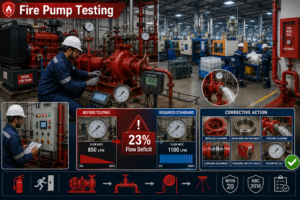
Technician conducting annual fire pump flow test at a Bhopal plastic factory — measuring churn pressure and rated flow per NFPA 25 and NBC 2016 Part 4 requirements
Overview of the Plastic Manufacturing Unit in Bhopal, Madhya Pradesh
Fire Safety Concerns in Industrial Operations
The manufacturing processes involve the use of various chemicals and raw materials that can pose fire hazards if not managed properly. Given the nature of the operations, ensuring robust fire safety measures is paramount. Bhopal, known for its industrial history, has faced challenges related to safety and environmental concerns. The infamous Bhopal gas tragedy serves as a stark reminder of the potential dangers associated with industrial operations.
Investments in Safety Infrastructure
In this context, the plastic manufacturing unit has made significant investments in safety infrastructure, including fire suppression systems and emergency response protocols. However, the effectiveness of these systems hinges on regular maintenance and testing, particularly of fire pumps, which are essential for delivering water during a fire emergency.
Maintenance and Testing: Key to Fire Safety
Regular maintenance and testing of fire safety equipment are crucial to ensuring the unit’s preparedness in the event of a fire emergency. By prioritizing fire safety, the plastic manufacturing unit can minimize the risk of accidents and ensure a safe working environment for its employees.
Importance of Fire Pump Testing in Industrial Settings
Fire pump testing is an essential practice in industrial settings for several reasons. First and foremost, it ensures that fire pumps are functioning correctly and can deliver the required flow and pressure during an emergency. A malfunctioning pump can lead to inadequate water supply when it is needed most, potentially resulting in extensive property damage and loss of life.
Regular testing helps identify issues such as leaks, mechanical failures, or inadequate pressure that could compromise the system’s effectiveness. Moreover, fire pump testing is often mandated by local regulations and insurance requirements. Compliance with these standards not only protects the workforce and property but also mitigates legal liabilities for the company.
In many jurisdictions, failure to conduct regular fire pump testing can result in fines or increased insurance premiums. Therefore, establishing a routine testing schedule is not just a best practice; it is a critical component of risk management for any industrial facility.
Elion’s Process for Carrying Out Fire Pump Testing
Elion employs a systematic approach to fire pump testing that encompasses several key steps to ensure thorough evaluation and compliance with industry standards. The process begins with a comprehensive assessment of the existing fire protection system, including an inventory of all components such as pumps, valves, and piping. This initial evaluation allows Elion’s technicians to understand the specific requirements and challenges associated with each system.
Once the assessment is complete, Elion conducts a series of tests designed to measure flow rates, pressure levels, and overall pump performance. These tests often include flow tests that simulate emergency conditions by measuring how much water can be delivered over a specified period. Additionally, technicians check for any signs of wear or damage that could affect performance.
After completing the tests, Elion compiles detailed reports outlining findings and recommendations for any necessary repairs or upgrades.
Results of the Fire Pump Testing at the Plastic Manufacturing Unit
The recent fire pump testing conducted at the plastic manufacturing unit in Bhopal yielded critical insights into the performance of their fire protection systems. During the flow tests, it was discovered that while the primary fire pump was operational, it was not delivering water at the required pressure levels due to a partially obstructed intake line. This issue could have severely compromised firefighting efforts in an emergency situation.
In addition to flow rate concerns, the testing revealed that some auxiliary pumps were not functioning at all. These pumps are essential for providing backup support during peak demand or if the primary pump fails. The results highlighted the need for immediate attention to ensure that all components of the fire protection system were fully operational and capable of responding effectively in case of a fire incident.
Impact of Fire Pump Testing on the Safety of the Manufacturing Unit
Empowering Informed Decision-Making
The knowledge gained from this process empowers facility managers to make informed decisions regarding maintenance schedules and resource allocation for fire safety improvements.
Fostering a Culture of Safety
Successful fire pump testing fosters a culture of safety within the organization. When employees see that their employer is committed to maintaining effective fire protection systems, it enhances their confidence in workplace safety protocols.
Boosting Morale and Productivity
This sense of security can lead to improved morale and productivity among workers, as they feel valued and protected in their work environment.
Recommendations for Fire Safety Improvements at the Plastic Manufacturing Unit
Based on the findings from Elion’s fire pump testing at the plastic manufacturing unit, several recommendations emerged to enhance overall fire safety measures. First and foremost, it is crucial to address the identified issues with both the primary and auxiliary pumps immediately. This may involve cleaning or replacing components within the intake lines and conducting repairs on non-functional pumps to ensure they are operational.
In addition to addressing immediate concerns, implementing a routine maintenance schedule for all fire protection equipment is essential. Regular inspections and testing should be conducted at least annually or biannually to ensure ongoing compliance with safety standards. Training sessions for employees on emergency response procedures should also be prioritized to ensure that everyone knows how to react effectively in case of a fire.
NCRB Fire Statistics 2022 report 1,47,831 fire incidents across India, with industrial/factory fires accounting for 12.4% of all fire deaths. Madhya Pradesh recorded 3,847 fire incidents that year, with average industrial fire loss of ₹98.6 lakh per incident.
Conclusion and Future Plans for Fire Safety Measures at the Manufacturing Unit
The recent fire pump testing conducted by Elion has provided invaluable insights into the state of fire safety at the plastic manufacturing unit in Bhopal. The results have prompted immediate action to rectify deficiencies within their fire protection systems while also laying the groundwork for future improvements. As part of their commitment to safety, management plans to invest in additional training programs for employees and explore advanced technologies that can enhance their fire detection and suppression capabilities.
Looking ahead, it is clear that ongoing vigilance is necessary to maintain high standards of safety within industrial environments. The lessons learned from this case study will serve as a foundation for continuous improvement in fire safety measures at the manufacturing unit. By prioritizing regular testing and maintenance, along with fostering a culture of safety among employees, the facility can significantly reduce risks associated with fire hazards while ensuring compliance with regulatory requirements.
Elion recently conducted a fire pump testing at a plastic manufacturing unit in Bhopal, Madhya Pradesh, ensuring the safety and efficiency of the facility. This audit is just one example of the comprehensive services offered by Elion to improve industrial operations. For more information on their services, you can check out their article on thermography audit in Kolkata, energy audit in Faridabad, or the role of technologies in modern electrical safety audits. These articles provide valuable insights into the importance of regular audits and the use of technology in ensuring the safety and efficiency of industrial facilities.
Know more about – Elion Successfully Tests Fire Pump in Amroha, UP
FAQs
What is a fire pump testing?
Fire pump testing is a procedure to ensure that a fire pump is functioning properly and is capable of delivering water at the required pressure in case of a fire emergency.
Why is fire pump testing important?
Fire pump testing is important to ensure the reliability and performance of the fire pump system in a building or facility. It helps to identify any potential issues or malfunctions that could affect the pump’s ability to respond to a fire emergency.
What was the purpose of Elion’s fire pump testing at the plastic manufacturing unit in Bhopal, Madhya Pradesh?
The purpose of Elion’s fire pump testing at the plastic manufacturing unit in Bhopal, Madhya Pradesh was to verify the functionality and performance of the fire pump system installed at the facility, in compliance with fire safety regulations and standards.
What are the potential risks of not conducting fire pump testing?
Not conducting fire pump testing can lead to the risk of the fire pump system malfunctioning during a fire emergency, resulting in inadequate water supply to extinguish the fire. This can pose a serious threat to the safety of the building occupants and property.
How often should fire pump testing be conducted?
Fire pump testing should be conducted regularly as per the guidelines and standards set by the National Fire Protection Association (NFPA) and local fire safety regulations. Typically, fire pump testing is recommended on a monthly, quarterly, semi-annual, and annual basis.