
Why Every Hotel, Resort, Residential Society and Swimming Pool Operator Should Prioritise Electrical Safety
Bengaluru Swimming Pool Tragedy Raises Serious Electrical Safety Concerns
On 30 October 2026, a tragic incident at the swimming pool of Conrad Bengaluru, a five-star hotel in Karnataka, resulted in the deaths of two foreign nationals following suspected electrocution. According to media reports, the victims were a German national and a Slovak national. Two other individuals, including a hotel employee, were injured during the incident. The accident attracted nationwide attention and raised serious questions about the electrical safety of swimming pools in hotels, resorts and other recreational facilities. Initial reports indicated that investigators were examining possible electrical leakage, underwater lighting installations and associated electrical safety arrangements.
The exact technical cause should not be treated as established until the competent investigating authorities release their findings.
The tragedy serves as an important reminder that swimming pool safety extends far beyond water quality, lifeguard availability and drowning prevention.
Electrical installations associated with swimming pools require dedicated engineering assessment, appropriate protection systems, effective maintenance and periodic electrical safety verification.
For property owners and facility managers, the important question is:
When was your swimming pool last subjected to a comprehensive electrical safety audit by a competent electrical safety professional?
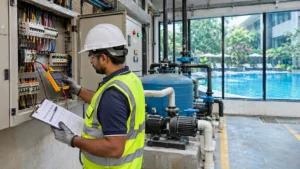
Why Swimming Pools Are High-Risk Electrical Environments
Swimming pools combine water, electricity, wet surfaces, barefoot users and conductive building components within a confined area.
Electrical equipment is required to operate circulation pumps, underwater lighting, filtration systems, water treatment plants, heating systems and other associated installations.
If electrical insulation deteriorates, protective measures are inadequate or electrical equipment develops a fault, hazardous potential differences can arise.
In a swimming pool environment, the consequences can be particularly severe because:
- Swimmers are in direct contact with water.
- Wet skin generally offers lower electrical resistance than dry skin.
- People may contact metallic ladders, handrails or other conductive components.
- An electric shock may prevent a swimmer from moving or calling for help.
- Electrical shock can lead to drowning, even when the electrical injury itself is not immediately fatal.
- An individual attempting a rescue may also become exposed to electrical danger.
A swimming pool may appear perfectly normal while an electrical fault remains undetected.
This makes preventive inspection and testing essential.
Seven Electrical Hazards That Should Be Assessed in Every Swimming Pool
- Electrical Leakage from Underwater Lighting
Underwater lights are among the electrical installations requiring particular attention in swimming pool safety assessments.
Potential hazards include deterioration of cable insulation, damaged fixtures, compromised seals, unsuitable equipment, incorrect wiring and inadequate electrical separation.
A professional audit should assess the lighting supply arrangement, equipment suitability, wiring integrity, protective devices and installation conditions.
Special attention should be given to the voltage supply, safety isolation transformers or SELV power sources, associated cable joints and the suitability of luminaires for underwater installation.
Elion Safety Tip: Never assume that an underwater LED light is electrically safe simply because it operates at a low nominal voltage. The complete supply arrangement, including the power source, isolation and wiring, must be assessed.
- Improper Earthing and Equipotential Bonding
Earthing and equipotential bonding perform different but complementary safety functions.
Protective earthing provides a fault-current path as part of the electrical protection system, while equipotential bonding helps minimise hazardous potential differences between conductive parts.
Swimming pool installations may contain metallic pipes, equipment enclosures, structural components, reinforcement and other conductive elements requiring assessment under the applicable standards.
A swimming pool electrical safety audit should verify:
- Protective earthing connections and continuity.
- Supplementary equipotential bonding arrangements.
- Bonding of applicable exposed and extraneous conductive parts.
- Conditions of earthing and bonding conductors.
- Corrosion, loose connections and deteriorated terminations.
- The adequacy of the electrical fault protection arrangement.
Elion Safety Tip: A satisfactory earth electrode resistance reading alone does not establish that a swimming pool is electrically safe. Protective conductor continuity, equipotential bonding and effective automatic disconnection must also be verified.
- Missing or Ineffective RCCB/RCD Protection
Residual Current Devices (RCDs), including appropriately selected RCCBs and RCBOs, are important electrical shock protection measures.
These devices monitor residual current and disconnect the supply when relevant fault conditions are detected.
For applicable circuits in swimming pool installations, 30 mA residual-current protection is an important requirement under relevant electrical safety provisions.
However, the correct protective arrangement depends on the installation zone, equipment, supply system and applicable code.
A thorough audit should assess device selection, sensitivity, installation, coordination and operational performance.
Elion Safety Tip: Pressing the TEST button on an RCCB is useful for routine checking, but it does not replace instrument-based verification of trip current and operating time by a competent person.
- Damaged Electrical Cables and Cable Joints
Swimming pool electrical cables are frequently exposed to humidity, moisture, chemical environments and installation conditions that may accelerate deterioration.
Improper cable joints, damaged insulation, unsuitable cable glands and water ingress can increase the possibility of electrical failure.
Electrical inspection should cover accessible cable routes, termination points, junction boxes, insulation condition and suitability of the installation for its environment.
- Electrical Hazards in Pump and Filtration Rooms
Swimming pool pumps and filtration systems commonly operate using electrical motors, starters and control panels.
Potential concerns include:
- Moisture ingress into electrical panels.
- Inadequate protective earthing.
- Damaged motor cables.
- Insulation deterioration.
- Unsuitable electrical enclosures.
- Defective protection devices.
- Exposed live parts and poor electrical maintenance.
The associated pump house and filtration plant should form part of the defined swimming pool electrical safety audit scope.
- Unsafe Electrical Installations Near Wet Areas
Electrical installations near swimming pools require special consideration because the level of exposure to water and contact by swimmers varies by location.
The selection and installation of electrical equipment should be assessed against the relevant swimming pool electrical zones.
Switches, sockets, lighting fixtures and other electrical accessories must comply with the restrictions and protective arrangements applicable to their locations.
- Lack of Periodic Electrical Inspection and Testing
Electrical equipment can deteriorate over time because of ageing, corrosion, moisture, repairs, alterations and operating conditions.
Regular housekeeping and visual checks alone may not identify hidden electrical hazards.
A structured inspection and testing programme provides management with a documented assessment of electrical risks and recommended corrective measures.
What Is a Swimming Pool Electrical Safety Audit?
A Swimming Pool Electrical Safety Audit is an engineering assessment of electrical installations associated with a swimming pool and its supporting systems.
Its objective is to identify potential electrical shock hazards, evaluate the adequacy of electrical protection measures, assess relevant code compliance and recommend suitable corrective actions.
Unlike a general facility inspection, a pool-specific electrical safety audit focuses on the unique risks associated with water, wet areas, conductive surfaces and submerged electrical equipment.
An effective assessment combines document review, visual inspection, electrical measurements, protective device verification and engineering evaluation.
Comprehensive Scope of Swimming Pool Electrical Safety Audit by Elion
Elion Technologies & Consulting Pvt. Ltd. provides electrical safety audit services for commercial, institutional, hospitality and industrial facilities across India.
A dedicated swimming pool electrical safety audit can be structured to include the following activities, as applicable to the installation and agreed scope.
- Electrical System and Documentation Review
- Review of available electrical single-line diagrams.
- Identification of pool-related electrical distribution circuits.
- Review of electrical equipment ratings and specifications.
- Assessment of available maintenance and testing records.
- Review of previous incidents, complaints and corrective actions.
- Earthing and Equipotential Bonding Assessment
- Verification of protective earthing arrangements.
- Protective conductor continuity testing.
- Inspection and testing of applicable equipotential bonding connections.
- Review of earthing conductor size and condition.
- Earth resistance testing, where applicable.
- Identification of missing, deteriorated or improper connections.
- RCCB/RCD and Electrical Protection Verification
- Identification of RCCBs, RCBOs and other protective devices.
- Verification of rated residual operating current.
- Instrument-based RCD trip-time and trip-current testing, where applicable.
- Review of circuit protection arrangements.
- Assessment of electrical isolation and protective measures.
- Underwater Lighting and Associated Wiring
- Inspection of accessible underwater lighting installations.
- Verification of the electrical supply and SELV arrangement.
- Review of safety isolation transformer or power-supply location and suitability.
- Assessment of cable condition and termination arrangements.
- Review of electrical protection and installation compliance.
- Assessment of underwater luminaire suitability and applicable ingress protection requirements.
- Pump House and Filtration System Electrical Safety
- Inspection of electrical panels, starters and motor connections.
- Earthing verification of applicable equipment.
- Insulation resistance testing, where appropriate.
- Inspection of cable glands, enclosures and accessible terminations.
- Assessment of electrical shock and fire hazards.
- Thermal imaging of electrical distribution equipment where useful and safely accessible.
- Swimming Pool Area Safety Inspection
- Review of electrical installation zones.
- Inspection of accessible electrical equipment near wet areas.
- Assessment of metallic and conductive components as required by applicable bonding provisions.
- Verification of electrical isolation arrangements.
- Review of relevant emergency shutdown and incident response provisions.
- Electrical Safety Audit Report
Following the assessment, Elion can provide a technical report incorporating:
- Executive summary.
- Electrical system assessment.
- Inspection and test observations.
- Identification of electrical safety hazards.
- Photographic evidence, where available.
- Applicable code references.
- Risk-based prioritisation of observations.
- Recommended corrective actions.
- Testing results and supporting records.
- Conclusion and recommendations for follow-up.
The exact testing programme is finalised after reviewing the swimming pool installation and site-specific safety conditions.
Electrical Safety Standards Applicable to Swimming Pools in India
Swimming pool electrical installations should be assessed against applicable Indian regulations, codes and relevant international standards.
Important technical references include:
| Standard / Regulation | Relevance |
| SP 30:2023 – National Electrical Code of India | Electrical safety requirements for special installations, including swimming pools |
| IS 732:2019 | Electrical wiring installation design and safety principles |
| IS 3043 | Earthing practice and engineering considerations |
| IEC 60364-7-702 | Requirements for electrical installations at swimming pools and fountains |
| IEC 60598-2-18 | Particular requirements for swimming pool and similar luminaires |
| IEC 60529 | Degrees of protection provided by enclosures (IP Code) |
| CEA Measures Relating to Safety and Electric Supply Regulations, 2023 | Applicable statutory electrical safety requirements in India |
The relevant edition, installation configuration, regulatory requirements and applicability of individual clauses should be checked during the audit.
Understanding Swimming Pool Electrical Zones
Swimming pool electrical safety provisions identify different zones based on the location and accessibility of electrical installations.
Zone 0: Generally includes the interior of the swimming pool basin.
Zone 1: Includes the immediate pool surroundings defined by the applicable code.
Zone 2: Includes the additional surrounding area specified by the standard, where relevant.
Electrical installations in these zones are subject to specific restrictions concerning voltage, wiring methods, equipment selection, protection and placement.
Under the relevant Indian swimming pool provisions, SELV supplies not exceeding 12 V AC or 30 V DC are central to protection in Zones 0 and 1, subject to specific code provisions and exceptions.
Simply installing a waterproof light or a general-purpose RCCB does not automatically establish compliance.
Swimming Pool Electrical Safety Checklist for Facility Managers
Before allowing swimmers to use a pool, management should maintain documented assurance of the safety of its electrical installations.
Important questions include:
- Has the swimming pool undergone a documented electrical safety assessment?
- Are the underwater lights and associated power supplies suitable for their intended installation?
- Has the protective earthing system been inspected and tested?
- Are applicable equipotential bonding connections verified?
- Are the appropriate RCDs installed and periodically tested?
- Are pool-related distribution panels and pump-room electrical installations inspected?
- Are cable insulation and accessible terminations in satisfactory condition?
- Are relevant electrical installation zones and equipment restrictions being followed?
- Are electrical isolation points identified and accessible to authorised personnel?
- Are maintenance records, electrical drawings and corrective action reports maintained?
Any reported tingling sensation, electric shock or suspected electrical leakage must be treated as a serious warning. The pool should be closed, the affected electrical installations made safe by authorised personnel and the cause investigated before reopening.
Elion’s Recommendations for Swimming Pool Electrical Safety
Elion Safety Tip 1 – Do Not Rely Only on Water Quality Testing
Water quality testing addresses chemical and microbiological conditions. It does not confirm that associated electrical installations are safe.
Elion Safety Tip 2 – Verify Earthing and Equipotential Bonding Separately
A good earthing result is only one part of the electrical safety evaluation. Bonding continuity and fault protection require separate assessment.
Elion Safety Tip 3 – Test Protective Devices with Suitable Instruments
RCCB/RCD performance should be verified using appropriate test equipment and procedures.
Elion Safety Tip 4 – Inspect After Electrical Modifications
Replacement of underwater lighting, pumps, power supplies, electrical cables or distribution equipment should trigger relevant electrical safety verification before returning the installation to service.
Elion Safety Tip 5 – Keep Electrical Equipment Properly Protected
Pool areas and filtration rooms can experience persistent humidity and exposure to water. Equipment selection, enclosure protection and cable termination quality are important.
Elion Safety Tip 6 – Establish a Periodic Inspection Programme
Facility management should implement a documented inspection and testing programme based on statutory requirements, equipment manufacturers’ instructions, site conditions and engineering risk assessment.
Elion Safety Tip 7 – Never Attempt an Unsafe Rescue
If electrical shock is suspected in a pool, do not enter the water or touch affected conductive parts. Activate emergency arrangements, have the electrical supply isolated safely by authorised personnel and contact emergency services. Rescue should proceed only when the electrical hazard has been controlled.
Which Facilities Should Consider a Swimming Pool Electrical Safety Audit?
Swimming pool electrical safety audits are relevant to:
- Five-star and business hotels.
- Resorts, wellness retreats and spas.
- Residential societies and gated communities.
- Luxury apartments, villas and private residences.
- Schools, colleges and universities.
- Sports complexes and swimming academies.
- Clubs, recreation centres and gyms.
- Water parks and leisure facilities.
- Hospitals and rehabilitation facilities with hydrotherapy pools.
Both newly commissioned and existing swimming pools can benefit from appropriate electrical verification.
Why Choose Elion Technologies & Consulting Pvt. Ltd.?
Elion Technologies & Consulting Pvt. Ltd. is an independent engineering audit and consulting company providing electrical safety, fire safety, energy and technical compliance audit services in India.
Established in 2010, Elion has experience assessing electrical installations across commercial buildings, hotels, industrial facilities and other complex environments.
Engineering-Led Electrical Safety Assessment
Elion’s electrical safety audit approach focuses on identifying electrical hazards, evaluating protection systems and recommending practical risk-reduction measures.
Instrument-Based Inspection and Testing
Depending on the installation and agreed scope, Elion’s electrical safety assessments incorporate suitable electrical test instruments for verification of earthing, insulation, protective devices and electrical equipment condition.
Experience Across Hospitality Facilities
Hotels and resorts present operating challenges involving public access, wet areas, recreational amenities and continuous building services.
Elion’s hospitality-sector audit experience provides a relevant foundation for assessing electrical safety within these facilities.
Structured Technical Reporting
Elion’s technical reports are designed to help facility management understand identified hazards, prioritise corrective actions and maintain evidence of the engineering assessment.
Pan-India Service Coverage
Elion provides engineering audit services across major Indian cities, including Delhi NCR, Mumbai, Bengaluru, Hyderabad, Chennai, Pune, Kolkata, Ahmedabad and other locations.
When Should a Swimming Pool Electrical Safety Audit Be Conducted?
An electrical safety assessment is particularly important:
- Before commissioning a new swimming pool.
- After major electrical modifications or equipment replacement.
- Following water ingress, flooding or suspected electrical damage.
- After an electrical shock incident or reported tingling sensation.
- Before reopening a pool following an electrical safety concern.
- As part of the facility’s periodic electrical inspection and maintenance programme.
The inspection frequency should be established based on applicable statutory obligations, equipment condition, operating environment and a competent risk assessment. A single universal audit interval should not be assumed for every facility.
Frequently Asked Questions
What is a swimming pool electrical safety audit?
It is a professional inspection and engineering assessment of pool-associated electrical installations, including underwater lighting, protective earthing, equipotential bonding, electrical panels, pumps, protective devices and relevant wiring systems.
Can a swimming pool cause electric shock?
Yes. Faulty electrical equipment, inadequate insulation, unsuitable wiring or ineffective protective measures can create an electrical shock hazard in or around a swimming pool.
Is an RCCB mandatory for swimming pools in India?
Applicable Indian electrical safety provisions require residual-current protection for specified circuits and circumstances. The correct RCD requirements and additional protective measures depend on the installation zone and configuration. Compliance should be assessed against the relevant code and regulations.
Is 30 mA RCCB protection sufficient for swimming pool safety?
No. An RCD is only one element of electrical safety. Suitable voltage supplies, electrical separation, earthing, bonding, insulation, equipment selection and proper installation are also essential.
Is earthing testing enough to confirm swimming pool electrical safety?
No. Earth resistance testing does not replace protective conductor continuity testing, equipotential bonding verification, RCD testing and inspection of underwater lighting and other electrical systems.
What is the cost of a swimming pool electrical safety audit in India?
The professional fee depends on pool size, number of pools, underwater lights, electrical panels, pumps, installation complexity, location and the required testing scope. A site-specific quotation is recommended.
Who should conduct a swimming pool electrical safety audit?
The assessment should be carried out by competent electrical safety professionals with appropriate knowledge of electrical protection, swimming pool installation requirements, test procedures and applicable safety standards.
Can an electrical safety audit help prevent electrocution?
A properly conducted audit can identify many electrical deficiencies and help reduce electrical shock risks through corrective action. However, no periodic audit can guarantee that a future fault will never occur. Appropriate maintenance and operating controls remain essential.
Does Elion provide swimming pool electrical safety audits across India?
Elion provides electrical safety audit services across India. A swimming pool-specific inspection and testing scope can be developed based on the facility’s electrical installation and requirements.
Conclusion: Swimming Pool Electrical Safety Must Be Treated as a Priority
The tragic Bengaluru swimming pool incident of October 2026 has reinforced the importance of electrical safety in water-based recreational facilities. While the precise technical cause of that incident remains a matter for the investigating authorities, the wider safety lesson is clear. Swimming pool operators must not assume that an installation is electrically safe merely because it operates normally or receives routine maintenance. Appropriate electrical design, effective protection, competent inspection, testing and timely corrective action are essential to reducing risk. Swimming pool electrical safety is not only about protecting equipment. It is about protecting human life.
Book a Swimming Pool Electrical Safety Audit in India
Elion Technologies & Consulting Pvt. Ltd.
Protect your guests, residents, employees and facility users through a structured electrical safety assessment.
Contact Elion for a swimming pool electrical safety audit, earthing and bonding verification, RCD testing, underwater lighting safety assessment and associated electrical risk evaluation.
Phone: +91 90138 90526
Website: https://elion.co.in/
Electrical Safety Audit: https://elion.co.in/electrical-safety-audits/
Request a Technical Consultation or Swimming Pool Electrical Safety Audit Proposal.