
Fire pumps are among the most inefficient large motors in any facility because they are sized for peak emergency demand, rarely operate at full load, and are exempt from normal energy-optimization pressures—but a combined safety and energy audit addresses both problems simultaneously. The Bureau of Energy Efficiency (BEE) under India’s Energy Conservation Act 2001 classifies fire pump systems as assessable loads in energy audits for designated consumers; facilities above 500 kW connected load are required by law to conduct BEE-accredited energy audits every three years.
BEE data from industrial sector audits shows that fire pump motor systems in Indian facilities waste 15-25% of consumed energy through a combination of oversizing, poor power factor, and inefficient diesel standby operation—for a 75 kW fire pump motor running 200 hours annually on tests, this represents Rs 45,000-75,000 in avoidable energy costs. A Mumbai commercial complex with three fire pumps (2 electric, 1 diesel) conducted a combined energy and safety audit in 2022. The energy audit identified motor rewinding (increasing efficiency from 82% to 91%) and soft-starter installation as interventions with a combined capital cost of Rs 3.8 lakh and projected annual savings of Rs 1.65 lakh—a 2.3-year payback.
The same audit simultaneously identified a pressure relief valve set 15% too high, causing the jockey pump to cycle excessively—a safety deficiency that also wasted electricity equivalent to Rs 28,000 annually in unnecessary pump operation. The intersection of fire safety and energy efficiency is growing in importance as ESG reporting requirements expand; facilities must now demonstrate both reliable fire protection and responsible energy use, making combined audits the optimal approach for compliance and sustainability reporting. This article explains how energy and safety audits complement each other for fire pump systems, what BEE standards apply, and how to calculate the financial return from combined auditing.
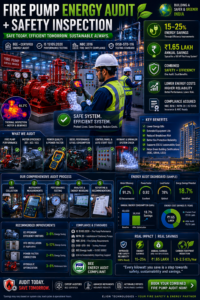
Combined energy and safety audits for fire pump systems identify both compliance gaps and efficiency opportunities—reducing costs while maintaining the fire protection reliability required by NBC 2016.
Understanding Energy Audits in Fire Pump Maintenance
Energy audits play a crucial role in fire pump maintenance, helping to identify opportunities for improving energy efficiency and reducing operational costs. An energy audit is a comprehensive assessment of a building’s energy use, including its fire pump system. During an energy audit, a team of experts evaluates the performance of the fire pump, identifies areas of energy waste, and recommends strategies for improving efficiency. By understanding the energy use of the fire pump system, building owners and facility managers can make informed decisions about maintenance, upgrades, and operational practices.
Energy audits in fire pump maintenance involve a detailed analysis of the system’s components, including pumps, motors, controllers, and associated equipment. The audit team assesses the condition and performance of these components, looking for opportunities to optimize energy use and reduce waste. Additionally, the audit may include a review of operational practices, such as scheduling, sequencing, and control strategies. By understanding how the fire pump system uses energy and identifying opportunities for improvement, building owners and facility managers can make informed decisions about maintenance and upgrades that will enhance efficiency and reduce energy costs.
Benefits of Energy Audits for Fire Pump Maintenance
Energy audits offer numerous benefits for fire pump maintenance, including improved efficiency, reduced operational costs, and enhanced reliability. By identifying opportunities for energy savings and efficiency improvements, energy audits help building owners and facility managers optimize the performance of their fire pump systems. This not only reduces energy consumption but also extends the life of equipment and reduces maintenance requirements. Additionally, energy audits can help organizations comply with regulatory requirements and demonstrate their commitment to sustainability.
One of the key benefits of energy audits for fire pump maintenance is the potential for cost savings. By identifying opportunities to improve energy efficiency, building owners and facility managers can reduce operational costs associated with fire pump systems. This can result in significant long-term savings, as well as improved financial performance for the organization. Additionally, energy audits can help organizations identify opportunities for rebates, incentives, or financing options that can offset the cost of implementing energy-saving measures.
The Role of Energy Audits in Improving Fire Pump Efficiency
Energy audits play a critical role in improving the efficiency of fire pump systems by identifying opportunities for optimization and recommending strategies for improvement. By evaluating the performance of the fire pump system and its components, energy audits help building owners and facility managers understand how energy is used and identify areas of waste or inefficiency. This information can then be used to develop a comprehensive plan for improving efficiency, reducing energy consumption, and enhancing the reliability of the fire pump system.
One of the key ways that energy audits improve fire pump efficiency is by identifying opportunities for equipment upgrades or replacements. By evaluating the condition and performance of pumps, motors, controllers, and associated equipment, energy audits can identify opportunities to replace outdated or inefficient components with more energy-efficient alternatives. This not only improves the overall efficiency of the fire pump system but also reduces energy consumption and operational costs. Additionally, energy audits may recommend operational changes or control strategies that can further enhance efficiency and reduce waste.
Ensuring Compliance with Fire Safety Regulations
Energy audits play a crucial role in ensuring compliance with fire safety regulations by identifying opportunities to improve the efficiency and reliability of fire pump systems. Building codes and standards require that fire pumps be properly maintained and operated to ensure their effectiveness in the event of a fire. By conducting energy audits, building owners and facility managers can demonstrate their commitment to compliance with these regulations while also improving the overall performance of their fire pump systems.
In many jurisdictions, building codes require that fire pumps be regularly tested and maintained to ensure their reliability in an emergency. Energy audits can help organizations identify opportunities to improve the efficiency and reliability of their fire pump systems, ensuring that they meet regulatory requirements while also reducing operational costs. Additionally, energy audits may recommend strategies for optimizing the performance of fire pump systems, such as implementing more efficient control strategies or upgrading equipment to meet current standards.
Integrating Sustainability Practices in Fire Pump Maintenance
Integrating sustainability practices in fire pump maintenance is essential for creating safer, more resilient buildings that minimize their environmental impact. By prioritizing sustainability in fire pump maintenance, building owners and facility managers can reduce energy consumption, conserve resources, and minimize their environmental footprint. This not only benefits the environment but also contributes to a more efficient and cost-effective operation of fire pump systems.
One way to integrate sustainability practices in fire pump maintenance is by prioritizing energy efficiency. Energy audits play a crucial role in this process by identifying opportunities to improve the efficiency of fire pump systems through equipment upgrades, operational changes, or control strategies. By implementing these recommendations, building owners and facility managers can reduce energy consumption while also improving the reliability of their fire pump systems. Additionally, sustainability practices in fire pump maintenance may include strategies for conserving water or other resources used in fire protection systems.
The Future of Fire Safety and Sustainability
The future of fire safety and sustainability is closely intertwined, with organizations recognizing the importance of integrating these two critical aspects of building operations. As building codes and standards continue to evolve to incorporate sustainable practices, organizations are increasingly prioritizing sustainability in their fire safety measures. Energy audits play a crucial role in this process by identifying opportunities to improve the efficiency and reliability of fire pump systems while also reducing operational costs. By integrating sustainability practices in fire pump maintenance, building owners and facility managers can create safer, more resilient buildings that minimize their environmental impact while also operating more efficiently. As organizations continue to prioritize sustainability in their operations, the future of fire safety will be closely linked to sustainable practices that protect lives and property while also benefiting the environment.