
An annual fire pump test evaluates the entire fire pump assembly — electric motor, diesel engine backup, jockey pump, controller, suction, and discharge — to confirm the system delivers design flow and pressure when needed in an actual fire. The National Building Code of India 2016, Part 4 (Fire and Life Safety), Clause 4.13, mandates annual performance verification of all fire pumps in buildings requiring fire NOC, directly referencing NFPA 25 test criteria. NCRB data from its “Accidental Deaths and Suicides in India” publication shows that fire-related industrial deaths increased 18% between 2018 and 2022, with suppression system failure among the leading contributing factors in mass casualty incidents. A cold storage facility in Nagpur discovered during its first-ever formal annual test that the diesel backup pump — never tested under load — failed to achieve even 40% of rated pressure due to a governor fault and fuel injector blockage. Rectification cost ₹1.6 lakh; the facility’s fire risk exposure prior to repair was estimated at ₹12 crore (building + inventory). Annual fire pump testing is not merely a box-checking exercise. It produces a documented performance curve, identifies wear trends before failure, and creates an audit trail required by fire departments, insurers, and factory inspectors. A third-party annual test in India costs ₹15,000–50,000 depending on pump capacity and site, with most medium-sized industrial facilities paying ₹20,000–35,000 for a complete three-pump system test with certified report.
An annual fire pump test checks starting reliability, rated flow (LPM), discharge pressure (bar), suction conditions, motor/engine performance, and controller response. Required under NBC 2016 Part 4 and NFPA 25. Indian facilities pay ₹15,000–50,000 for a certified third-party test. Missing records can void TAC fire insurance.
Key Takeaways
- Annual fire pump tests are important for ensuring the reliability and effectiveness of fire protection systems in buildings.
- Understanding fire pump performance tests is crucial for evaluating the capability of the pump to deliver water at the required pressure and flow rate.
- Conducting a fire pump churn test helps to ensure that the pump can operate continuously for an extended period without overheating or malfunctioning.
- The process of fire pump flow test involves measuring the actual flow rate and pressure of water delivered by the pump to verify its performance.
- Regular fire pump testing is essential for ensuring safety and reliability of fire protection systems, and for complying with regulatory requirements.
- Common issues found during annual fire pump tests include leaks, worn out parts, and inadequate water supply, which can affect the pump’s performance.
- Benefits of regular fire pump testing include early detection of potential issues, compliance with regulations, and peace of mind knowing that the fire protection system is reliable.
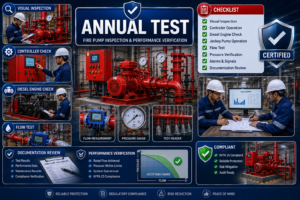
Annual fire pump performance test capturing suction pressure, discharge pressure, and LPM flow — the three critical parameters for NBC 2016 and NFPA 25 compliance.
Understanding Fire Pump Performance Test
Pre-Test Inspection
The performance test begins with a thorough inspection of the fire pump and its components to ensure that everything is in proper working order. This inspection is crucial in identifying any potential issues or defects that could affect the pump’s performance during the test.
Testing the Fire Pump
Once the inspection is complete, the fire pump is activated, and its performance is measured at various flow rates and pressures. This allows technicians to assess the pump’s ability to deliver water consistently and effectively, as well as identify any potential issues or deficiencies in its performance.
Results and Compliance
The results of the performance test are compared against the manufacturer’s specifications and local fire codes to determine if the fire pump is operating within acceptable parameters. If any discrepancies are found, they must be addressed promptly to ensure that the fire pump is capable of providing adequate water flow and pressure in the event of a fire. By conducting regular performance tests, building owners can have confidence in the reliability and effectiveness of their fire pump system.
Conducting a Fire Pump Churn Test
A fire pump churn test is an essential part of annual fire pump testing, as it helps to ensure that the fire pump is capable of starting and running smoothly when needed. During a churn test, the fire pump is operated without actually pumping water, simulating a situation where the pump starts up to supply water to the sprinkler system during a fire emergency. The churn test involves running the fire pump for a specified period of time to verify that it can start and operate without any issues.
This test helps to identify any potential problems with the pump’s motor, bearings, seals, or other components that could affect its ability to function properly during an actual fire event. By conducting regular churn tests, building owners can proactively address any issues with the fire pump before they compromise its reliability and effectiveness. In addition to verifying the operational readiness of the fire pump, churn tests also help to prevent stagnation and corrosion within the pump system.
Running the pump without pumping water helps to keep the system components lubricated and prevents buildup of debris or sediment that could impede its performance. By including churn tests as part of annual Fire Pump Testing, building owners can ensure that their fire pumps are ready to respond effectively in the event of a fire.
The Process of Fire Pump Flow Test
| Flow Test Parameters | Results |
|---|---|
| Flow Rate (GPM) | 750 |
| Nozzle Pressure (PSI) | 100 |
| Pump Discharge Pressure (PSI) | 120 |
| Duration of Test (minutes) | 15 |
A fire pump flow test is a critical component of annual fire pump testing, as it helps to verify that the fire pump is capable of delivering water at the required flow rate and pressure to the building’s sprinkler system. During a flow test, the fire pump is activated, and its performance is measured at various flow rates to ensure that it can provide an adequate supply of water in the event of a fire. The flow test begins by establishing the baseline flow rate and pressure required by the building’s sprinkler system.
The fire pump is then activated, and its performance is measured at various flow rates to determine if it can meet the demands of the sprinkler system. This test helps to identify any potential issues with the pump’s capacity or efficiency and ensures that it can deliver water consistently and effectively when needed. The results of the flow test are compared against the building’s specific requirements and local fire codes to determine if the fire pump is operating within acceptable parameters.
If any discrepancies are found, they must be addressed promptly to ensure that the fire pump is capable of providing adequate water flow and pressure in the event of a fire. By conducting regular flow tests, building owners can have confidence in the reliability and effectiveness of their fire pump system.
Ensuring Safety and Reliability through Annual Fire Pump Test
Annual fire pump tests play a crucial role in ensuring the safety and reliability of a building’s fire protection system. By conducting regular tests and maintenance, building owners can identify and address any potential issues with their fire pumps before they compromise their ability to respond effectively in the event of a fire. This proactive approach helps to minimize the risk of equipment failure and ensures that the building’s occupants are adequately protected in case of an emergency.
In addition to ensuring safety, annual fire pump tests also help to maintain compliance with local fire codes and regulations. Many jurisdictions require regular testing and maintenance of fire pumps to ensure that they are capable of meeting the demands of the building’s sprinkler system. By staying up-to-date with annual testing requirements, building owners can avoid costly fines and penalties for non-compliance while also demonstrating their commitment to maintaining a safe environment for their occupants.
Furthermore, annual fire pump tests help to protect the investment in the building’s fire protection system. By identifying and addressing potential issues early on, building owners can extend the lifespan of their fire pumps and prevent costly repairs or replacements down the line. This proactive approach not only saves money in the long run but also provides peace of mind knowing that the building’s fire protection system is reliable and ready to respond in case of a fire.
Common Issues Found During Annual Fire Pump Test
During annual fire pump tests, technicians often encounter common issues that can affect the performance and reliability of a building’s fire protection system.
Water Flow and Pressure Issues
One common issue is inadequate water flow or pressure from the fire pump, which can result from clogged pipes, valves, or fittings within the system. This can compromise the effectiveness of the sprinkler system and put the safety of the building at risk.
Motor and Power Supply Problems
Another common issue found during annual fire pump tests is motor or power supply problems. Faulty motors or electrical components can prevent the fire pump from starting or running properly when needed, compromising its ability to provide water to the sprinkler system during a fire emergency. Additionally, leaks or mechanical failures within the pump itself can also be identified during annual testing, requiring prompt attention to prevent further damage or deterioration.
Inadequate Maintenance and Neglect
Furthermore, inadequate maintenance or neglect of the fire pump system can lead to corrosion, rust, or deterioration of components over time. These issues can affect the overall performance and reliability of the fire pump, making it essential for building owners to prioritize regular testing and maintenance to address any potential problems before they escalate.
Benefits of Regular Fire Pump Testing
Regular testing and maintenance of fire pumps offer numerous benefits for building owners and facility managers. One significant benefit is improved safety for building occupants in case of a fire emergency. By ensuring that fire pumps are capable of delivering water at the required flow rate and pressure, building owners can have confidence that their sprinkler systems will effectively suppress fires and protect lives and property.
Regular testing also helps to identify potential issues with fire pumps early on, allowing for prompt repairs or replacements as needed. This proactive approach can help to prevent costly downtime or emergency repairs in case of equipment failure during an actual fire event. Additionally, regular testing helps to extend the lifespan of fire pumps by addressing potential issues before they escalate into more significant problems.
Furthermore, regular testing and maintenance help building owners maintain compliance with local fire codes and regulations. Many jurisdictions require annual testing and maintenance of fire pumps to ensure that they are capable of meeting the demands of the building’s sprinkler system. By staying up-to-date with these requirements, building owners can avoid costly fines and penalties for non-compliance while also demonstrating their commitment to maintaining a safe environment for their occupants.
In conclusion, annual fire pump tests are essential for ensuring the safety, reliability, and compliance of a building’s fire protection system. By conducting regular testing and maintenance, building owners can identify and address potential issues with their fire pumps before they compromise their ability to respond effectively in case of a fire emergency. This proactive approach not only protects lives and property but also helps to maintain compliance with local regulations while extending the lifespan of critical equipment.
Regular testing offers numerous benefits for building owners, making it an essential investment in maintaining a safe environment for occupants.
If you are interested in annual fire pump testing, you may also want to learn about the importance of noise level testing in industrial settings. This article discusses the significance of monitoring and controlling noise levels to ensure a safe and healthy work environment. Just like fire pump testing, noise level testing is crucial for maintaining safety standards and preventing potential hazards in the workplace.
FAQs
What is an annual fire pump test?
An annual fire pump test is a routine test conducted on a building’s fire pump to ensure that it is functioning properly and can provide adequate water flow to the sprinkler system in the event of a fire.
Why is an annual fire pump test important?
An annual fire pump test is important because it helps to ensure the reliability and effectiveness of the fire pump system in the event of a fire. It also helps to identify any potential issues or malfunctions that need to be addressed.
Who is responsible for conducting an annual fire pump test?
The responsibility for conducting an annual fire pump test typically falls on the building owner or the designated facility manager. It is important to hire a qualified and certified professional to perform the test.
What is involved in an annual fire pump test?
During an annual fire pump test, the pump is run at full capacity to ensure that it can deliver the required water flow to the sprinkler system. The test also includes checking the pump’s pressure, flow rate, and overall performance.
Are there any regulations or standards for annual fire pump tests?
Yes, there are regulations and standards set by organizations such as the National Fire Protection Association (NFPA) and local building codes that outline the requirements for annual fire pump tests. It is important to comply with these regulations to ensure the safety and effectiveness of the fire pump system.