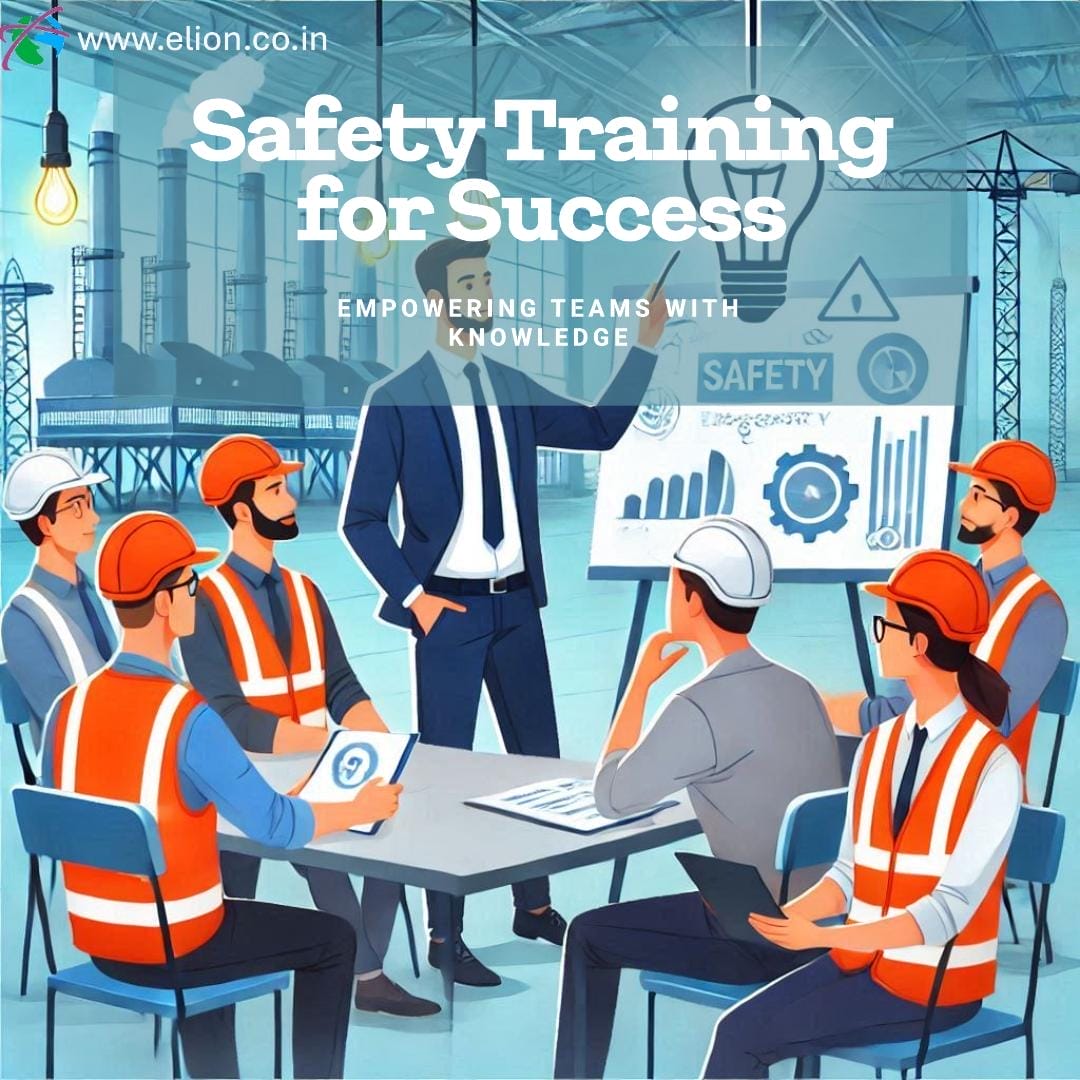
Safety Training
Safety training is the structured, systematic process of equipping workers, supervisors, safety personnel, and management with the knowledge, technical competencies, practical skills, and behavioural awareness needed to identify hazards, apply safe working practices, respond correctly to emergency situations, and fulfil their individual responsibilities under a facility’s safety management system and applicable statutory safety obligations. It is the human dimension of industrial safety — the mechanism by which engineering controls, safety procedures, regulatory requirements, and organisational safety commitments are translated into the competent, informed, safety-conscious behaviour of every individual present in a workplace.
Engineering controls, safety procedures, and regulatory compliance frameworks are the structural foundation of industrial safety management. But they function only to the extent that the people operating within them understand what is required of them, possess the competency to execute it, and have been trained to recognise the conditions under which established procedures must be followed without deviation. A fire suppression system is only as effective as the worker who initiates it correctly during an emergency. A permit-to-work system is only as robust as the supervisors and operatives who understand its requirements and follow them precisely. A chemical handling procedure is only as safe as the worker who has been trained to implement it — including in the abnormal situations that routine training frequently fails to address adequately.
Safety training, properly designed and delivered, is not a compliance activity. It is an investment in the competence of the workforce on which every other safety management system element depends — and its quality, relevance, and measurable effectiveness directly determine whether a facility’s safety management system performs as designed when it matters most.
Why Safety Training Is Essential for Workforce Competence and Regulatory Compliance
The statutory imperative for safety training in Indian workplaces is comprehensive and multi-layered. The Occupational Safety, Health and Working Conditions Code 2020 places explicit obligations on employers to provide safety training to all workers — covering hazard awareness, safe working procedures, emergency response, and the use of personal protective equipment — and to maintain documented evidence of training delivery and competency assessment. The Factories Act, MSIHC Rules, Mines Act, and sector-specific regulatory frameworks reinforce these obligations with prescriptive requirements for training content, frequency, and records maintenance across specific industry categories and hazardous activity types.
Beyond statutory obligation, the operational safety case for systematic safety training is unambiguous. Analysis of workplace accident causation consistently identifies inadequate training — whether in hazard recognition, safe procedure execution, emergency response, or the correct use of protective equipment — as a contributing factor in a substantial proportion of occupational fatalities and serious injuries. Workers who have not been adequately trained to recognise the hazards they encounter, understand the controls that protect them, and respond correctly when normal conditions deviate cannot be expected to maintain safe behaviour under the pressures of production environments. This is not a reflection on individual workers — it is a predictable consequence of a training failure that is the employer’s responsibility to prevent.
The effectiveness of safety training is also directly linked to safety culture — the shared values, beliefs, and behavioural norms that determine how safety is prioritised and practised across every level of an organisation. Facilities where safety training is systematic, technically credible, regularly updated, and demonstrably valued by management consistently develop stronger safety cultures, lower incident rates, and more effective safety management system performance than those where training is treated as a periodic compliance obligation rather than a continuous workforce development investment.
Applicable Standards and Regulatory Framework
Safety training requirements in Indian facilities are governed by a comprehensive framework of statutory regulations and technical standards, including:
- Occupational Safety, Health and Working Conditions (OSH) Code, 2020 — Consolidating employer safety training obligations across all employment categories, establishing mandatory training requirements for workers exposed to occupational hazards and prescribing training records maintenance obligations
- Factories Act, 1948 and State Factories Rules — Mandating safety training for workers employed in hazardous processes, machinery operation, and specific high-risk activities, with training content and frequency requirements specified in State Rules schedules
- Manufacture, Storage and Import of Hazardous Chemicals (MSIHC) Rules, 1989 — Requiring comprehensive safety training for all personnel at Major Accident Hazard installations — covering hazard awareness, emergency response, personal protective equipment use, and specific training for emergency response team members
- Mines Act, 1952 and Mines Vocational Training Rules, 1966 — Governing mandatory vocational safety training requirements for mine workers across surface and underground mining operations
- Building and Other Construction Workers Act, 1996 — Establishing safety training obligations for construction workers covering hazard recognition, fall prevention, equipment operation, and emergency response
- Petroleum Act, 1934 and Petroleum Rules, 2002 — Governing safety training requirements for personnel at petroleum storage, handling, and distribution facilities
- Explosives Act, 1884 and Explosives Rules, 2008 — Mandating specific safety training for personnel handling explosive materials
- IS 14489 — Indian Standard code of practice for occupational safety and health audit, incorporating safety training programme adequacy as a core audit assessment element
- ISO 45001:2018 — International Occupational Health and Safety Management System standard establishing competence, awareness, and training as mandatory management system elements under clause 7.2, 7.3, and 7.4 — requiring organisations to determine necessary competencies, provide training to achieve them, and evaluate training effectiveness
- OISD (Oil Industry Safety Directorate) Standards — Specifying safety training requirements, training programme content, and competency verification obligations for petroleum sector facility personnel
- DGMS (Directorate General of Mines Safety) Guidelines — Governing safety training requirements and competency certification for mining sector personnel
- NFPA 70E — Standard for Electrical Safety in the Workplace, establishing training requirements for qualified and unqualified electrical workers, including arc flash hazard awareness training and energised electrical work safety training
- NFPA 10 and NFPA 101 — Standards specifying training requirements for fire extinguisher use and fire emergency response
- IEC 61511 — Functional safety standard requiring specific competency and training requirements for personnel responsible for safety instrumented system design, operation, and maintenance
- National Disaster Management Authority (NDMA) Guidelines — Providing training content guidance for emergency response team training at major hazard installations
- NBC 2016 — Incorporating safety training requirements for fire wardens, first aiders, and emergency response personnel in commercial buildings
- Directorate General of Factory Advice Service and Labour Institutes (DGFASLI) Guidelines — Providing technical guidance on safety training programme development for factory sector employers
- ILO Training Guidelines — International Labour Organisation training methodology references applicable to occupational safety training programme design
- Bureau of Indian Standards training standards — IS standards covering specific occupational safety training topics including first aid, fire safety, and confined space entry
For Major Accident Hazard installations under MSIHC Rules, safety training obligations extend to documented emergency response training for all facility personnel, specific technical training for emergency response team members, and periodic refresher training with documented competency assessment — making safety training records a primary subject of regulatory inspection and statutory compliance verification.
Industries Where Safety Training Is Relevant
Safety training is a universal employer obligation — applicable to every workplace where people are employed and exposed to occupational hazards. However, the technical complexity, regulatory intensity, and consequence severity of safety training requirements vary substantially across sectors. Chemical and petrochemical facilities require safety training of exceptional technical depth — covering process hazard awareness, toxic substance handling, personal protective equipment for chemical exposure, emergency shutdown procedures, and emergency response team training for toxic release, fire, and explosion scenarios. Manufacturing plants require safety training across mechanical safety, electrical hazard awareness, fire safety, manual handling, chemical handling, and permit-to-work systems — delivered to diverse worker populations with varying literacy levels, language backgrounds, and prior safety knowledge. Construction sites require safety training programmes that address continuously changing hazard profiles — with induction training for new site entrants, task-specific training for high-risk activities, and toolbox talk programmes that maintain hazard awareness as site conditions evolve. Hospitals require safety training covering clinical staff occupational safety, patient handling procedures, biosafety and infection control, chemical waste management, and emergency evacuation — across workforce populations that span highly educated clinical professionals and less formally educated support and maintenance workers simultaneously.
The Role of Independent Engineering Assessment
Independent assessment of safety training programme adequacy provides the technical objectivity, cross-industry benchmarking context, and regulatory expertise that internal training reviews cannot deliver. Safety training programmes are frequently assessed by the same people responsible for designing and delivering them — creating evaluation bias that systematically overestimates training effectiveness and underestimates training gaps. Elion’s safety engineers assess training programmes against regulatory requirements, ISO 45001 competence management obligations, sector-specific training standards, and hazard-specific training content requirements — producing gap assessments that accurately identify training deficiencies, competency shortfalls, and programme improvement needs that internal review processes routinely fail to surface.
Articles, Case Studies, and Technical Resources on Safety Training
This category is a dedicated knowledge hub for safety managers, HSE professionals, training coordinators, plant managers, HR professionals, and compliance officers seeking technically reliable information on safety training programme design, delivery methodology, regulatory compliance, and training effectiveness evaluation.
Resources published here include:
- Real project case studies from safety training programme development and assessment engagements conducted at Indian industrial, commercial, and infrastructure facilities — documenting training needs identified, programme gaps found, content development approaches, delivery methodology selection, and training effectiveness improvement outcomes
- Technical articles on safety training programme design methodology, adult learning principles in industrial safety contexts, competency-based training frameworks, and training needs analysis for diverse workforce populations
- Industry best practices for safety induction programme design, task-specific training development, toolbox talk programme management, emergency response training delivery, and safety training records management
- Regulatory compliance guides covering OSH Code 2020 training obligations, Factories Act safety training requirements, MSIHC Rules emergency training mandates, OISD petroleum sector training standards, and ISO 45001 competence management requirements
- Engineering methodology explainers covering specific training programme components — training needs analysis methodology, learning objective development, training content design for hazard-specific topics, competency assessment instrument development, and training effectiveness evaluation methodology
- Training delivery insights covering instructor-led training, on-the-job training, simulation-based training, toolbox talk facilitation, e-learning integration, and language and literacy considerations in multi-lingual Indian industrial workforces
- Safety culture content covering the relationship between training quality, workforce competence, and safety culture maturity — and the role of management engagement in training programme credibility and effectiveness
Whether you are designing a safety training programme for a new facility, reviewing an existing programme’s regulatory compliance, developing training content for a specific hazard category, preparing for an ISO 45001 certification audit of your competence management system, fulfilling MSIHC Rules training obligations for a Major Accident Hazard installation, or investigating training inadequacy as a contributing factor in a workplace incident, the technical resources in this category provide the engineering and regulatory depth needed to develop and manage safety training with the rigour that workforce competence and worker protection demand.
Professional Safety Training Services by Elion
Elion Technologies & Consulting Pvt. Ltd. delivers independent safety training services for industrial, manufacturing, commercial, healthcare, and infrastructure facilities across India. Our qualified safety engineers and training professionals provide comprehensive safety training support — encompassing training needs analysis, safety induction programme development and delivery, hazard-specific technical training for high-risk activities and processes, permit-to-work and safe system of work training, emergency response team training, fire safety and evacuation training, chemical handling and PPE training, electrical safety awareness training, working at height and confined space entry training, safety management system awareness training, ISO 45001 competence management support, and MSIHC Rules compliance training — delivering programmes that are technically accurate, regulatory-aligned, practically relevant, and structured to produce measurable improvement in workforce safety competence and behavioural safety performance.
To understand our training methodology, scope of services, and how Elion’s independent safety training expertise can support your facility’s workforce competence development, regulatory compliance, and safety management improvement objectives, visit our dedicated service page:
👉 Safety Training Services by Elion
Industries Where Safety Training Is Critical
- Chemical and specialty chemical manufacturing plants
- Oil, gas, and petrochemical refineries, terminals, and storage facilities
- Manufacturing plants — automotive, heavy engineering, textile, and process industries
- Pharmaceutical and biotech manufacturing facilities
- Steel, cement, aluminium, and primary metals processing industries
- Construction sites and large-scale infrastructure development projects
- Mining and mineral extraction and processing operations
- Hospitals, healthcare institutions, and large medical facility networks
- Hotels, resorts, convention centres, and large hospitality establishments
- Warehouses, logistics centres, and large distribution facilities
- Power generation plants and electrical substation installations
- Food and beverage processing and packaging facilities
- Airports, metro rail systems, and large transport infrastructure
- Educational institutions, universities, and large campus facilities
- Banks, financial institutions, and large commercial building portfolios
Technical Topics Covered in This Knowledge Hub
Articles and case studies in this category address the complete technical and regulatory landscape of safety training programme design, delivery, compliance management, and effectiveness evaluation, including:
- Safety training programme design — training needs analysis methodology, learning objective development, content sequencing, and delivery format selection
- Training needs analysis — hazard profile mapping, regulatory requirement identification, competency gap assessment, and training priority determination
- Safety induction programme design — site hazard overview, emergency procedures, permit-to-work introduction, PPE requirements, and site rules content development
- Hazard-specific technical training — content development for chemical handling, machinery safety, electrical hazard awareness, working at height, confined space entry, hot work, and manual handling
- Permit-to-work training — system understanding, authorisation responsibility, isolation procedure, and practical permit completion exercises
- Emergency response training — emergency scenario familiarisation, alarm response, evacuation procedure, assembly point management, and emergency role responsibility training
- Fire safety training — fire triangle awareness, fire classification, extinguisher selection and use, evacuation procedure, fire warden role, and fire emergency response
- First aid training — basic life support, wound management, chemical exposure response, and emergency call procedure training
- Chemical safety training — SDS interpretation, exposure route awareness, PPE selection, spill response, and chemical waste management
- Electrical safety awareness training — shock hazard recognition, safe isolation principles, permit-to-work for electrical work, and arc flash hazard awareness
- Working at height training — fall risk awareness, fall prevention equipment selection, harness inspection and donning, and rescue procedure familiarisation
- Confined space entry training — atmosphere hazard awareness, entry permit requirements, atmospheric testing, rescue procedure, and standby person responsibilities
- Manual handling training — injury mechanism awareness, risk assessment principles, correct lifting technique, mechanical aid selection, and team handling coordination
- Personal protective equipment training — hazard-PPE selection matrix, donning and doffing procedures, inspection and maintenance, and limitation awareness
- Toolbox talk facilitation — topic selection methodology, delivery technique, worker engagement management, and attendance and content recording
- Safety observation and near-miss reporting training — observation methodology, reporting culture development, feedback loop design, and recognition programme integration
- Safety leadership training for supervisors and managers — safety responsibility, hazard recognition, safety conversation facilitation, and safety performance monitoring
- ISO 45001 competence management — training needs determination, competency assessment instrument development, records management, and training effectiveness evaluation
- MSIHC Rules emergency training compliance — on-site emergency plan training obligations, emergency response team training content, drill integration, and training frequency requirements
- Training effectiveness evaluation — Kirkpatrick model application, knowledge assessment instrument design, behavioural observation methodology, and safety performance indicator correlation
- Adult learning principles in industrial safety training — relevance, experience integration, practical application focus, and learner engagement techniques
- Multi-lingual training delivery — language barrier management, visual content development, interpreter use, and literacy-independent training methodology for diverse Indian workforces
- E-learning and digital training tools — application in industrial safety contexts, blended learning design, and engagement management for field worker populations
- Simulation-based safety training — tabletop exercise design, scenario-based training for emergency response, and practical skills simulation for high-risk task training
- Training records management — documentation requirements, records retention, competency certification, and regulatory inspection evidence preparation
- Safety training audit — programme adequacy assessment, regulatory compliance gap identification, content accuracy review, and delivery quality evaluation
- Common safety training deficiencies identified during Indian workplace safety audits — content gaps, delivery failures, records inadequacies, and competency assessment weaknesses
- Post-incident training review — incident causation training gap identification, corrective training programme development, and retraining effectiveness verification
- Contractor safety training management — pre-mobilisation training requirements, site induction design, task-specific training verification, and ongoing training compliance monitoring
Elion’s Engineering Authority in Safety Training
Since 2010, Elion Technologies & Consulting Pvt. Ltd. has established itself as one of India’s most experienced independent engineering audit and industrial safety compliance consultancies. With over 30,000 audits completed across chemical, manufacturing, banking, hospitality, refinery, pharmaceutical, healthcare, construction, and infrastructure sectors spanning every region of India, Elion has assessed safety training programmes and delivered safety training across the complete spectrum of Indian industrial and commercial workplace environments — from entry-level worker hazard awareness inductions in large manufacturing plants to specialist technical training for emergency response teams at Major Accident Hazard chemical installations, safety leadership development for plant management teams, and ISO 45001 competence management system implementation support for multi-site industrial organisations. This breadth of cross-industry safety training experience provides the hazard-specific content knowledge, regulatory framework expertise, and workforce engagement understanding that distinguishes Elion’s safety training practice from generic training providers and internal safety department programmes.
Our safety training engagements are conducted by qualified safety engineers and training professionals with specialist expertise in the OSH Code 2020, Factories Act training obligations, MSIHC Rules emergency training requirements, OISD petroleum sector training standards, ISO 45001 competence management requirements, and sector-specific safety training content across the full range of industrial hazard categories — applying structured training needs analysis methodology, competency-based learning objective development, adult learning principles, and training effectiveness evaluation frameworks to design and deliver safety training programmes that are technically accurate, regulatory-compliant, practically relevant, and measurably effective in building the workforce competence on which every other safety management system element depends. As a fully independent consultancy with no affiliation to training software vendors, e-learning platform providers, PPE manufacturers, or safety equipment suppliers, Elion delivers safety training services that are technically objective, commercially unbiased, and focused entirely on developing the genuine safety competence of the workers and supervisors who are the ultimate beneficiaries of everything the safety management system exists to protect.
Every safety training programme and assessment delivered by Elion is designed to serve as a technically defensible component of the client facility’s safety management system — producing training records, competency assessments, and programme documentation that satisfy factory inspectorate and OSH regulatory inspection requirements, ISO 45001 certification audit evidence standards, MSIHC Rules training compliance obligations, insurance underwriting assessment requirements, and management safety governance expectations — giving safety managers, plant engineers, HR professionals, and facility operators the independently delivered, engineering-grounded safety training and competence management support required to build the workforce capability that genuine industrial safety demands, and to demonstrate that capability with the documented evidence that India’s evolving occupational safety regulatory framework requires.