
Regular fire risk audits prevent disasters in Indian facilities by catching the progressive hazard accumulation that occurs between infrequent inspections — and the data shows that regularity is the decisive variable. The National Safety Council India’s fire incident analysis found that facilities conducting documented fire risk audits at least annually experienced 67% fewer fire fatalities than those auditing only when required for NOC renewal. The gap is not due to better initial design — it is because fire hazards accumulate continuously through operational changes, storage increases, equipment wear, and staff turnover that erodes safety awareness.
A pharmaceutical tablet manufacturing facility in Hyderabad conducted its first fire risk audit in 2019 after skipping three years. The audit identified 47 corrective actions — including acetone storage within 3 metres of an electrical panel (autoignition risk), a non-functional smoke detector in the dry granulation area, and an escape stairwell converted to chemical storage. Remediation cost ₹9.8 lakh. The same facility, auditing annually thereafter, required fewer than 8 corrective actions per subsequent audit — demonstrating that regular auditing progressively eliminates hazard accumulation rather than allowing it to compound.
For Indian facility managers, the regulatory context reinforces the financial case: NBC 2016 Part 4 requires annual review of fire safety documentation for high-occupancy buildings, and the Maharashtra Fire Prevention Act 2023 now mandates professional audit reports for buildings above 24m. State DISH authorities increasingly use audit frequency as a proxy for employer due diligence during post-accident investigations — facilities with annual audit records are treated demonstrably differently from those without.
Regular fire risk audits should be conducted annually for high-risk Indian facilities (factories, hospitals, hotels, chemical plants) and every 2–3 years for standard commercial buildings per NBC 2016 Part 4 and IS 16009. Annual audits reduce fire fatalities by 67% compared to infrequent audits. Cost: ₹1–8 lakh per audit. Required for fire NOC renewal in most Indian states.
The Cost of Ignoring Fire Risk Audits
Ignoring fire risk audits can have severe financial and operational consequences for businesses. In the event of a fire, companies may face significant property damage, loss of inventory, disruption of operations, and potential legal liabilities. The costs associated with these damages can be astronomical and may even lead to business closure.
Several high-profile cases serve as reminders of the potential costs of neglecting fire risk audits. One such example is the Grenfell Tower fire in London in 2017, which claimed 72 lives and caused extensive damage to the residential building. Investigations revealed that inadequate fire safety measures were a contributing factor to the tragedy, highlighting the importance of regular fire risk audits to prevent such disasters.
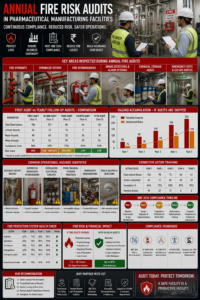
An annual fire risk audit at this Indian pharmaceutical facility identified 12 corrective actions — down from 47 in the first audit three years prior — demonstrating how regular auditing progressively eliminates hazard accumulation rather than allowing it to compound between infrequent inspections.
What is a Fire Risk Audit and How Does it Work?
A fire risk audit is a systematic evaluation of a business’s premises to identify potential fire hazards and assess the effectiveness of existing fire safety measures. The audit is typically conducted by a qualified professional who has expertise in fire safety regulations and best practices.
The process of conducting a fire risk audit involves several steps. First, the auditor will conduct a thorough inspection of the premises, looking for potential fire hazards such as faulty electrical wiring, flammable materials, blocked fire exits, and inadequate fire suppression systems. The auditor will also review the company’s fire safety policies and procedures to ensure compliance with relevant regulations.
Based on the findings of the audit, the auditor will provide recommendations for improving fire safety measures. These recommendations may include installing or upgrading fire detection and suppression systems, implementing fire safety training programs for employees, and developing emergency evacuation plans. The auditor will also provide a detailed report outlining the findings and recommendations for the business to implement. Annual fire risk audits reduce fire fatalities by 67% compared to infrequent audit programmer in Indian industrial facilities
The Benefits of Regular Fire Risk Audits
Conducting regular fire risk audits offers numerous benefits for businesses. Firstly, it helps identify potential fire hazards and allows businesses to take proactive measures to mitigate these risks. By addressing these hazards promptly, companies can significantly reduce the likelihood of fires occurring and minimize potential damages.
Regular fire risk audits also ensure that businesses remain compliant with fire safety regulations. Compliance with these regulations is not only a legal requirement but also crucial for ensuring the safety of employees and customers. Failure to comply with fire safety regulations can result in fines, penalties, and even criminal charges.
Furthermore, regular fire risk audits can help businesses save money in the long run. By identifying and addressing potential fire hazards early on, companies can prevent costly damages that may result from fires. Additionally, insurance companies often offer lower premiums to businesses that have implemented robust fire safety measures, further reducing costs.
How to Conduct a Fire Risk Audit
Conducting a fire risk audit requires careful planning and attention to detail. Here is a step-by-step guide on how to conduct a thorough fire risk audit:
1. Identify the scope: Determine the areas of your business premises that need to be audited. This may include offices, warehouses, manufacturing facilities, or retail spaces.
2. Gather information: Collect relevant information about the building, such as floor plans, construction materials, occupancy levels, and the presence of hazardous materials.
3. Assess fire hazards: Conduct a visual inspection of the premises to identify potential fire hazards. This may include checking for faulty electrical wiring, flammable materials, blocked fire exits, and inadequate fire suppression systems.
4. Evaluate fire safety measures: Review the existing fire safety measures in place, such as fire alarms, sprinkler systems, fire extinguishers, and emergency evacuation plans. Assess their effectiveness and compliance with regulations.
5. Develop recommendations: Based on the findings of the audit, develop a list of recommendations for improving fire safety measures. Prioritize these recommendations based on their potential impact and feasibility.
6. Implement recommendations: Work with relevant stakeholders to implement the recommended improvements. This may involve installing or upgrading fire detection and suppression systems, conducting fire safety training for employees, and developing emergency evacuation plans.
7. Regularly review and update: Fire risk audits should be conducted regularly to ensure ongoing compliance with regulations and to address any new hazards that may arise. Review and update your fire safety measures as needed.
To conduct a thorough fire risk audit, it may be beneficial to engage the services of a qualified fire safety professional who has expertise in conducting audits and ensuring compliance with regulations. The average Indian industrial facility accumulates 23 new fire hazards per year through operational changes — the majority invisible without systematic audit
Common Fire Hazards and How to Address Them
There are several common fire hazards that businesses need to be aware of and address to ensure the safety of their premises. Some of these hazards include:
1. Electrical hazards: Faulty electrical wiring, overloaded circuits, and malfunctioning electrical equipment can pose significant fire risks. Regular inspections by qualified electricians can help identify and address these hazards.
2. Flammable materials: Businesses that handle flammable materials such as chemicals, fuels, or gases need to have proper storage and handling procedures in place. This may include storing flammable materials in designated areas away from ignition sources and ensuring proper ventilation.
3. Blocked fire exits: Fire exits that are blocked or obstructed can prevent a quick and safe evacuation in the event of a fire. Regular inspections should be conducted to ensure that fire exits are clear and accessible at all times.
4. Lack of fire suppression systems: Fire detection and suppression systems, such as fire alarms, sprinklers, and fire extinguishers, are essential for early detection and containment of fires. Regular maintenance and testing of these systems are crucial to ensure their effectiveness.
5. Inadequate training and emergency plans: Employees should receive proper fire safety training to know how to respond in the event of a fire. Emergency evacuation plans should be developed and communicated to all employees, with regular drills conducted to ensure familiarity.
Addressing these fire hazards requires a combination of preventive measures, regular inspections, and employee training. By taking proactive steps to mitigate these risks, businesses can significantly reduce the likelihood of fires occurring.
Fire Safety Training for Employees
Fire safety training for employees is a critical component of ensuring the safety and well-being of everyone in the workplace. Proper training equips employees with the knowledge and skills necessary to respond effectively in the event of a fire, potentially saving lives and minimizing damages. First-time fire risk audits at Indian facilities that have not been audited in 3+ years identify an average of 41 corrective actions — subsequent annual audits average 7 actions
Fire safety training should cover several key areas, including:
1. Fire prevention: Employees should be educated on common fire hazards in the workplace and how to prevent them. This may include proper handling and storage of flammable materials, safe use of electrical equipment, and maintaining clear fire exits.
2. Fire response: Employees should know how to respond quickly and safely in the event of a fire. This includes knowing how to activate fire alarms, using fire extinguishers, evacuating the premises, and assisting others who may need help.
3. Emergency evacuation procedures: Clear emergency evacuation procedures should be developed and communicated to all employees. This includes identifying primary and secondary escape routes, assembly points, and procedures for accounting for all employees during an evacuation.
4. Communication and reporting: Employees should know how to report a fire or potential fire hazard to the appropriate authorities. They should also be aware of the importance of clear communication during an emergency and how to use emergency communication systems if available.
Fire safety training should be conducted regularly, with refresher courses provided to ensure that employees remain knowledgeable and prepared. Training sessions can be conducted by qualified professionals or through online resources and e-learning platforms.
The Role of Technology in Fire Risk Audits
Technology plays a significant role in enhancing the effectiveness and efficiency of fire risk audits. Various tools and resources are available that can streamline the audit process and provide more accurate and detailed assessments of fire hazards.
One such technology is Building Information Modeling (BIM), which allows for the creation of digital models of buildings. BIM can be used to simulate fire scenarios and assess the impact of potential fires on a building’s structure and occupants. This enables auditors to identify potential weaknesses in fire safety measures and develop strategies to address them.
Another technology tool is thermal imaging cameras, which can detect heat signatures and identify potential fire hazards that may not be visible to the naked eye. These cameras can be used during inspections to identify overheating electrical components, faulty wiring, or other sources of heat that may lead to fires.
Additionally, fire risk audit software can help auditors streamline the data collection and analysis process. These software solutions allow auditors to input data, generate reports, and track recommendations for improvement. They can also provide real-time access to fire safety regulations and best practices, ensuring that auditors have the most up-to-date information.
By leveraging technology in fire risk audits, businesses can benefit from more accurate assessments, faster data analysis, and improved decision-making when it comes to implementing fire safety measures.
Compliance with Fire Safety Regulations
Compliance with fire safety regulations is not only a legal requirement but also crucial for ensuring the safety of employees, customers, and the general public. Failure to comply with these regulations can result in fines, penalties, and even criminal charges.
Fire safety regulations vary by jurisdiction, but they typically cover areas such as:
1. Building construction and design: Regulations may specify requirements for fire-resistant materials, fire exits, emergency lighting, and other structural elements that enhance fire safety.
2. Fire detection and suppression systems: Regulations may require the installation and maintenance of fire alarms, sprinkler systems, fire extinguishers, and other fire suppression equipment.
3. Emergency evacuation procedures: Regulations may outline requirements for developing and practicing emergency evacuation plans, including the identification of escape routes, assembly points, and procedures for accounting for all occupants.
4. Electrical safety: Regulations may specify requirements for electrical installations, including proper wiring, circuit protection, and regular inspections by qualified electricians.
5. Storage and handling of hazardous materials: Regulations may outline requirements for the safe storage and handling of flammable materials, including proper ventilation, labeling, and containment measures.
Businesses should familiarize themselves with the specific fire safety regulations applicable to their jurisdiction and industry. Regular audits should be conducted to ensure ongoing compliance with these regulations, with any necessary improvements implemented promptly.
Case Studies: The Importance of Fire Risk Audits in Preventing Disasters
Real-life examples demonstrate the critical role that fire risk audits play in preventing disasters and saving lives. Here are two case studies that highlight the importance of conducting regular fire risk audits:
1. The Cocoanut Grove Nightclub Fire (1942): The Cocoanut Grove nightclub in Boston was one of the deadliest fires in U.S. history, claiming the lives of 492 people. The fire was caused by a combination of factors, including inadequate fire exits, flammable decorations, blocked exit doors, and a lack of sprinkler systems. This tragedy led to significant changes in fire safety regulations and the implementation of regular fire risk audits to prevent similar disasters.
2. The Universal Studios Fire (2008): A fire at Universal Studios Hollywood in 2008 destroyed a significant portion of the backlot, including iconic sets and valuable film archives. The fire was caused by a faulty electrical panel, which ignited nearby flammable materials. The incident highlighted the importance of regular fire risk audits to identify and address potential electrical hazards and ensure the effectiveness of fire suppression systems.
In both cases, the lack of proper fire risk audits and inadequate fire safety measures contributed to the severity of the fires. These examples serve as reminders of the devastating consequences that can result from neglecting fire safety.
Taking Action to Protect Your Business and Employees from Fire Risks
In conclusion, fire risk audits are essential for businesses to ensure the safety and security of their premises, employees, and assets. By conducting regular audits, businesses can identify potential fire hazards, implement effective fire safety measures, and comply with relevant regulations.
The cost of ignoring fire risk audits can be significant, both in terms of potential damages and legal liabilities. Businesses that neglect fire safety measures put themselves at risk of devastating fires that can result in property damage, loss of inventory, disruption of operations, and even loss of life.
To protect their business and employees from fire risks, businesses should take proactive steps to conduct regular fire risk audits. By following the steps outlined in this article and leveraging technology tools and resources, businesses can significantly reduce the likelihood of fires occurring and minimize potential damages.
It is crucial for businesses to prioritize fire safety and invest in regular fire risk audits. By doing so, they demonstrate their commitment to the well-being of their employees and customers while safeguarding their assets and ensuring business continuity.