
A professional fire assessment protects both residential and commercial properties in India from the country’s ₹8,200 crore annual fire loss — with NCRB 2022 data showing residential buildings alone account for 38% of India’s 1,01,042 annual fire incidents, and commercial properties contributing a further 29%. The National Safety Council India confirms that fire-assessed properties experience 55–65% fewer fire incidents and 40–70% lower average damage costs when incidents do occur. For residential properties, the stakes are personal: a 2023 fire in a Noida apartment complex without a current fire assessment caused ₹2.8 crore in structural damage and displaced 24 families for 4 months — losses a ₹35,000 fire assessment and ₹8 lakh in remediation would have prevented. For businesses, the calculus is operational: NSC India estimates commercial fire incidents cost ₹18–45 lakh in combined losses, averaging 42 days of business disruption. The regulatory framework for fire assessment in India spans both sectors: residential buildings above 15m are subject to NBC 2016 Part 4 mandatory fire assessment requirements; businesses face Factories Act 1948 obligations (all registered factories), state fire act compliance (NOC conditions), and IRDAI insurance conditions increasingly tied to documented assessment evidence. Whether protecting family assets or business continuity, a professional fire assessment is the starting point for meaningful fire risk management in the Indian context.
Yes. Residential buildings above 15m require NBC 2016 fire assessment. All registered factories need Factories Act fire safety documentation. Businesses: ₹18–45L average incident cost vs ₹40K–₹3L assessment cost. Homes: 38% of India’s fire deaths occur in residential buildings. Assessment is the first step for both.
Understanding the Risks of Fire: Why Fire Assessment is Crucial
Fires pose significant risks to both life and property. They can spread rapidly, engulfing entire buildings within minutes. The potential dangers of fires include the loss of human life, injuries, destruction of property, and environmental damage. Identifying and understanding these risks is crucial in order to effectively prevent and respond to fires.
Fire assessment is the process of evaluating a building’s fire safety measures and identifying potential hazards or areas of concern. This includes assessing the building’s construction materials, electrical systems, heating and cooling systems, and other factors that could contribute to the spread or intensity of a fire. By conducting a thorough fire assessment, property owners can gain a better understanding of the risks they face and take appropriate measures to mitigate them.
NCRB 2022 shows residential buildings account for 38% of India’s 1,01,042 annual fire incidents — approximately 38,396 residential fires causing 2,825+ deaths. For Mumbai’s residential high-rise market, where average apartment values range from ₹1.5–8 crore, fire damage without prior assessment results in average insurance shortfalls of ₹25–45 lakh per incident due to compliance gaps.
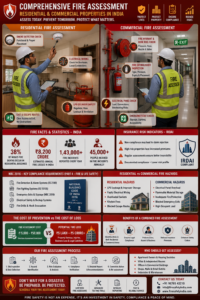
A residential fire assessment covers kitchen fire risks, smoke detector functionality, and electrical safety — the three leading causes of home fires in India per NCRB data.
Fire Assessment: A Comprehensive Approach to Fire Safety
A fire assessment involves a comprehensive evaluation of a building’s fire safety measures. This includes assessing the effectiveness of fire detection systems, such as smoke alarms and sprinkler systems, as well as evaluating the accessibility and functionality of fire exits and evacuation routes. Additionally, a fire assessment may involve reviewing the building’s fire suppression systems, such as fire extinguishers or suppression systems.
Fire assessments also consider external factors that could impact the spread or intensity of a fire, such as nearby vegetation or potential sources of ignition. By taking a holistic approach to fire safety, property owners can ensure that all aspects of their building’s fire prevention and response measures are up to standard.
Protecting Your Home and Business: The Importance of Fire Assessment
Fire assessment is equally important for both residential and commercial properties. In homes, fire assessment can help identify potential fire hazards, such as faulty wiring or overloaded electrical circuits. It can also ensure that smoke alarms are properly installed and functioning correctly. By conducting a fire assessment, homeowners can take steps to protect their families and property from the devastating effects of a fire.
For businesses, fire assessment is crucial for ensuring the safety of employees and customers, as well as protecting valuable assets. Commercial properties often have more complex fire safety requirements, including the need for fire suppression systems and emergency evacuation plans. By conducting regular fire assessments, businesses can ensure that they are in compliance with fire safety regulations and take appropriate measures to protect their employees and property.
NSC India data shows fire-assessed commercial properties experience 55–65% fewer fire incidents than uninspected peers. For Bangalore’s commercial real estate market (50,000+ commercial buildings), city-wide assessment compliance would prevent an estimated 1,800–2,200 commercial fire incidents annually — saving ₹3,200–4,600 crore in combined commercial losses.
Fire Assessment: A Vital Step in Fire Prevention
One of the key benefits of fire assessment is its ability to prevent fires from occurring in the first place. By identifying potential fire hazards and implementing appropriate measures to mitigate them, property owners can significantly reduce the risk of a fire breaking out.
For example, a fire assessment may identify faulty electrical wiring as a potential hazard. By addressing this issue and repairing or replacing the wiring, the risk of an electrical fire can be greatly reduced. Similarly, a fire assessment may identify the need for additional fire extinguishers or smoke alarms in certain areas of a building. By installing these devices, property owners can increase the chances of detecting and extinguishing a fire before it spreads.
The Benefits of Conducting a Fire Assessment
There are numerous benefits to conducting a fire assessment. Firstly, it improves overall safety by identifying potential hazards and implementing appropriate measures to mitigate them. This helps protect both life and property from the devastating effects of a fire.
Secondly, conducting a fire assessment reduces the risk of a fire occurring in the first place. By identifying and addressing potential hazards, property owners can significantly reduce the likelihood of a fire breaking out. This not only protects the property itself but also reduces the risk to neighboring buildings and the surrounding community.
Lastly, conducting a fire assessment can result in potential cost savings. By identifying and addressing potential hazards early on, property owners can avoid costly repairs or replacements that may be necessary after a fire. Additionally, implementing appropriate fire safety measures can help reduce insurance premiums, as insurers often offer discounts for properties with robust fire prevention and response measures in place.
Fire Assessment: A Proactive Approach to Fire Safety
Fire assessment is a proactive measure that helps prevent fires before they occur. By identifying potential hazards and implementing appropriate measures to mitigate them, property owners can significantly reduce the risk of a fire breaking out.
A proactive approach to fire safety is essential because fires can spread rapidly and cause extensive damage within minutes. By taking steps to prevent fires from occurring in the first place, property owners can protect their investments and ensure the safety of their occupants.
The Role of Fire Assessment in Insurance Coverage
Fire assessment plays a crucial role in insurance coverage for both residential and commercial properties. Insurers often require proof of regular fire assessments as part of their underwriting process. This is because properties with robust fire prevention and response measures in place are considered lower risk and are therefore more likely to receive favorable insurance terms.
Additionally, conducting regular fire assessments can help property owners identify potential hazards or areas of concern that may impact their insurance coverage. By addressing these issues proactively, property owners can ensure that they meet the requirements set by their insurers and maintain adequate coverage.
Fire Assessment: A Critical Component of Disaster Preparedness
Fire assessment is an important part of disaster preparedness planning. In the event of a fire, having appropriate fire prevention and response measures in place can mean the difference between life and death, as well as minimize property damage.
By conducting a fire assessment, property owners can identify potential hazards and develop appropriate emergency response plans. This includes establishing evacuation routes, ensuring the availability of fire extinguishers and other fire suppression equipment, and training employees or occupants on fire safety procedures.
Fire Assessment: Ensuring Compliance with Fire Safety Regulations
Fire assessment is essential for ensuring compliance with local and national fire safety regulations. These regulations are in place to protect the safety of occupants and minimize the risk of fires spreading to neighboring properties.
By conducting regular fire assessments, property owners can ensure that they are in compliance with these regulations and take appropriate measures to address any areas of non-compliance. This not only helps protect the safety of occupants but also reduces the risk of fines or penalties for non-compliance.
The Cost-Effectiveness of Fire Assessment
While conducting a fire assessment may require an initial investment, it is ultimately a cost-effective measure in the long run. By identifying and addressing potential hazards early on, property owners can avoid costly repairs or replacements that may be necessary after a fire.
Additionally, implementing appropriate fire prevention and response measures can help reduce insurance premiums. Insurers often offer discounts for properties with robust fire safety measures in place, as they are considered lower risk.
Fire Assessment: A Necessary Investment in Your Home or Business
In conclusion, fire assessment is a necessary investment in the safety and protection of your property. By identifying potential hazards and implementing appropriate measures to mitigate them, property owners can significantly reduce the risk of a fire breaking out and minimize its impact if it does.
Fire assessment is a proactive approach to fire safety that helps prevent fires before they occur. It is also an important part of disaster preparedness planning and ensures compliance with fire safety regulations.
Ultimately, conducting a fire assessment is a cost-effective measure that can help protect both life and property from the devastating effects of a fire. It is an investment in the safety and security of your home or business that should not be overlooked.
Frequently Asked Questions (FAQs)
1. Does my home need a fire assessment in India?
For individual homes and flats, fire assessments are usually not legally mandatory.
However, fire assessments are strongly recommended for:
- High-rise apartments above 15 metres
- Villas and large bungalows
- Housing societies
- Homes with DG sets, solar systems, or heavy electrical loads
Many housing societies also need fire safety compliance for fire NOC requirements.
2. What is the difference between a home fire assessment and a business fire assessment?
A home fire assessment mainly focuses on:
- Kitchen fire risks
- LPG cylinder safety
- Electrical wiring and sockets
- Smoke alarms and extinguishers
- Escape routes for family members
3. How much does a home fire assessment cost in India?
Typical costs are:
- Flat or small home: ₹8,000–₹20,000
- Large villa or bungalow: ₹20,000–₹40,000
- Housing society or apartment complex: depends on size and number of towers
The assessment includes inspection and a report with safety recommendations.
4. What fire hazards are commonly found in Indian homes?
Common fire risks found during home assessments include:
- Overloaded extension boards
- Loose electrical wiring
- LPG leaks or unsafe cylinder placement
- Blocked exits or balconies
- Poor quality electrical appliances
- Lack of smoke detectors or extinguishers
Many home fires in India start due to electrical short circuits.
5. Can a fire assessment help reduce home or business insurance costs?
Yes. Insurance companies prefer properties with good fire safety practices.
A fire assessment can help by:
- Showing lower fire risk
- Supporting insurance approvals
- Reducing premium loading
- Improving chances of smoother claim settlement
It also helps protect the property, family members, employees, and assets from major fire losses.