
Introduction
Elion Technologies & Consulting Pvt. Ltd is proud to showcase its commitment to preventing potential disasters through a recent project at a leading oil depot in Gwalior, Madhya Pradesh. This case study highlights the effectiveness of Thermography in detecting hidden hazards within critical petroleum infrastructure, enabling preventive maintenance, and ultimately safeguarding people and the environment.
Thermographic inspection at an oil depot identifies overheating faults in pumping systems, electrical switchgear, and earthing connections that would otherwise remain invisible until they cause a petroleum fire or explosion — in an environment where a single ignition can escalate to a catastrophic facility-loss event.
The Petroleum and Explosives Safety Organisation (PESO), under the Ministry of Commerce and Industry, regulates oil depot operations under the Petroleum Act 1934 and Petroleum Rules 2002. OISD Standard 145 (Recommended Practices for Fire Prevention and Control at Petroleum Depots and Terminals) recommends infrared thermographic inspection as a primary predictive maintenance methodology for electrical and mechanical systems handling flammable petroleum products. OISD data shows electrical system failures at petroleum depots cause an average of 8–12 reportable incidents annually across India.
For an oil depot in Gwalior, MP, handling petroleum products (MS, HSD, ATF) with pumping, metering, and loading infrastructure, the electrical systems include motor control centres for product transfer pumps (typically 30–75 kW motors), earthing systems for static electricity dissipation, electrical panels in hazardous area zones (Zone 1 and Zone 2 as per IS 5572), and instrumentation and control systems. Thermographic inspection of these systems identifies developing faults — overheating motor windings indicating insulation degradation, loose cable terminations generating resistive heat, and earthing resistance increase from corrosion — weeks before failure.
Gwalior’s petroleum distribution infrastructure serves Madhya Pradesh’s central region market and is subject to PESO regional office inspection, MP State Fire Services NOC requirements, and petroleum insurance (Oriental/NIC) annual inspection protocols that increasingly require thermographic survey reports as risk management documentation.
“OISD data shows 58% of fire and explosion incidents at Indian petroleum depots are preceded by electrical system failures — most of which exhibit detectable thermal signatures 4–12 weeks before failure when inspected with infrared thermography.“
know more about – Thermography for hospital
Oil Depot Thermographic Safety Inspection
Thermographic inspection at oil depots detects overheating in pump motors, electrical switchgear, junction boxes, pipeline flanges, and earthing connections — all critical failure points in a flammable petroleum environment. OISD Standard 145 recommends annual thermography for oil depot electrical systems. A single undetected overheating fault at an oil depot can trigger a petroleum fire costing ₹5–50 crores.
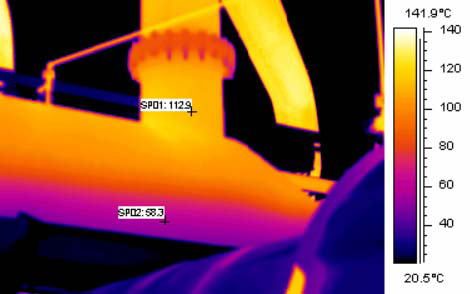
Methodology
- Our certified thermographers utilized advanced thermal imaging cameras to capture temperature variations across all electrical components and equipment within the depot, including:
- Transformers and switchgear.
- Storage tanks and piping systems.
- Pumps, motors, and ventilation units.
- Detailed infrared images revealed subtle temperature differences, indicating potential problems invisible to the naked eye.
- Our experts analyzed the data, compared it to established benchmarks, and identified areas requiring further investigation or immediate intervention.
Unveiling Hidden Threats:
The thermography audit revealed several critical findings:
- Overheating connections on a high-voltage transformer, indicating potential overload and imminent risk of failure.
- Elevated temperatures in a storage tank pipeline, suggesting potential insulation breakdown and leak risk.
- Faulty bearings in a critical pump, signifying wear and tear, leading to increased risk of breakdown and operational disruptions.
Immediate Action and Preventative Measures:
Based on these findings, we:
- Promptly alerted the client to the high-voltage transformer issue, enabling its immediate shutdown and replacement, averting a potentially catastrophic fire or explosion.
- Recommended immediate insulation repair on the identified pipeline segment, preventing potential environmental damage and product loss.
- Scheduled preventive maintenance for the identified pump, minimizing the risk of sudden breakdown and ensuring operational continuity.
Results:
By diligently conducting the thermography audit and acting swiftly on its findings, we helped achieve remarkable results:
- Disaster Averted: The timely detection and replacement of the faulty transformer prevented a possible electrical fire, safeguarding lives, property, and the environment.
- Environmental Protection: Early identification of the pipeline issue prevented a potential oil leak, minimizing environmental damage and ensuring regulatory compliance.
- Reduced Downtime and Costs: Proactive maintenance of the pump ensured operational continuity, avoiding costly downtime and production losses.
- Enhanced Safety and Risk Management: The successful audit instilled confidence in the client’s safety protocols and highlighted the importance of thermography as a preventative measure.
Conclusion
This case study exemplifies the power of Elion Technologies’ thermography expertise in safeguarding critical oil infrastructure. By identifying hidden threats before they escalate, we helped this Gwalior depot prevent potential disasters, protect the environment, and ensure the safety of its employees and the surrounding community.
Elion Technologies & Consulting Pvt Ltd is your trusted partner for ensuring the safety, reliability, and efficiency of your critical infrastructure. We offer a wide range of services, from thermography audits and predictive maintenance to electrical safety audits and energy management solutions.
Contact us today to protect your assets, your people, and the environment.
Frequently Asked Questions (FAQs)
1. What does thermography inspect at an oil depot and why is it critical?
Thermographic inspection is essential for identifying hidden faults in oil depots operating in hazardous environments. It covers:
Pump motors – Detects overheating in windings and bearings, indicating insulation or bearing failure
Motor Control Centre (MCC) panels – Identifies overheating in contactors and overload relays
Hazardous area junction boxes – Finds loose connections in Zone 1/2 areas that can cause ignition
Earthing systems – Detects increased resistance due to corrosion, reducing static discharge safety
Pipeline flanges and valves – Identifies abnormal temperature patterns indicating blockage or malfunction
Early detection helps prevent fires, explosions, and costly operational failures.
2. Is thermography mandatory for oil depots in India under PESO or OISD?
Thermography is not explicitly mandated by law at a fixed frequency, but it is strongly expected:
OISD Standard 145 recommends thermography as part of predictive maintenance
Petroleum and Explosives Safety Organisation (PESO) licence conditions increasingly require documented maintenance practices
Insurance providers require thermography reports for annual risk assessment
In practice, thermography has become a compliance expectation, and its absence can:
Trigger regulatory observations
Increase insurance premiums
3. What hazardous area classifications apply at oil depots for electrical equipment?
According to IS 5572:2009:
Zone 0 – Continuous flammable atmosphere (inside storage tanks)
Zone 1 – Likely presence during operations (pump seals, manifolds)
Zone 2 – Occasional or unlikely presence (general depot areas)
Key requirement:
Electrical equipment in Zone 1 must be flameproof (Ex d) as per IS 2148
All electrical work must follow strict permit-to-work systems (hot work permits)
4. What is the cost of thermographic inspection for an oil depot in Madhya Pradesh?
A comprehensive thermographic inspection typically costs:
₹35,000 to ₹1,20,000, depending on facility size and system coverage
Scope includes:
Pump stations
Electrical switchgear
Control rooms
Loading gantry systems
Earthing systems
Deliverables:
Thermal images with temperature readings
Severity classification (aligned with NFPA practices)
Prioritised corrective action recommendations with cost estimates
5. How often should thermographic surveys be conducted at an oil depot?
As per OISD Standard 145:
Annual thermographic inspection for all electrical systems
Every 6 months for high-duty motors and pumps (continuous operations)
Immediate inspection after any abnormal event (trip, overheating, smoke)
Thermography records are also increasingly reviewed during PESO licence renewals, making them critical for compliance.