
Ventilation
Here is the fully optimized WordPress category page content for Ventilation:
META TITLE
Ventilation Articles, Case Studies & Technical Insights | Elion(63 characters — precise and keyword-targeted)
META DESCRIPTION
Explore ventilation articles, case studies & engineering insights by Elion — India's trusted industrial ventilation and occupational safety compliance consultancy since 2010.(172 characters — clean alternative below:)
Ventilation articles, case studies & technical insights by Elion — India's trusted industrial ventilation and safety compliance consultancy since 2010.(152 characters)
PAGE CONTENT
Ventilation: Engineering Knowledge Hub
Ventilation is the engineering discipline of designing, installing, assessing, and maintaining systems that control the movement of air within occupied and industrial spaces — supplying fresh air, removing contaminated air, controlling temperature and humidity, diluting airborne contaminants, exhausting process emissions at source, and maintaining the pressure differentials that protect occupant health, product integrity, and environmental compliance. It is simultaneously a life safety engineering discipline, an occupational health management tool, an energy performance determinant, and a regulatory compliance requirement — with consequences that span worker health protection, indoor air quality, explosive atmosphere management, pharmaceutical product quality, and building energy performance.
Ventilation in industrial and commercial environments is far more complex and consequential than the provision of air movement through open windows and ceiling fans. Industrial ventilation encompasses local exhaust ventilation systems that capture hazardous airborne contaminants at their generation point before they can disperse into the worker breathing zone, general dilution ventilation systems that manage background contamination levels across large production areas, make-up air systems that replace exhausted air without creating cross-drafts or negative pressure conditions, and specialised ventilation for confined spaces, explosive atmosphere zones, cleanrooms, laboratories, and process enclosures where air quality control is a safety or product quality imperative.
Commercial and institutional ventilation addresses the fresh air supply rates, air distribution patterns, filtration levels, and pressure management that determine the indoor environment quality experienced by building occupants — with inadequate ventilation producing carbon dioxide accumulation, sick building syndrome, infection transmission risk, thermal discomfort, and reduced cognitive performance that affect productivity, health, and wellbeing simultaneously. In healthcare settings, ventilation is a primary infection control tool — with pressure differentials between rooms, air change rates, filtration levels, and supply and exhaust positioning all critical to preventing cross-infection in clinical environments.
Why Ventilation Assessment Is Essential for Health, Safety, and Compliance
The occupational health consequences of inadequate industrial ventilation are among the most serious and well-documented outcomes of workplace safety management failure in Indian industry. Workers exposed to welding fumes, solvent vapours, wood dust, silica dust, metal fumes, isocyanates, and dozens of other airborne hazardous substances in workplaces with inadequate local exhaust ventilation accumulate occupational disease burdens — occupational lung disease, chemical sensitisation, neurological damage, and carcinogenic exposure — that develop over years and decades of exposure without acute symptoms that would prompt corrective action. By the time occupational disease manifests clinically, the damage is irreversible and the exposure accumulation that caused it is years or decades in the past.
Ventilation system inadequacy in industrial environments also creates explosive atmosphere hazards when flammable vapours, gases, or combustible dusts accumulate to concentrations above their lower explosive limits. In facilities where flammable solvents are used in painting, cleaning, or processing operations, inadequate ventilation converts a managed chemical hazard into an explosive atmosphere that requires only an ignition source to produce a catastrophic fire or explosion event.
In commercial and institutional buildings, inadequate ventilation rates produce CO₂ concentrations that impair cognitive performance, moisture accumulation that promotes mould growth, and the air stagnation conditions that facilitated the transmission of airborne pathogens — consequences that became acutely apparent during the COVID-19 pandemic and have permanently elevated the regulatory and management attention given to building ventilation adequacy.
From a regulatory standpoint, ventilation requirements permeate India’s occupational safety and building services legislative framework — from the Factories Act ventilation provisions to pharmaceutical GMP requirements for controlled environment ventilation, from NBC 2016 building ventilation standards to SPCB requirements for process exhaust emission control.
Applicable Standards and Regulatory Framework
Ventilation system design, assessment, and compliance in India are governed by a comprehensive framework of statutory regulations and technical standards, including:
- Factories Act, 1948 and State Factories Rules — Mandating adequate ventilation in all workrooms, with specific requirements for natural and mechanical ventilation adequacy, removal of dust, fumes, and impurities generated in manufacturing processes, and ventilation of confined spaces prior to worker entry
- Occupational Safety, Health and Working Conditions (OSH) Code, 2020 — Consolidating ventilation obligations across all employment categories, establishing adequate ventilation as a fundamental employer obligation for every workplace where occupational air quality hazards are present
- Mines Act, 1952 and Mines Ventilation Regulations — Governing ventilation requirements for underground mine workings, including mandatory ventilation design, airflow quantity requirements, and methane monitoring provisions
- Building and Other Construction Workers Act, 1996 — Establishing ventilation requirements for construction site welfare facilities and confined space working
- National Building Code (NBC) 2016, Part 8 — Specifying ventilation design requirements for commercial, institutional, and residential buildings including natural ventilation provisions, mechanical ventilation design standards, and air change rate requirements by occupancy category
- IS 3103 — Indian Standard code of practice for industrial ventilation, providing design guidance for industrial general and local exhaust ventilation systems
- IS 655 — Indian Standard specification for metal air distribution systems, providing ductwork design and construction requirements applicable to mechanical ventilation system assessment
- IS 14489 — Indian Standard code of practice for occupational safety and health audit, incorporating ventilation system adequacy as a core workplace health assessment element
- ASHRAE 62.1 — Ventilation for Acceptable Indoor Air Quality, the internationally referenced standard for minimum outdoor air supply rates and indoor air quality management in commercial and institutional buildings
- ASHRAE 62.2 — Ventilation and Acceptable Indoor Air Quality in Residential Buildings
- ASHRAE 55 — Thermal Environmental Conditions for Human Occupancy, providing the thermal comfort framework within which ventilation performance is assessed
- ASHRAE 110 — Method of Testing Performance of Laboratory Fume Hoods, specifying fume hood containment performance assessment methodology
- ACGIH Industrial Ventilation — A Manual of Recommended Practice — The primary international technical reference for industrial local exhaust ventilation design and assessment, providing design velocity, capture velocity, and ductwork calculation methodology for hundreds of industrial process ventilation applications
- EN 689 — European standard for measurement of occupational exposure to chemical agents by inhalation, referenced for ventilation adequacy assessment through air monitoring
- EN 1822 series — European standards for high-efficiency air filters, governing HEPA and ULPA filter classification and testing in cleanroom and pharmaceutical ventilation applications
- ISO 14644 series — International standards for cleanrooms and associated controlled environments, governing ventilation design, performance testing, and ongoing monitoring requirements for pharmaceutical and electronics manufacturing environments
- Pharmaceutical GMP Guidelines (Schedule M) — Governing ventilation system requirements for pharmaceutical manufacturing — including air change rates, pressure cascades, temperature and humidity control, filtration specifications, and validation requirements for production and quality control areas
- NABH Accreditation Standards — Hospital accreditation requirements incorporating ventilation performance criteria for operating theatres, isolation rooms, ICUs, and general ward environments
- Energy Conservation Building Code (ECBC) 2017 — Establishing minimum energy performance requirements for mechanical ventilation systems in commercial buildings including specific fan power limits
- Bureau of Energy Efficiency (BEE) Guidelines — Incorporating ventilation system energy performance assessment as a component of building and industrial energy audit methodology
- CPCB and SPCB Industrial Emission Standards — Governing process exhaust ventilation system performance as a component of air emission control compliance
- IS 5571 and IS 5572 — Indian Standards for electrical equipment in explosive atmospheres, applicable to ventilation system electrical components in hazardous area classified zones
- IEC 60079 series — International standards for explosive atmospheres, incorporating ventilation as a primary technique for explosive atmosphere prevention and zone classification reduction
- NFPA 91 — Standard for Exhaust Systems for Air Conveying of Vapors, Gases, Mists, and Particulate Solids, providing fire and explosion safety guidance for industrial exhaust ventilation design
- NFPA 45 — Standard on Fire Protection for Laboratories Using Chemicals, incorporating laboratory ventilation requirements
- LEED, GRIHA, and IGBC Green Building Rating Systems — Incorporating indoor environment quality criteria including ventilation adequacy, outdoor air delivery monitoring, and filtration performance as certification assessment parameters
- ISO 45001 — Occupational Health and Safety Management System standard requiring systematic identification and control of airborne hazards — within which ventilation system adequacy is a primary engineering control subject to verification
For pharmaceutical manufacturing facilities, ventilation system validation — demonstrating that installed systems consistently deliver the temperature, humidity, air change rate, pressure differential, and particulate control parameters specified in the facility’s GMP design basis — is a regulatory requirement for product licence maintenance and regulatory inspection compliance.
Industries Where Ventilation Assessment Is Relevant
Ventilation system adequacy is a safety and compliance concern across every category of facility where workers are exposed to airborne contaminants, where explosive atmospheres may form, where indoor air quality affects occupant health and productivity, or where controlled environment conditions are required for product quality or infection control. Industrial facilities with chemical, dust, fume, and vapour generation represent the highest-consequence ventilation assessment environments — where local exhaust ventilation system performance directly determines worker exposure levels and regulatory compliance status. Pharmaceutical manufacturing facilities depend on validated HVAC and ventilation systems for GMP compliance — where ventilation performance is a product quality assurance parameter as well as an occupational health control measure. Hospitals require ventilation assessment covering operating theatre positive pressure, isolation room negative pressure, and general ward air change rates — where ventilation performance is an infection control requirement of direct patient safety significance. Confined spaces across every industrial sector — vessels, tanks, pits, tunnels, and enclosed equipment — require ventilation assessment as a prerequisite for safe entry authorisation.
The Role of Independent Engineering Assessment
An independent ventilation assessment provides the engineering objectivity, measurement methodology expertise, and regulatory framework knowledge that internal facility management teams and HVAC contractors cannot consistently deliver. Ventilation system performance degrades gradually through filter loading, fan belt wear, duct leakage, damper malfunctions, and changes in room layout and process configuration — with performance reductions that are imperceptible without measurement but cumulatively significant in their impact on worker exposure levels and regulatory compliance. Elion’s occupational hygiene and building services engineers conduct ventilation assessments using calibrated airflow measurement instruments, tracer gas techniques, smoke visualisation, and air quality monitoring — producing findings that are instrument-evidenced, standards-referenced, and accompanied by technically grounded improvement recommendations.
Articles, Case Studies, and Technical Resources on Ventilation
This category is a dedicated knowledge hub for industrial hygienists, occupational health engineers, building services engineers, facility managers, HSE professionals, pharmaceutical quality engineers, and compliance officers seeking technically reliable information on ventilation system assessment, industrial exhaust ventilation design adequacy, indoor air quality management, and ventilation regulatory compliance.
Resources published here include:
- Real project case studies from ventilation assessment engagements conducted at Indian industrial, pharmaceutical, commercial, and healthcare facilities — documenting ventilation system deficiencies identified, worker exposure reduction achieved through ventilation improvement, indoor air quality deficiencies corrected, and regulatory compliance gaps addressed
- Technical articles on industrial ventilation design principles, local exhaust ventilation capture velocity assessment, ductwork velocity pressure measurement, air change rate verification, and ventilation system energy performance evaluation
- Industry best practices for ventilation maintenance programme development, local exhaust ventilation inspection frequency management, filter replacement scheduling, and integration of ventilation assessment findings into occupational health and energy management programmes
- Regulatory compliance guides covering Factories Act ventilation obligations, OSH Code air quality requirements, pharmaceutical GMP ventilation validation requirements, NBC 2016 building ventilation standards, ECBC mechanical ventilation energy performance provisions, and CPCB process exhaust emission compliance
- Engineering methodology explainers covering specific assessment components — local exhaust ventilation capture velocity measurement, ductwork static pressure survey, fan performance testing, air change rate verification by tracer gas, pharmaceutical cleanroom air change and pressure cascade testing, and confined space ventilation adequacy assessment
- Indoor air quality content covering CO₂ concentration monitoring, VOC and particulate measurement, thermal comfort assessment, and ventilation rate verification against ASHRAE 62.1 minimum requirements
- Energy efficiency content covering ventilation system specific fan power assessment, variable speed drive opportunity identification, heat recovery system performance evaluation, and ECBC mechanical ventilation compliance verification
Whether you are assessing local exhaust ventilation adequacy for occupational exposure compliance, validating pharmaceutical cleanroom ventilation performance, investigating indoor air quality complaints in a commercial building, verifying confined space ventilation prior to entry, designing a ventilation improvement programme for a high-exposure industrial process, preparing for a Factories Act inspection of workplace ventilation, or assessing ventilation system energy performance for an ECBC compliance audit, the technical resources in this category provide the engineering and regulatory depth needed to manage ventilation systems with the rigour that worker health, product quality, and occupant safety demand.
Professional Ventilation Services by Elion
Elion Technologies & Consulting Pvt. Ltd. delivers independent ventilation assessment services for industrial, pharmaceutical, commercial, healthcare, and infrastructure facilities across India. Our occupational hygiene and building services engineering teams conduct comprehensive ventilation assessments covering local exhaust ventilation capture velocity measurement, ductwork static and velocity pressure surveys, fan performance testing, air change rate verification, pressure differential assessment, filter condition and efficiency evaluation, make-up air adequacy review, confined space ventilation pre-entry assessment, pharmaceutical cleanroom ventilation validation support, indoor air quality monitoring including CO₂, temperature, humidity, and airborne particulate measurement, and regulatory compliance verification against Factories Act, OSH Code, NBC 2016, ASHRAE 62.1, pharmaceutical GMP Schedule M, and ECBC requirements — producing detailed assessment reports with measured airflow data, exposure control adequacy assessment, regulatory compliance status, and prioritised improvement recommendations.
To understand our assessment methodology, scope of services, and how an independent ventilation assessment can support your facility’s occupational health management, regulatory compliance, indoor air quality, and energy performance objectives, visit our dedicated service page:
👉 Ventilation Services by Elion
Industries Where Ventilation Assessment Is Critical
- Manufacturing plants — welding, painting, surface treatment, metalworking, and chemical process facilities
- Pharmaceutical and biotech manufacturing cleanrooms and controlled environment facilities
- Chemical and specialty chemical manufacturing plants with solvent, vapour, and dust generation
- Automotive paint shops and body assembly facilities
- Textile mills, dyeing units, and chemical processing facilities
- Hospitals, operation theatres, isolation rooms, and large healthcare institutions
- Laboratories, research institutions, and fume hood-intensive scientific facilities
- Food and beverage processing and packaging facilities
- Printing and publishing facilities with solvent-based ink processes
- Woodworking, furniture manufacturing, and joinery facilities
- Mining and underground tunnel operations requiring forced ventilation
- Commercial office buildings, call centres, and large corporate campuses
- Educational institutions, universities, and large campus facilities
- Hotels, hospitality facilities, and large public assembly buildings
- Data centres and mission-critical facilities with precision cooling requirements
Technical Topics Covered in This Knowledge Hub
Articles and case studies in this category address the complete technical and regulatory landscape of ventilation assessment, industrial hygiene engineering, and indoor air quality management, including:
- Ventilation fundamentals — dilution ventilation versus local exhaust ventilation, air change rate concepts, pressure differential principles, and ventilation effectiveness parameters
- Local exhaust ventilation design principles — capture velocity determination, hood design, ductwork sizing, fan selection, and air cleaning device specification per ACGIH methodology
- Local exhaust ventilation assessment — capture velocity measurement, face velocity testing, hood condition inspection, ductwork integrity assessment, and transport velocity verification
- Ductwork static pressure survey — static pressure measurement methodology, system resistance calculation, and pressure imbalance identification
- Fan performance testing — airflow measurement, static pressure measurement, fan curve comparison, and drive system efficiency assessment
- Air change rate measurement — tracer gas dilution and decay methodology, direct airflow measurement, and air change rate calculation for regulatory compliance verification
- Pressure differential measurement — magnehelic gauge and micromanometer methodology, pressure cascade verification in pharmaceutical and healthcare environments, and door seal adequacy assessment
- Dilution ventilation assessment — general workplace ventilation adequacy evaluation, mixing factor estimation, and contaminant dilution effectiveness calculation
- Confined space ventilation assessment — pre-entry atmospheric testing, forced ventilation adequacy calculation, continuous monitoring requirement determination, and rescue ventilation planning
- ACGIH industrial ventilation design data — hood design plates, capture velocity recommendations, and minimum duct velocity requirements for specific industrial process applications
- Pharmaceutical cleanroom ventilation validation — air change rate verification, pressure cascade testing, temperature and humidity uniformity assessment, HEPA filter integrity testing, and ISO 14644 compliance verification
- Hospital ventilation assessment — operating theatre positive pressure verification, isolation room negative pressure measurement, air change rate compliance for clinical zones, and NABH accreditation requirements
- Laboratory fume hood performance testing — ASHRAE 110 face velocity measurement, containment test methodology, and alarm system function verification
- Indoor air quality monitoring — CO₂ concentration measurement, VOC sampling, airborne particulate monitoring, biological aerosol assessment, and ASHRAE 62.1 outdoor air delivery verification
- Thermal comfort assessment — operative temperature measurement, relative humidity evaluation, air velocity assessment, and ASHRAE 55 compliance evaluation in ventilated spaces
- Legionella risk in ventilation systems — cooling tower risk assessment, humidifier Legionella management, and air handling unit drain pan inspection
- Ventilation for explosive atmosphere prevention — flammable vapour and gas dilution ventilation design, zone classification impact of ventilation adequacy, and IEC 60079-10 ventilation assessment for zone reduction
- HEPA and ULPA filter testing — EN 1822 scan test methodology, filter integrity verification, and filter replacement frequency assessment
- Heat recovery system performance — plate heat exchanger, run-around coil, and rotary thermal wheel effectiveness measurement and energy saving quantification
- Variable speed drive application in ventilation — energy saving calculation, demand-controlled ventilation design, CO₂-based supply air modulation, and variable air volume system assessment
- ECBC ventilation energy compliance — specific fan power calculation, air handling unit efficiency assessment, and mechanical ventilation system energy performance benchmarking
- Ventilation system maintenance programme assessment — filter replacement scheduling, fan belt inspection, duct cleaning frequency, and damper operation verification
- Make-up air system assessment — supply air quantity adequacy, supply air temperature and humidity conditioning, and negative pressure consequence management
- Smoke exhaust and smoke control system assessment — smoke extract system performance, pressurisation system adequacy, and fire damper integration review
- Process exhaust emission compliance — stack emission measurement, CPCB standard compliance, and process ventilation system capture efficiency assessment
- Common ventilation deficiencies and occupational exposure failures identified during Indian workplace ventilation assessments
- Post-improvement ventilation verification — airflow re-measurement, exposure re-assessment, and compliance confirmation documentation
- Ventilation programme design — assessment frequency determination, priority area identification, seasonal performance variation management, and regulatory inspection preparation
Elion’s Engineering Authority in Ventilation Assessment
Since 2010, Elion Technologies & Consulting Pvt. Ltd. has established itself as one of India’s most experienced independent engineering audit and occupational safety compliance consultancies. With over 30,000 audits completed across manufacturing, banking, hospitality, refinery, pharmaceutical, healthcare, and infrastructure sectors spanning every region of India, Elion has conducted ventilation assessments across the complete spectrum of Indian industrial and commercial ventilation environments — from local exhaust ventilation systems in small metalworking and welding shops to complex multi-zone pharmaceutical cleanroom ventilation validation programmes, large industrial general ventilation systems in textile mills and automotive paint shops, hospital infection control ventilation assessments covering operating theatres and isolation suites, and commercial building indoor air quality investigations addressing sick building syndrome and occupant comfort complaints across large corporate and institutional facilities. This breadth of cross-industry ventilation assessment experience provides the industrial hygiene engineering knowledge, airflow measurement methodology expertise, pharmaceutical validation competence, and regulatory framework familiarity that distinguishes Elion’s ventilation assessment practice from routine HVAC maintenance and equipment vendor service visits.
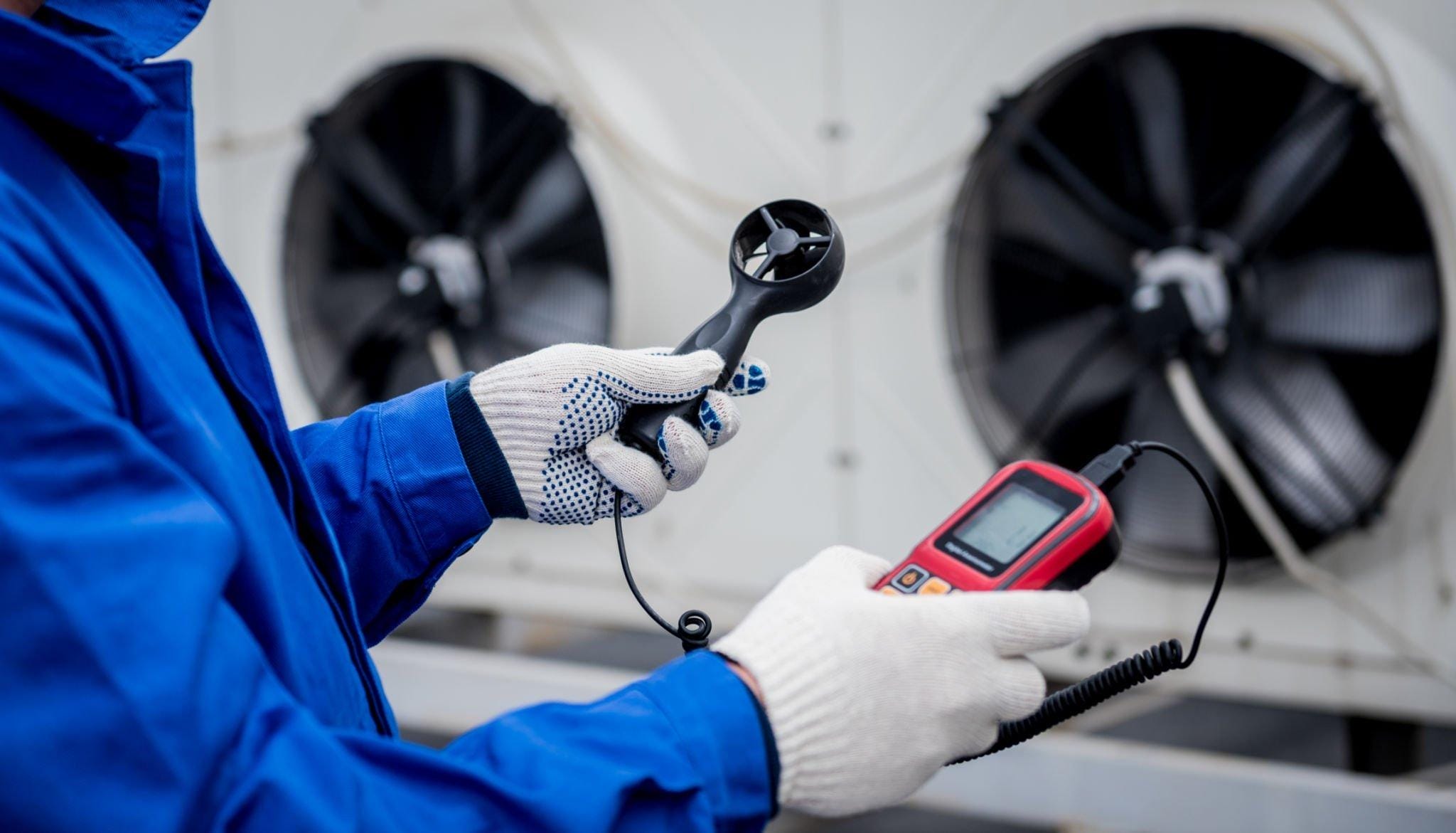
Our ventilation assessment engagements are conducted by qualified occupational hygiene and building services engineers using calibrated airflow measurement instruments — including hot wire anemometers, vane anemometers, pitot tube manometers, tracer gas analysers, particle counters, CO₂ monitors, and pressure differential meters — applying ACGIH industrial ventilation methodology, ASHRAE 62.1 outdoor air assessment procedures, ISO 14644 cleanroom verification protocols, and Factories Act and NBC 2016 compliance assessment frameworks to produce ventilation assessment findings that are instrument-evidenced, standards-referenced, and accompanied by engineering recommendations that genuinely address the ventilation deficiencies affecting worker health, product quality, occupant wellbeing, and regulatory compliance in the client facility. As a fully independent consultancy with no affiliation to HVAC equipment manufacturers, ventilation system installers, filter suppliers, or facility management companies, Elion delivers ventilation assessment findings that are technically objective, commercially unbiased, and focused entirely on providing clients with accurate, measured assessment of their ventilation system performance and the engineering improvements needed to achieve and maintain the air quality conditions that occupational health, regulatory compliance, and operational integrity demand.
Every ventilation assessment report produced by Elion is structured to serve as a technically defensible document for factory inspectorate and OSH regulatory inspections, pharmaceutical GMP regulatory assessments, hospital NABH accreditation reviews, ECBC energy compliance assessments, SPCB process emission compliance submissions, ISO 45001 certification audits, insurance engineering assessments, and management occupational health governance — giving industrial hygienists, building services engineers, facility managers, safety professionals, and compliance officers the independently verified, instrument-based ventilation performance assessment required to manage workplace and building air quality with the engineering rigour, regulatory credibility, and genuine commitment to the health of every worker and occupant that responsible ventilation management in India’s demanding industrial and commercial environments demands.