Testing
Engineering testing is the systematic application of instrument-based measurement, functional verification, performance assessment, and condition evaluation techniques to physical equipment, systems, installations, and materials — producing documented, quantified, technically defensible data that confirms whether assets are safe to operate, performing within design parameters, compliant with applicable engineering standards, and fit for their intended purpose. It is the empirical foundation of engineering practice — the discipline through which design intent is verified, operational condition is objectively characterised, regulatory compliance is demonstrated, and maintenance decisions are grounded in measured reality rather than assumption or visual impression.
In industrial and commercial facilities, testing is not a single discipline — it is the collective term for a diverse portfolio of assessment methodologies applied across every engineering system category that a facility operates. Electrical testing encompasses insulation resistance measurement, protection relay functional testing, earth resistance verification, high-voltage withstand testing, and contact resistance assessment. Mechanical testing covers pump performance measurement, vibration analysis, pressure vessel inspection, and rotating equipment condition assessment. Structural testing addresses concrete strength verification, non-destructive examination of load-bearing elements, and settlement monitoring. Fire safety testing verifies detection system functionality, suppression system performance, emergency lighting adequacy, and suppression agent integrity. Environmental testing measures air emissions, effluent quality, noise levels, and contamination concentrations. Each of these testing disciplines addresses a specific category of engineering risk — and together they constitute the comprehensive testing programme that responsible facility management requires.
The unifying characteristic across every category of engineering testing is objectivity. Testing replaces subjective assessment — visual inspection, operational experience, and informed judgement — with measured data referenced against defined acceptance criteria. A transformer that appears to be in good condition may harbour insulation breakdown that only a Megger test will reveal. A pump that appears to be operating normally may be delivering 30 percent less flow than its duty point requires — a condition that only a hydraulic performance test will quantify. A concrete column that looks structurally sound may contain reinforcement with 40 percent section loss through corrosion — detectable only through systematic non-destructive testing. Testing makes the invisible visible — and in doing so, makes informed engineering decision-making possible.
Why Engineering Testing Is Essential for Safety and Operational Integrity
The safety, operational, and regulatory case for systematic engineering testing in Indian industrial and commercial facilities is built on a fundamental engineering reality: the condition of physical assets changes continuously through use, ageing, environmental exposure, and operational stress — and those changes are largely invisible without measurement. Equipment that was commissioned to specification deteriorates over time. Insulation ages and develops breakdown paths. Mechanical components wear and lose performance efficiency. Structural materials degrade through environmental attack. Protective systems drift from their calibrated settings. Without periodic, instrument-based testing, these deterioration processes proceed undetected until they manifest as equipment failures, safety incidents, regulatory non-compliance findings, or catastrophic structural or operational events.
The financial consequences of inadequate testing programmes are substantial and well documented. Unexpected equipment failures — which systematic testing would have predicted — generate emergency maintenance costs that invariably exceed planned maintenance investment by large multiples. Undetected structural deterioration results in rehabilitation costs exponentially higher than the preventive maintenance that early detection would have enabled. Protection system failures that testing would have identified cause fault damage and arc flash incidents whose direct and indirect costs dwarf the testing investment that would have prevented them. Insurance claims arising from failures attributable to inadequate testing programmes face coverage disputes that transform operational losses into legal liabilities.
From a regulatory standpoint, testing obligations permeate India’s engineering safety statutory framework — from CEA Electrical Safety Regulations requiring periodic electrical installation testing to the Indian Boilers Act mandating pressure vessel inspection, from the Factories Act requiring machinery safety verification to the NBC 2016 incorporating structural and fire safety testing provisions. Documented testing records are the primary evidence that regulatory inspectors examine to assess compliance — and their absence or inadequacy is among the most common grounds for regulatory enforcement action across every engineering discipline.
Applicable Standards and Regulatory Framework
Engineering testing in Indian facilities is governed by a comprehensive and multi-disciplinary framework of statutory regulations and technical standards, including:
- CEA (Measures Relating to Safety and Electric Supply) Regulations, 2010 — Establishing statutory obligations for electrical installation testing, inspection, and maintenance, with documented test records required as evidence of compliance
- Electricity Act, 2003 — The overarching legislative framework establishing technical standards and testing obligations for electrical infrastructure owners and operators
- Indian Boilers Act, 1923 and Indian Boiler Regulations, 1950 — Mandating statutory inspection and pressure testing of boilers and pressure vessels with specific test methodology and frequency requirements
- Factories Act, 1948 and State Factories Rules — Requiring testing and inspection of machinery, pressure plant, electrical installations, and structural elements within manufacturing facilities
- Petroleum Act, 1934 and Petroleum Rules, 2002 — Governing testing requirements for petroleum storage tanks, pipelines, and associated equipment
- Mines Act, 1952 and Mines Rules, 1955 — Mandating testing of electrical equipment, winding plant, and structural elements in mining operations
- National Building Code (NBC) 2016 — Incorporating testing requirements for structural elements, fire protection systems, electrical installations, and building services across all building categories
- IS 732 — Indian Standard Code of Practice for Electrical Wiring Installations, specifying testing requirements for completed wiring systems
- IS 3043 — Indian Standard Code of Practice for Earthing, defining earth resistance testing methodology and acceptance criteria
- IS 456 — Indian Standard for reinforced concrete, incorporating structural testing provisions for concrete strength verification
- IS 2189 — Indian Standard for automatic fire detection and alarm systems, specifying testing requirements for installed systems
- IS 15105 — Indian Standard for automatic sprinkler systems, specifying commissioning and periodic test requirements
- IS 9137 — Indian Standard for centrifugal pump acceptance testing, providing hydraulic performance test methodology and acceptance criteria
- IS 13947 series — Indian Standards for low-voltage switchgear and controlgear, specifying type and routine test requirements
- IEC 60364-6 — International standard for verification of electrical installations, defining inspection and testing requirements for installation commissioning and periodic verification
- IEC 60255 series — Standards for protection relay testing, specifying functional performance and calibration requirements
- IEC 61672 series — Standards for sound level meter performance and calibration, applicable to noise testing programmes
- IEC 61000-4-30 — Standard for power quality measurement methodology, specifying instrument performance for power quality testing
- ISO 9906 — International standard for rotodynamic pump hydraulic performance acceptance testing
- ISO 10816 — International standard for mechanical vibration measurement and evaluation on non-rotating parts
- IEEE 399 — IEEE Recommended Practice for Industrial and Commercial Power Systems Analysis, incorporating testing as a component of power system assessment
- IEEE 1584 — Guide for Performing Arc Flash Hazard Calculations, requiring validated test data as input to incident energy calculation
- NFPA 70B — Recommended Practice for Electrical Equipment Maintenance, providing testing frequency and methodology guidance for electrical system maintenance programmes
- OISD Standards — Governing testing requirements for electrical, mechanical, fire protection, and structural systems in petroleum sector facilities
- BEE and IS 14885 — Governing energy audit testing methodology for industrial facilities under energy conservation obligations
- ISO 45001 — Occupational Health and Safety Management System standard requiring systematic verification that safety-critical systems are functioning as intended through defined testing and inspection programmes
For facilities operating across multiple regulatory jurisdictions simultaneously — such as refineries subject to both CEA regulations and OISD standards, or pharmaceutical plants subject to factory regulations and GMP testing requirements — a comprehensive testing programme must be designed to satisfy the most demanding applicable requirements across every relevant framework, making independent specialist testing consultancy the only credible approach to integrated testing compliance management.
Industries Where Engineering Testing Is Relevant
Engineering testing is relevant to every category of facility that operates physical infrastructure of any engineering significance — which encompasses the entire spectrum of Indian industrial, commercial, and institutional activity. However, the technical complexity, regulatory intensity, and consequence severity of testing requirements vary substantially across sectors. Large manufacturing plants with complex electrical distribution systems, extensive rotating equipment populations, structural assets, and fire protection infrastructure require multi-discipline testing programmes covering every engineering system category simultaneously. Refineries and petrochemical facilities combine electrical testing, pressure equipment inspection, fire protection testing, and structural assessment requirements in environments where the consequence of testing failure is fire, explosion, and toxic release. Hospitals require testing programmes that address life-safety system integrity, patient area equipotential bonding, structural condition, and fire protection performance with consequences measured directly in patient safety outcomes. Data centres demand testing that verifies power distribution reliability, cooling system performance, fire suppression adequacy, and structural integrity under the operational continuity requirements that business-critical IT infrastructure demands.
The Role of Independent Engineering Assessment
Independent engineering testing provides the calibrated measurement data, technical objectivity, and cross-discipline expertise that internal maintenance teams and equipment vendor service programmes cannot consistently deliver. Internal testing programmes are subject to resource constraints, equipment familiarity bias, and operational pressure to minimise downtime that systematically compromise testing rigour and completeness. Equipment vendors conduct testing with commercial interests in positive findings that support ongoing service contracts. Independent testing consultancies apply structured methodology, calibrated instruments, and objective engineering judgement to produce test results that accurately reflect asset condition — providing the technically defensible, regulatory-credible testing documentation that facilities require for compliance, insurance, and informed asset management.
Elion’s multi-discipline engineering teams conduct testing programmes across electrical, mechanical, structural, fire protection, environmental, and occupational health engineering domains — using calibrated instrumentation, validated test methodologies, and structured documentation practices to deliver testing results that are accurate, standards-referenced, and structured for the full range of regulatory, commercial, and operational purposes that testing documentation serves.
Articles, Case Studies, and Technical Resources on Testing
This category is a dedicated knowledge hub for electrical engineers, mechanical engineers, structural engineers, safety professionals, facility managers, maintenance professionals, and compliance officers seeking technically authoritative information on engineering testing methodology, test programme design, and testing compliance management across every discipline of industrial and commercial facility engineering.
Resources published here include:
- Real project case studies from testing engagements conducted at Indian industrial, commercial, banking, and infrastructure facilities — documenting test findings across engineering disciplines, equipment deficiencies identified, compliance gaps revealed, and corrective actions recommended and implemented
- Technical articles on testing methodology across electrical, mechanical, structural, fire protection, environmental, and occupational health engineering disciplines — covering instrument selection, test procedure design, data collection, and result interpretation
- Industry best practices for multi-discipline testing programme design, test frequency determination, testing documentation management, and integration of test findings into maintenance planning and capital investment decisions
- Regulatory compliance guides covering testing obligations under CEA regulations, Factories Act, Indian Boilers Act, NBC 2016, OISD standards, and sector-specific testing frameworks across every major regulatory jurisdiction applicable to Indian industrial and commercial facilities
- Engineering methodology explainers covering specific testing techniques across disciplines — insulation resistance testing, earth resistance measurement, protection relay testing, pump performance testing, vibration analysis, structural non-destructive testing, fire detection system testing, noise level measurement, and air quality sampling
- Asset management insights covering the role of systematic testing in condition-based maintenance programme development, asset life prediction, and capital replacement planning
- Testing programme design content covering risk-based test frequency determination, equipment criticality classification, test resource planning, and multi-discipline testing programme integration
Whether you are designing a comprehensive multi-discipline testing programme for a new facility, reviewing testing adequacy across an existing installation, preparing for a regulatory inspection that will examine testing records, investigating an equipment failure whose testing history is under scrutiny, developing condition-based maintenance programmes grounded in systematic testing data, or managing testing compliance across a multi-site facility portfolio, the technical resources in this category provide the engineering depth and regulatory grounding needed to manage engineering testing with the rigour that safety, operational reliability, and statutory compliance demand.
Professional Testing Services by Elion
Elion Technologies & Consulting Pvt. Ltd. delivers independent engineering testing services across electrical, mechanical, structural, fire protection, environmental, and occupational health engineering disciplines for industrial, commercial, banking, healthcare, and infrastructure facilities across India. Our multi-discipline engineering teams conduct comprehensive testing programmes covering electrical insulation and earth resistance testing, protection relay and switchgear testing, thermographic survey, power quality analysis, pump and rotating equipment performance testing, vibration analysis, structural non-destructive testing, pressure vessel inspection, fire detection and suppression system testing, emergency lighting assessment, noise level measurement, air quality analysis, and water quality testing — using calibrated instruments across every discipline, producing detailed test reports with measured data, standard compliance assessment, and prioritised corrective action recommendations.
To understand our testing methodology, scope of services across engineering disciplines, and how Elion’s independent multi-discipline testing expertise can support your facility’s safety compliance, equipment integrity, and operational reliability objectives, visit our dedicated service page:
Industries Where Engineering Testing Is Critical
- Manufacturing plants — automotive, engineering, textile, and process industries
- Oil, gas, and petrochemical refineries, terminals, and storage facilities
- Chemical and specialty chemical manufacturing plants
- Pharmaceutical and biotech manufacturing facilities
- Steel, cement, and primary metals processing industries
- Data centres and mission-critical IT infrastructure facilities
- Hospitals, operation theatres, and large healthcare institutions
- Banks, financial institutions, and currency handling facilities
- Hotels, resorts, and large hospitality establishments
- Power generation plants and electrical substation installations
- Warehouses and large-scale logistics and distribution centres
- Airports, metro rail systems, and transport infrastructure
- Educational institutions and large campus facilities
- Commercial high-rise buildings and large corporate campuses
- Mining and mineral processing operations
Technical Topics Covered in This Knowledge Hub
Articles and case studies in this category address the complete technical and regulatory landscape of engineering testing across all disciplines relevant to industrial and commercial facility management, including:
- Electrical Testing
- Insulation resistance testing — Megger methodology, polarisation index, dielectric absorption ratio, and IS standard benchmark comparison
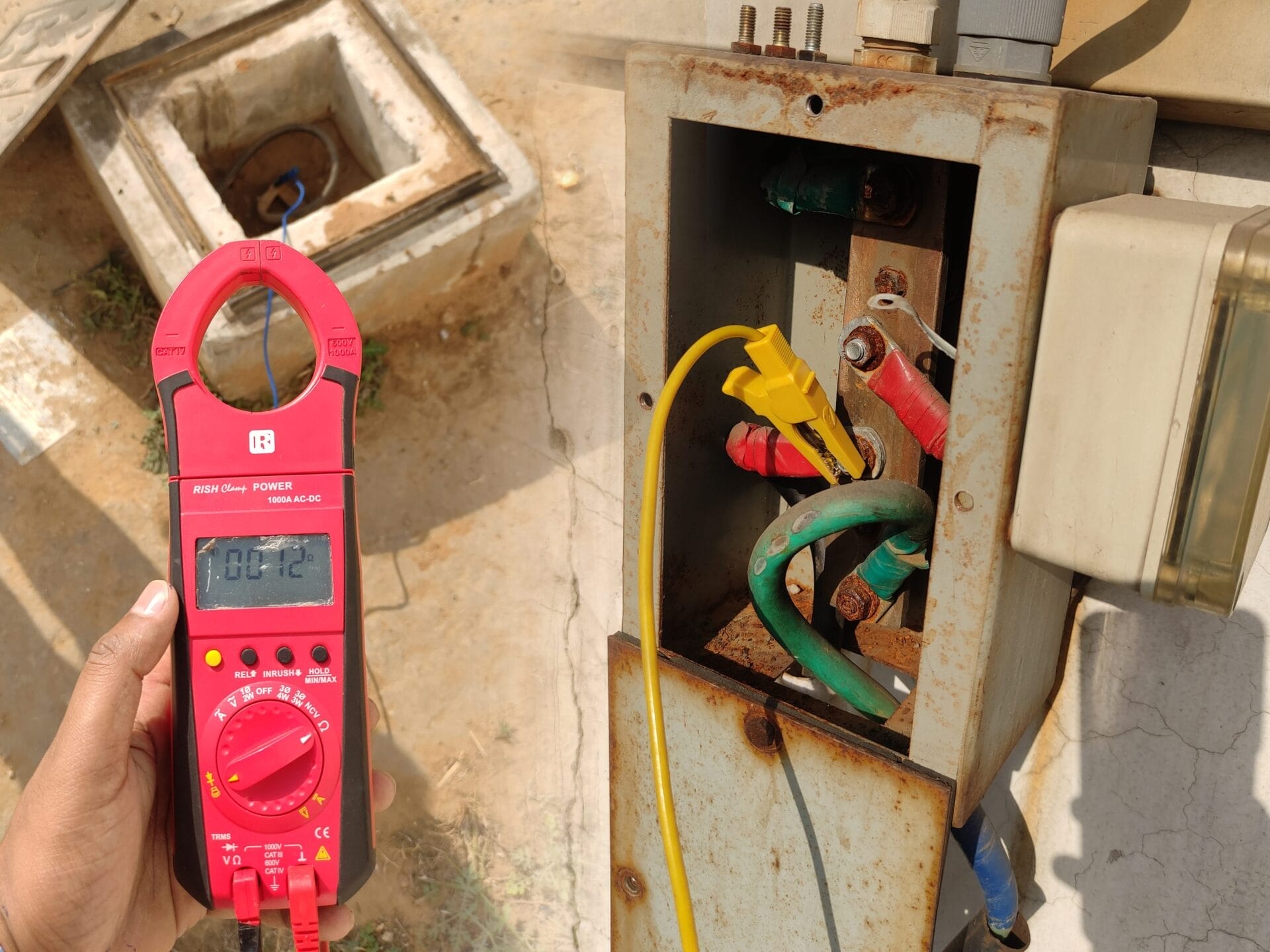
- Earth resistance measurement — fall-of-potential, clamp-on, and stakeless methods, IS 3043 compliance assessment
- Protection relay functional testing — trip characteristic verification, timing measurement, and coordination compliance
- High-voltage withstand testing — AC and DC hipot test procedures, equipment preparation, and acceptance criteria
- Contact resistance measurement — micro-ohmmeter methodology for switchgear, busbar joints, and cable terminations
- Thermographic survey — hotspot identification, severity classification, and remediation prioritisation
- Power quality analysis — harmonic distortion, voltage sag, unbalance, and flicker measurement
- Circuit breaker testing — timing, contact resistance, minimum operating voltage, and mechanical condition
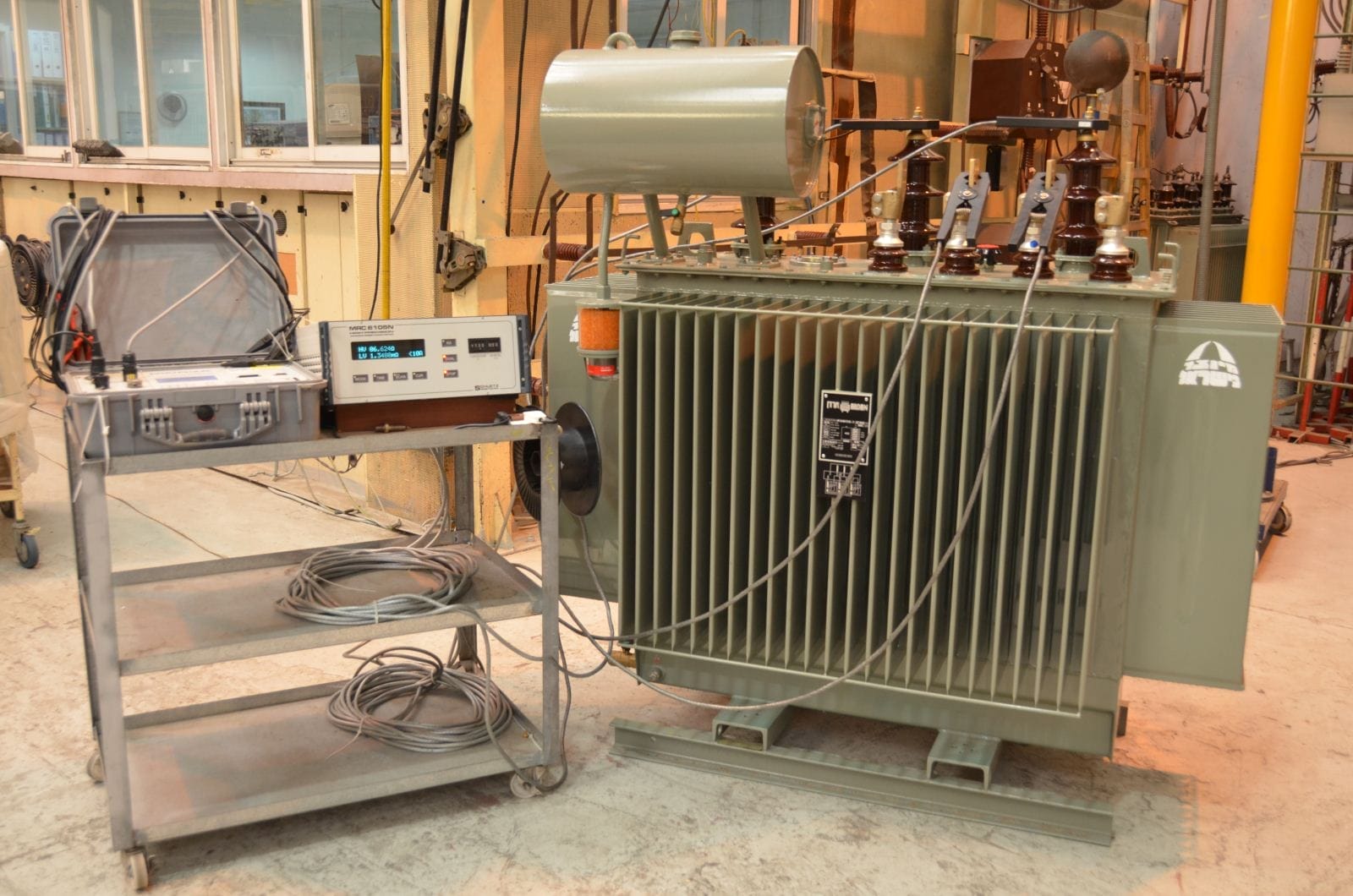
- Transformer testing — turns ratio, winding resistance, insulation, and oil dielectric strength
- Motor insulation and winding resistance testing — condition assessment and predictive maintenance application
- UPS and battery system testing — capacity verification, transfer time, and charger performance
- Generator load bank testing — performance verification and automatic transfer switch assessment
- Mechanical Testing
- Pump hydraulic performance testing — ISO 9906 methodology, efficiency calculation, and BEP comparison
- Vibration analysis — ISO 10816 severity assessment, bearing condition, and imbalance diagnosis
- Compressed air system testing — flow measurement, pressure mapping, and leakage quantification
- Boiler efficiency testing — flue gas analysis, direct and indirect method calculation
- Pressure vessel inspection — thickness measurement, non-destructive examination, and IBR compliance
- Safety valve testing — set pressure verification, lift testing, and regulatory compliance
- Rotating equipment alignment — laser alignment measurement and misalignment correction
- Noise level testing — ISO 9612 workplace exposure measurement and community boundary assessment
- Structural Testing
- Rebound hammer testing — concrete strength estimation and surface hardness assessment
- Ultrasonic pulse velocity testing — concrete quality classification and crack depth estimation
- Carbonation depth testing — residual service life assessment for reinforced concrete
- Half-cell potential survey — reinforcement corrosion probability mapping
- Core sampling — in-situ concrete strength determination and durability assessment
- Cover meter survey — reinforcement location and cover depth measurement
- Load testing — structural performance verification under defined loading conditions
- Fire Safety Testing
- Fire detection system testing — detector functionality, panel response, and IS 2189 compliance
- Sprinkler system testing — hydraulic adequacy, water supply verification, and IS 15105 compliance
- Emergency lighting testing — illuminance measurement, duration testing, and battery condition
- Fire extinguisher inspection — type adequacy, service record, and IS 2190 compliance
- Suppression agent integrity testing — gaseous system agent quantity and pressure verification
- Fire damper testing — actuator function, fusible link, and access provision assessment
- Environmental and Occupational Health Testing
- Air emission testing — stack emission monitoring and ambient air quality measurement
- Effluent quality testing — parameter analysis and discharge standard compliance
- Noise level testing — occupational exposure assessment and boundary noise compliance
- Lux level measurement — illuminance survey and IS 3646 compliance verification
- Air quality sampling — workplace exposure monitoring and occupational exposure limit comparison
- Soil and water contamination testing — site investigation and environmental baseline assessment
- Testing Programme Management
- Risk-based testing frequency determination — equipment criticality classification and regulatory minimum compliance
- Pre-commissioning testing — verification sequence for new and refurbished installations
- Periodic testing programme design — multi-discipline integration, scheduling optimisation, and resource planning
- Testing documentation management — test record formats, calibration traceability, and regulatory submission requirements
- Condition-based maintenance integration — using test data to drive predictive maintenance decisions
- Common test failures and equipment deficiencies identified during Indian facility engineering assessments
- Post-remediation testing — corrective action effectiveness verification and compliance confirmation
Elion’s Engineering Authority in Engineering Testing
Since 2010, Elion Technologies & Consulting Pvt. Ltd. has established itself as one of India’s most experienced independent engineering audit and safety compliance consultancies. With over 30,000 audits and testing engagements completed across manufacturing, banking, hospitality, refinery, pharmaceutical, healthcare, and infrastructure sectors spanning every region of India, Elion has conducted engineering testing across the complete spectrum of Indian industrial and commercial facility types — from small commercial branch offices requiring basic electrical safety testing to large, multi-discipline industrial complexes requiring simultaneous testing across electrical systems, rotating equipment, pressure vessels, structural elements, fire protection infrastructure, and environmental compliance parameters. This extraordinary breadth of cross-industry, cross-discipline testing experience is the foundation of the technical authority, methodological consistency, and engineering judgement that Elion brings to every testing engagement.
Our testing teams are genuinely multi-discipline — comprising qualified electrical engineers, mechanical engineers, structural engineers, fire safety specialists, environmental engineers, and occupational health professionals, each deploying calibrated instrumentation within their specialist discipline and operating within a unified testing management framework that ensures findings across all disciplines are consistently documented, cross-referenced where relevant, and presented in formats that facility management can act upon with confidence. Using a comprehensive suite of calibrated test instrumentation — insulation resistance testers, earth resistance meters, protection relay test sets, thermal imaging cameras, power quality analysers, contact resistance micro-ohmmeters, transformer test instruments, pump performance measurement equipment, vibration analysers, ultrasonic thickness gauges, rebound hammers, carbonation test kits, lux meters, sound level meters, air quality samplers, and fire system test equipment — Elion’s engineers conduct testing that is instrument-based, methodology-structured, and technically defensible across every discipline and every finding.
As a fully independent consultancy with no affiliation to equipment manufacturers, maintenance contractors, testing equipment suppliers, calibration laboratories, or facility management organisations of any kind, Elion delivers engineering testing results that are technically objective, commercially unbiased, and focused entirely on producing accurate, measured assessments of asset condition and system performance. Every testing report produced by Elion is structured to serve as a technically defensible document for CEA regulatory inspections, IBR statutory compliance submissions, factory inspectorate reviews, insurance engineering assessments, condition-based maintenance programme development, capital investment decision-making, and management engineering governance — giving electrical engineers, mechanical engineers, structural engineers, facility managers, safety professionals, and senior executives the independently conducted, instrument-based, multi-discipline engineering testing data required to manage every category of physical asset with the technical rigour, regulatory credibility, and operational confidence that India’s demanding industrial and commercial engineering environment demands.