
Earth Pit Testing
Earth pit testing is a critical electrical safety procedure that measures and verifies the resistance of earthing electrodes — commonly referred to as earth pits — installed at industrial, commercial, and infrastructure facilities. It confirms that the grounding system is capable of safely dissipating fault currents and lightning strike energy into the ground, maintaining electrical potential differences within safe limits, and protecting both personnel and equipment from the consequences of electrical faults.
An earthing system is the silent foundation of every electrical installation’s safety architecture. It provides the low-impedance return path that enables protective devices — circuit breakers, earth leakage relays, and residual current devices — to operate correctly during fault conditions. It limits touch and step voltages at equipment enclosures and structures to levels that human beings can survive. It provides the reference potential against which electrical systems operate stably. And it dissipates the enormous transient energy of direct and indirect lightning strikes before that energy can damage equipment or injure personnel.
When an earthing system is inadequately designed, improperly installed, or has deteriorated over time without detection, none of these protective functions can be guaranteed. The consequences range from nuisance tripping and equipment malfunction to fatal electric shock, arc flash incidents, and catastrophic equipment damage. Earth pit testing is the engineering discipline that confirms the earthing system is performing as required — and identifies deterioration or deficiency before it results in failure.
Why Earth Pit Testing Is Essential for Electrical Safety
Earthing systems are subject to a range of deterioration mechanisms that are invisible without systematic testing. Corrosion of earthing electrodes and conductor connections progressively increases earth resistance over time, particularly in chemically aggressive soils or coastal environments. Soil resistivity varies seasonally with moisture content, meaning an earth pit that measured within acceptable limits during the monsoon season may exceed safe resistance thresholds during dry summer months. Mechanical damage to buried conductors, loose or corroded bonding connections, and inadequate electrode depth all contribute to earthing system degradation that cannot be identified through visual inspection alone.
A single earth pit with elevated resistance in a ring earthing network can significantly compromise the fault current dissipation capability of the entire system. In lightning protection earthing applications, an earth termination network with inadequate resistance creates the conditions for a lightning strike to cause equipment damage or personnel injury rather than being safely conducted to ground.
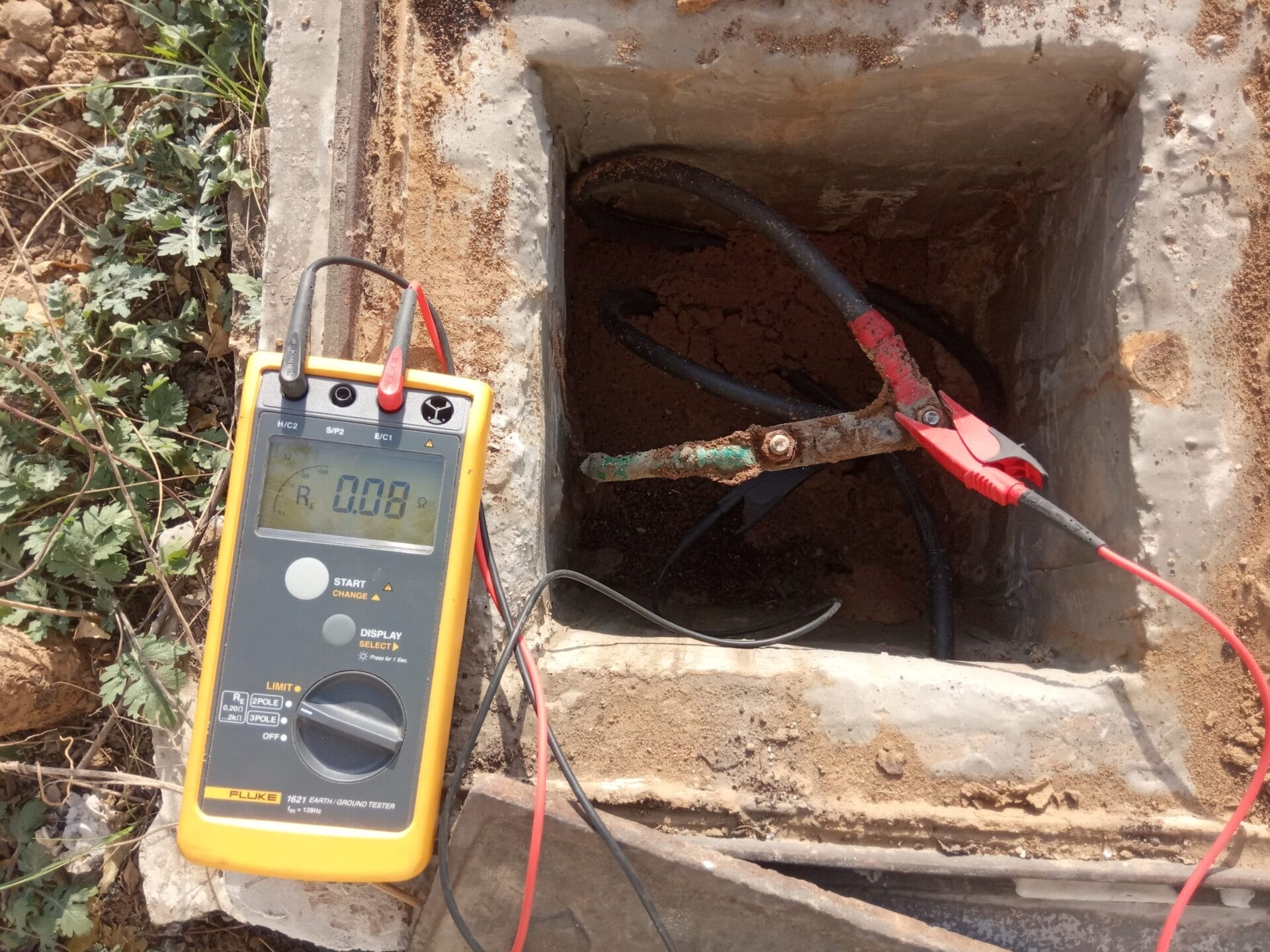
Regular, instrument-based earth pit testing — using standardised fall-of-potential or clamp-on testing methods — provides the quantified resistance data needed to verify earthing system adequacy, identify deteriorating electrodes, and demonstrate compliance with applicable standards and statutory requirements.
Applicable Standards and Regulatory Framework
Earth pit testing and earthing system design in India are governed by a well-defined framework of technical standards and statutory regulations, including:
- IS 3043 — Indian Standard Code of Practice for Earthing, the primary technical reference for earthing system design, installation, and testing in India
- IS 14977 — Guidelines for earthing of low-voltage systems
- CEA (Electrical Safety) Regulations, 2010 — Mandating adequate earthing of electrical installations and periodic verification of earthing system integrity
- IS 2309 — Indian Standard for protection of buildings and allied structures against lightning, incorporating earthing requirements for lightning protection systems
- IEC 60364-5-54 — International standard for earthing arrangements, protective conductors, and protective bonding conductors
- IEC 62305 — International standard for lightning protection, specifying earth termination network resistance requirements
- NFPA 780 — Standard for Installation of Lightning Protection Systems, referenced for best practice in lightning earthing design
- Factories Act, 1948 — Requiring safe electrical installations including adequate earthing of machinery and equipment
- National Building Code (NBC) 2016 — Incorporating earthing requirements for electrical installations in buildings
- OISD (Oil Industry Safety Directorate) Standards — Specifying earthing and bonding requirements for petroleum storage and processing facilities
For most industrial facilities, the CEA Electrical Safety Regulations create a statutory obligation to maintain and periodically verify earthing system integrity — making documented earth pit test records an essential element of electrical safety compliance.
Industries Where Earth Pit Testing Is Relevant
Earthing systems are installed in every category of facility that uses electricity — which is to say, every facility. However, the consequences of earthing system failure, and the regulatory obligations for earthing system verification, are particularly acute in certain sectors. Manufacturing plants operating heavy electrical machinery depend on robust earthing for both personnel protection and equipment fault clearance. Refineries, chemical plants, and petroleum storage facilities require earthing and bonding systems to prevent static charge accumulation that could ignite flammable atmospheres. Data centres and IT facilities require low-resistance earthing to protect sensitive electronic equipment from transient overvoltages. Hospitals require equipotential bonding and earthing verification to protect patients in clinical environments from microshock hazards. Tall structures, communication towers, and outdoor infrastructure installations depend on low-resistance lightning protection earthing to safely manage direct strike events.
The Role of Independent Engineering Assessment
Earth pit testing conducted by independent engineers provides facility operators with objective, instrument-based resistance measurements that are free from the operational pressures and confirmation bias that can affect internal testing programmes. Elion’s electrical engineers conduct earth pit testing using calibrated earth resistance testers applying both fall-of-potential and clamp-on measurement methods as appropriate to installation type — delivering test records that are systematic, traceable, and structured for regulatory compliance and maintenance programme use.
Articles, Case Studies, and Technical Resources on Earth Pit Testing
This category is a dedicated knowledge hub for electrical engineers, facility managers, safety officers, maintenance professionals, and compliance managers seeking technically reliable information on earthing system testing, earth resistance measurement, and grounding system compliance management.
Resources published here include:
- Real project case studies from earth pit testing engagements conducted at Indian industrial, commercial, and infrastructure facilities, documenting resistance measurements recorded, deficiencies identified, and corrective actions recommended
- Technical articles on earth resistance measurement methodologies, instrumentation selection, and interpretation of test results against IS 3043 and IEC standard requirements
- Industry best practices for earth pit testing programme design, testing frequency determination, and seasonal resistance variation management
- Safety guidelines for working on and around earthing systems, including safe isolation procedures, testing near live equipment, and lightning protection system earthing testing protocols
- Engineering methodology explainers covering specific testing components — fall-of-potential three-terminal testing, selective clamp-on testing, stakeless testing methods, and soil resistivity measurement
- Compliance references linking earth pit testing requirements to IS 3043, CEA Electrical Safety Regulations, IEC 62305, and applicable statutory frameworks
- Risk assessment insights covering the electrical safety and equipment protection consequences of inadequate earthing system maintenance and testing
Whether you are establishing a periodic earth pit testing programme, investigating an electrical fault incident, preparing for a statutory electrical safety inspection, or verifying the earthing system of a newly commissioned installation, the technical resources in this category provide the engineering and regulatory depth needed to manage grounding infrastructure with confidence.
Professional Earth Pit Testing Services by Elion
Elion Technologies & Consulting Pvt. Ltd. delivers independent earth pit testing services for industrial, commercial, healthcare, and infrastructure facilities across India. Our electrical engineering teams conduct comprehensive earthing system assessments covering individual earth pit resistance measurement, earthing network continuity verification, equipotential bonding checks, lightning protection earth termination testing, and soil resistivity measurement — producing detailed test reports with resistance values, standard compliance assessment, and prioritised recommendations for remediation where deficiencies are identified.
To understand our testing methodology, scope of assessment, and how independent earth pit testing can support your facility’s electrical safety compliance and earthing system maintenance programme, visit our dedicated service page:
👉 Earth Pit Testing Services by Elion
Industries Where Earth Pit Testing Is Critical
- Manufacturing plants and heavy industrial facilities with large electrical loads
- Oil, gas, and petrochemical refineries, terminals, and storage facilities
- Data centres and mission-critical IT infrastructure facilities
- Hospitals, operation theatres, and healthcare institutions
- Chemical processing and specialty manufacturing plants
- Power generation plants and electrical substation installations
- Telecommunications towers, mast structures, and broadcast facilities
- Banks, financial institutions, and data processing centres
- Warehouses and large-scale logistics and distribution facilities
- Hotels, hospitality facilities, and large commercial buildings
- Educational institutions and large campus infrastructure
- Airports, metro rail systems, and transport infrastructure
- Steel, cement, and primary metals processing facilities
- Pharmaceutical manufacturing and research facilities
- Construction sites and infrastructure development projects
Technical Topics Covered in This Knowledge Hub
Articles and case studies in this category address the complete technical and compliance landscape of earth pit testing, earthing system assessment, and grounding infrastructure management, including:
- Fall-of-potential method — three-terminal earth resistance measurement procedure and electrode spacing calculation
- Clamp-on earth resistance testing — selective measurement methodology for ring and mesh earthing networks
- Stakeless earth resistance testing — application in paved and congested environments
- Soil resistivity measurement — Wenner four-pin method and its application in earthing design verification
- IS 3043 earth resistance requirements — acceptable limits by installation type and voltage level
- Seasonal variation management — testing frequency to account for dry season resistance increases
- Lightning protection earth termination resistance testing — IEC 62305 and IS 2309 compliance verification
- Equipotential bonding continuity testing — methodology and acceptance criteria
- Corrosion assessment of buried earthing electrodes and conductor connections
- Chemical earthing electrode performance assessment and maintenance requirements
- Earthing system design adequacy review — electrode type, depth, spacing, and network configuration
- Earth pit inspection — visual assessment of above-ground connections, pit condition, and conductor integrity
- Earthing in hazardous areas — static bonding and earthing verification for flammable atmosphere installations
- Hospital earthing and equipotential bonding verification — patient safety zone requirements
- Data centre earthing and grounding — signal reference grid and equipment bonding assessment
- Lightning protection system earthing integration — coordination between power system and lightning protection earthing
- Common earth pit deficiencies and grounding system failures identified during field testing
- Documentation and test record formats for CEA regulatory compliance submissions
- Earth pit testing as part of periodic electrical safety audit programmes
- Remediation options for high-resistance earth pits — electrode augmentation, soil treatment, and network reconfiguration
Elion’s Engineering Authority in Earth Pit Testing
Since 2010, Elion Technologies & Consulting Pvt. Ltd. has established itself as one of India’s most experienced independent engineering audit and electrical safety compliance consultancies. With over 30,000 audits completed across manufacturing, banking, hospitality, refinery, healthcare, and infrastructure sectors, Elion brings a depth of cross-industry earthing system assessment experience that distinguishes its testing practice from routine maintenance checks and OEM service visits.
Our earth pit testing engagements are conducted by qualified electrical engineers using calibrated earth resistance measurement instruments — applying fall-of-potential, clamp-on, and stakeless testing methodologies as appropriate to installation type, network configuration, and site conditions. All testing is performed in accordance with IS 3043, CEA Electrical Safety Regulations, and applicable IEC and lightning protection standards. As a fully independent consultancy with no affiliation to earthing material suppliers, electrical contractors, or maintenance service providers, Elion delivers earth pit testing results that are technically objective, commercially unbiased, and focused entirely on the safety and compliance outcomes of the client facility.
Every earth pit test report produced by Elion is structured to serve as a technically defensible document for CEA regulatory inspections, statutory electrical safety certifications, insurance assessments, and internal safety management records — giving electrical engineers, facility managers, and safety professionals the quantified, instrument-based earthing system data required to manage grounding infrastructure with the rigour that personnel protection and equipment safety demand.