
Elion Technologies
And Consulting Private Limited
Elion Technologies
And Consulting Private Limited

Elion Technologies
And Consulting Private Limited
And Consulting Private Limited
And Consulting Private Limited
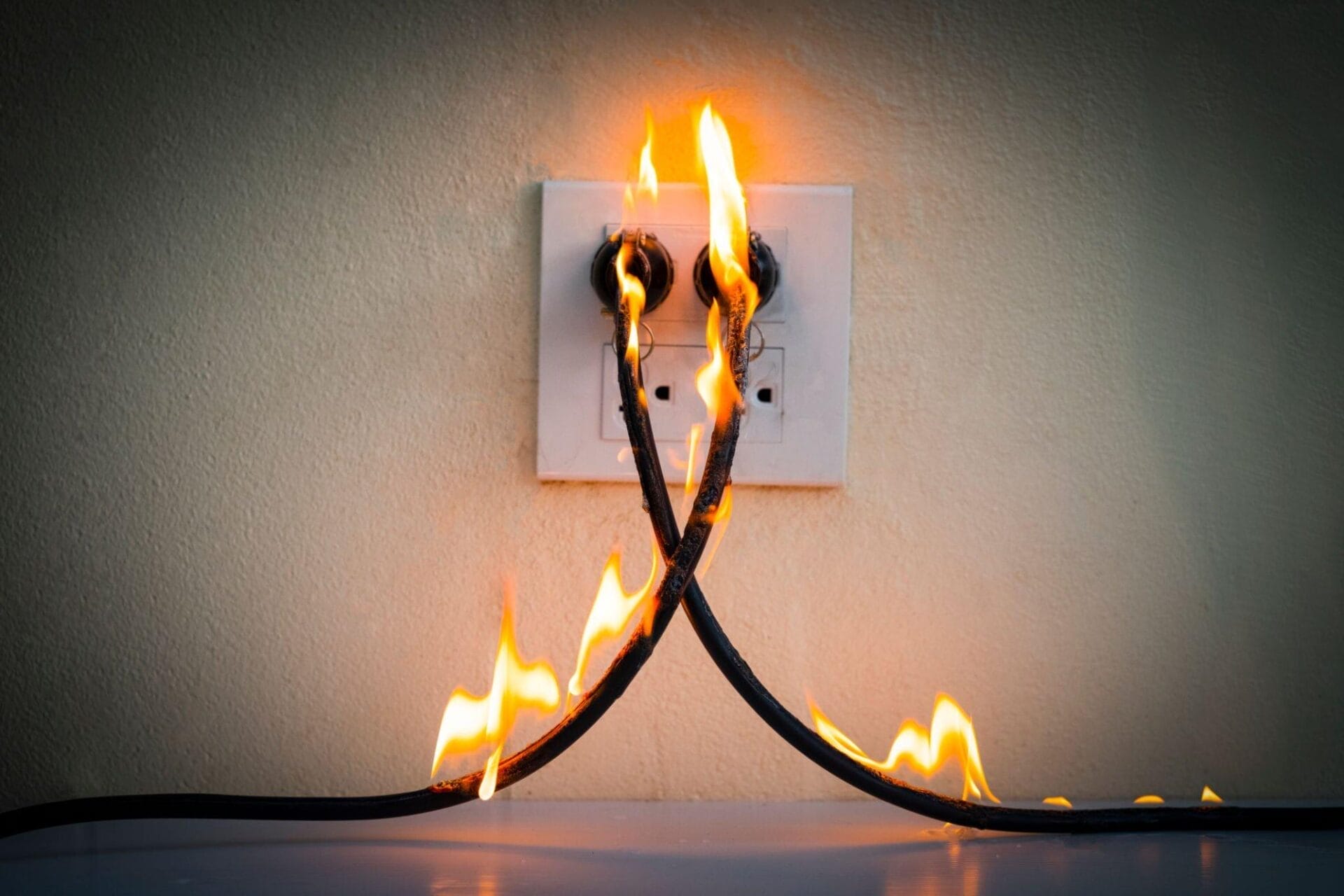
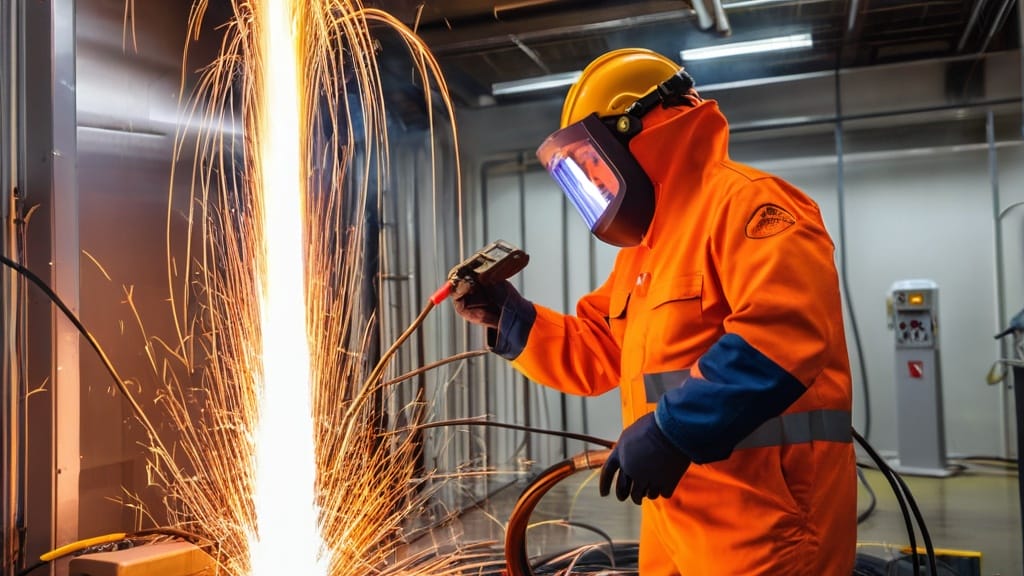
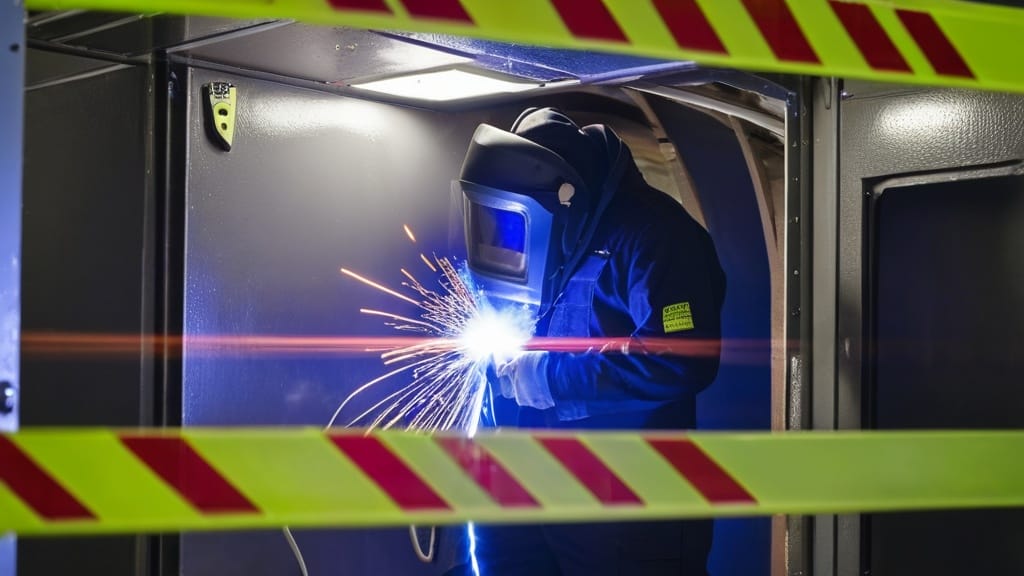
Arc flash is one of the most severe electrical hazards present in industrial and commercial power systems. It is a high-energy electrical discharge that occurs when current flows through an unintended air path between energised conductors or between a conductor and ground. The resulting explosion releases intense thermal energy, a pressure wave, molten metal fragments, and blinding ultraviolet and infrared radiation — all within milliseconds and with consequences that can be fatal.
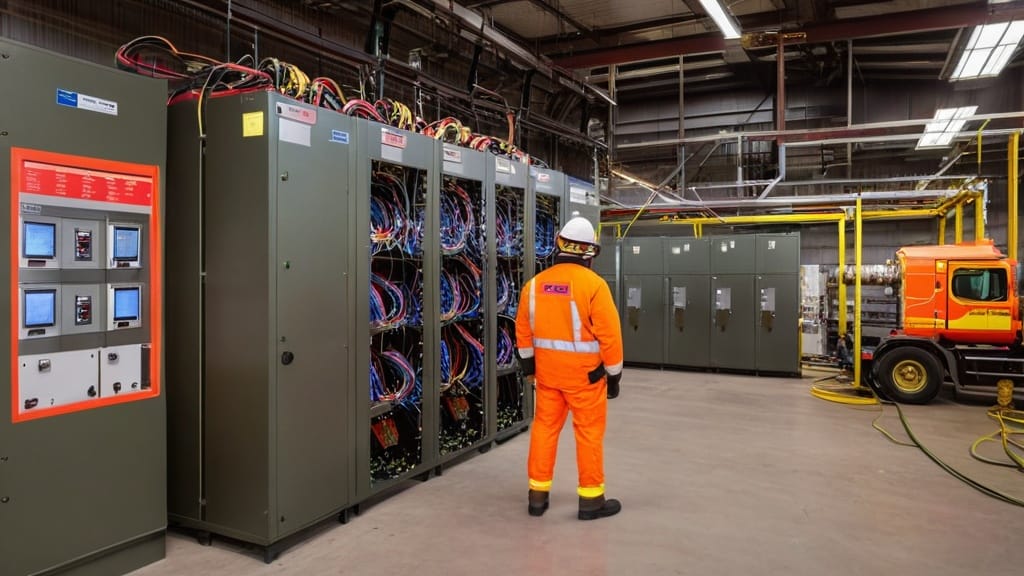
Unlike many electrical hazards that are latent or gradual in their effect, an arc flash event is instantaneous and catastrophic. Incident energy levels at the point of arc can reach tens of calories per square centimetre, far exceeding the threshold at which human tissue sustains irreversible burns. Workers operating in proximity to energised switchgear, distribution panels, motor control centres, and busbar systems are potentially exposed to arc flash hazards during routine switching operations, maintenance activities, and fault conditions.
Understanding, quantifying, and controlling arc flash hazard is not a discretionary safety initiative — it is a fundamental engineering obligation for any facility operating medium or low-voltage electrical distribution systems.
Why Arc Flash Hazard Assessment Is Essential
The danger of arc flash is compounded by the fact that it cannot be observed or measured during normal operation. It is a potential energy condition — the hazard exists whenever equipment is energised, and it manifests only when an arcing fault is initiated. Without a formal arc flash study, facility operators and electrical workers have no quantified basis for understanding the level of hazard present, selecting appropriate personal protective equipment, establishing safe working boundaries, or designing protection systems that limit incident energy to survivable levels.
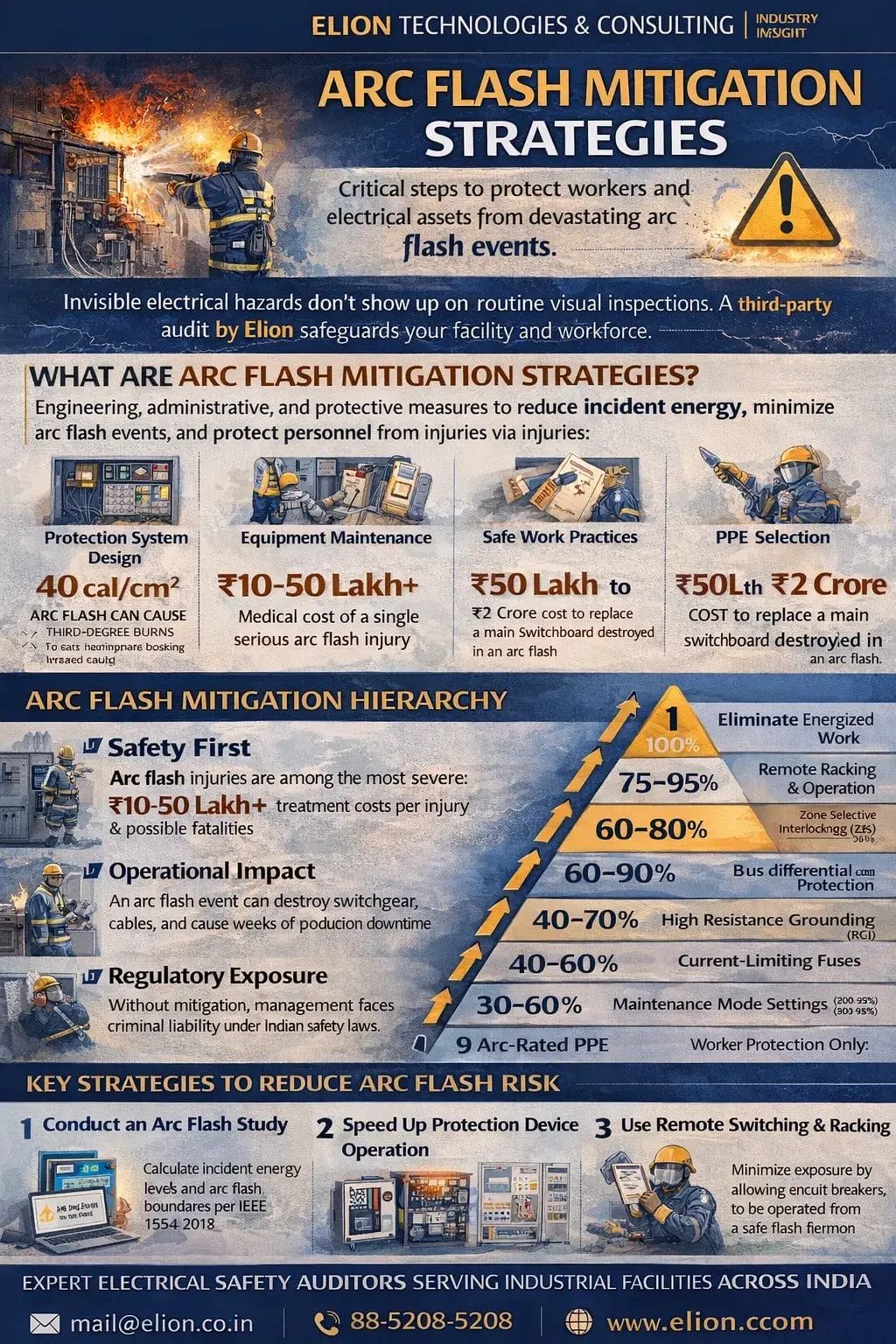
A professionally conducted arc flash study models the electrical distribution system, calculates incident energy at each point of work, determines arc flash protection boundaries, and recommends engineering controls and protection coordination improvements that reduce hazard severity. It forms the technical foundation for an effective electrical safety programme.
Applicable Standards and Regulatory Framework
Arc flash hazard assessment and electrical safety management are governed by internationally recognised and domestically applicable standards and regulations, including:
For facilities operating under international safety management frameworks — ISO 45001, OHSAS 18001, or corporate HSE standards — arc flash hazard assessment is typically a mandatory element of electrical safety compliance.
Industries Where Arc Flash Assessment Is Relevant
Arc flash hazards are present wherever medium or low-voltage electrical distribution equipment is installed and operated. This spans manufacturing plants with large motor loads and complex distribution systems, oil and gas facilities where arc flash risk intersects with explosive atmosphere hazards, data centres with high-density power distribution infrastructure, hospitals where electrical reliability and worker safety are simultaneously critical, commercial high-rises and infrastructure facilities with substantial switchgear installations, and steel, cement, and heavy process industries operating at medium voltage levels.
The Role of Independent Engineering Assessment
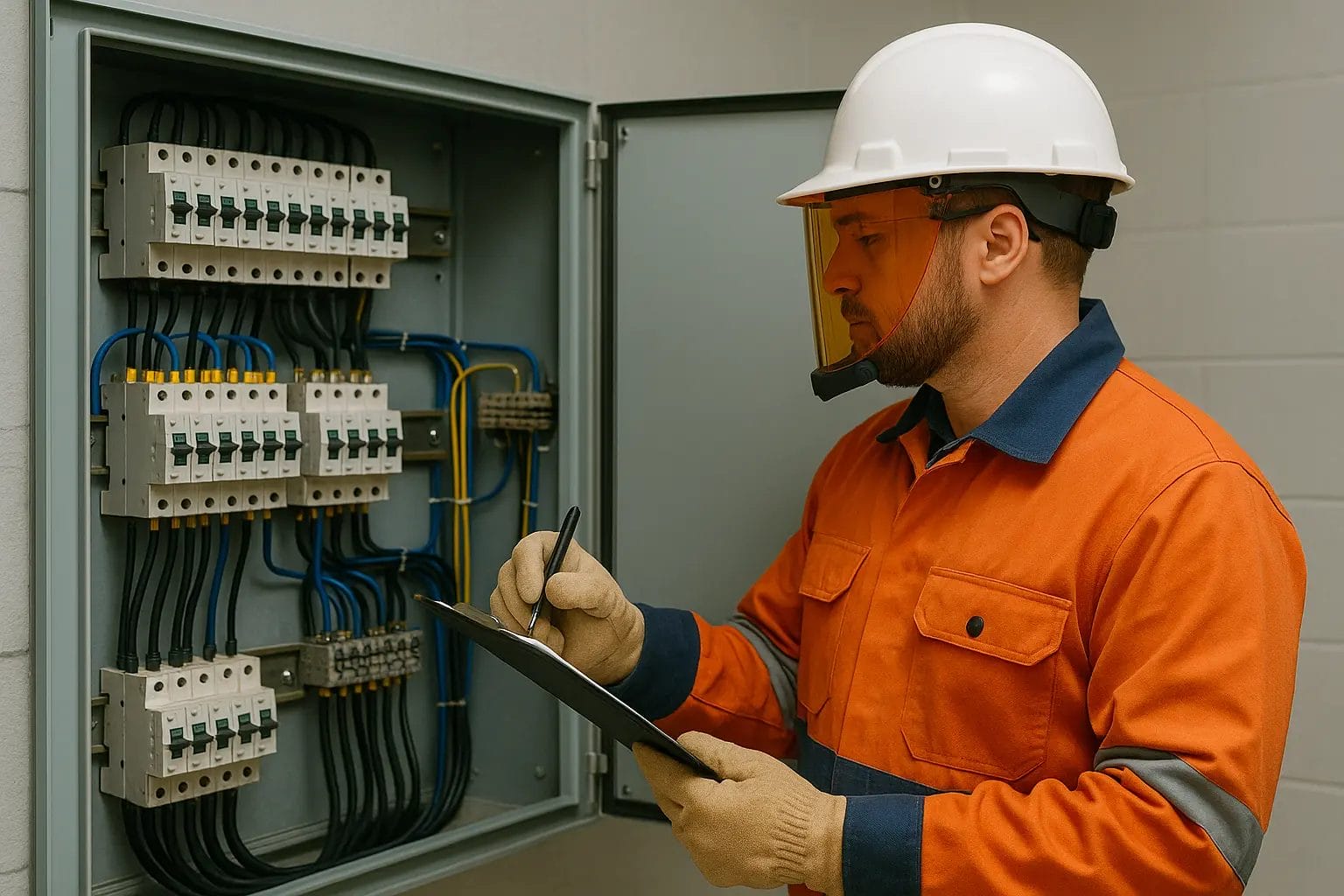
An arc flash study requires detailed electrical system modelling, short-circuit analysis, protection coordination review, and incident energy calculations performed by qualified electrical engineers — work that demands both engineering expertise and independence from the operational pressures that can compromise internal assessments. Elion’s electrical engineers conduct arc flash studies as rigorous, instrument-informed engineering assessments, producing labelling data, PPE category recommendations, and protection system improvement findings that are actionable, standards-aligned, and defensible.
This category is a dedicated knowledge hub for electrical engineers, safety professionals, plant managers, HSE officers, and facility operators seeking technically authoritative information on arc flash hazard analysis, electrical safety management, and protection system design.
Resources published here include:
Whether you are initiating an arc flash study for the first time, reviewing existing study findings, updating a programme following system modifications, or building an electrical safety management system, the technical resources in this category provide the engineering rigour needed to manage arc flash hazard responsibly.
Elion Technologies & Consulting Pvt. Ltd. provides independent arc flash hazard assessment and electrical safety services for industrial, commercial, and infrastructure facilities across India. Our qualified electrical engineers conduct comprehensive arc flash studies encompassing electrical system data collection, short-circuit analysis, protection coordination review, IEEE 1584-based incident energy calculations, arc flash boundary determination, PPE category recommendations, and equipment labelling — delivering technical reports that meet NFPA 70E and IEEE 1584 requirements.
To learn more about our arc flash study methodology, scope of assessment, and how Elion can support your facility’s electrical safety compliance programme, visit our dedicated service page:
Articles and case studies in this category address the complete technical landscape of arc flash hazard analysis and electrical safety management, including:
Since 2010, Elion Technologies & Consulting Pvt. Ltd. has been at the forefront of independent electrical safety assessment in India, delivering arc flash studies and electrical hazard evaluations across some of the country’s most complex and high-risk industrial and commercial electrical installations. With over 30,000 audits completed spanning manufacturing, refinery, banking, hospitality, healthcare, and infrastructure sectors, Elion brings a depth of field experience in electrical system assessment that is unmatched among independent safety consultancies operating across India.
Our arc flash engagements are conducted by qualified electrical engineers trained in IEEE 1584 methodology and NFPA 70E requirements, using structured data collection processes, validated calculation tools, and rigorous engineering review protocols. As a fully independent consultancy with no affiliation to switchgear manufacturers, protection relay suppliers, or electrical contractors, Elion delivers arc flash assessments that are technically objective, commercially unbiased, and focused entirely on the safety and compliance outcomes of the client facility.
Every arc flash study report produced by Elion is structured to serve as a technically defensible document for regulatory inspections, HSE audits, insurance assessments, and management decision-making — equipping electrical engineers, safety managers, and facility operators with the quantified hazard data and engineering recommendations required to protect workers, assets, and operational continuity from one of the most serious hazards in electrical power systems.