
India's Independent Engineering Audit Authority | Since 2010
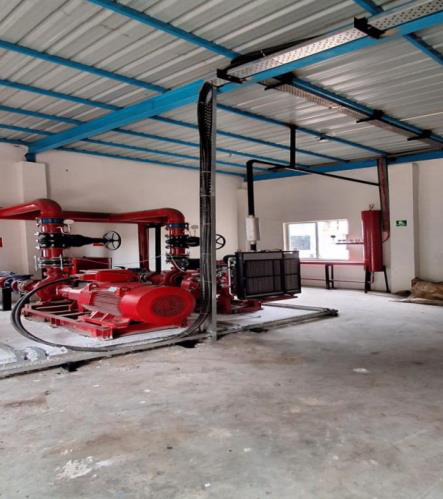
Fire Pump Performance Testing at a Pump Manufacturing Facility in Dewas – Case Study
Annual fire pump testing measures actual flow and pressure at churn, rated and peak load to confirm each pump can deliver emergency water.
NCRB’s 2022 report recorded 7,566 fire accidents in India, and NCRB data shows Madhya Pradesh, Maharashtra and Gujarat accounted for over half of all fire accidents from 2014 to 2022. NCRB also logged 742 factory and machine accidents in 2024.
On 9 October 2024, Elion tested the electric, diesel and jockey fire pumps at a Dewas pump plant with an ultrasonic flow meter. The 279 m³/hr electric pump delivered 266.14 m³/hr and the 273 m³/hr diesel pump delivered 299.87 m³/hr, each running 10 minutes. For illustration, a ₹2 crore finished-goods store can be lost within hours if hydrants run short of water.
Nameplate data shows what a pump was built to do; site measurement shows what it delivers today. NFPA 25 asks for annual flow testing at no flow, 100% and 150% of rated capacity, compared with the original acceptance curve. NFPA 20, NFPA 14, IS 15301 and NBC 2016 Part 4 set the design basis. Below are the readings, the method and the next steps for facility managers. Each reading comes from the Elion test report.
Client Info
- Kirloskar Brothers Limited
- Dewas, Madhya Pradesh
- Pump & Engineering Equipment Manufacturing
- Fire Pump Performance Testing
🔥 Quick Answer: Annual Fire Pump Testing
Annual fire pump testing runs each pump at churn, 100% and 150% of rated flow and records flow, pressure, current and run time against the pump curve (NFPA 25). In this Dewas test, an ultrasonic flow meter recorded 266.14 m³/hr (electric), 299.87 m³/hr (diesel) and 60.234 m³/hr (jockey), each over a 10-minute run.
30,000+
Audits Completed
Since 2010
Independent Practice
Pan-India
National Coverage
10+ Disciplines
Multi-disciplinary Audits
NABL-Calibrated
Precision Instruments
Scope
Scope of Testing
The assignment included performance evaluation of:
Main electric fire pump
Diesel engine-driven fire pump
Jockey pump
Pump operational condition
Fire-water flow
Hydrant-system performance
Noise and vibration
Pump running duration
Testing Methodology
Elion used an ultrasonic flow meter to measure the actual water flow through the fire-pump system. The tests were performed using the recirculation method, with the flow controlled through the discharge arrangement. Where applicable, the following parameters were recorded:
Actual water flow was measured using an ultrasonic flow meter. Testing was performed using a recirculation arrangement, with the quantity of water controlled through the discharge valve.
This enabled Elion to determine the actual flow being delivered by each tested pump rather than relying solely on pump nameplate data. The applicable technical references included:
- NFPA 20
- IS 15301
- NFPA 14
- National Building Code of India 2016, Part 4 – Fire & Life Safety
The report also references NFPA 25 Fire Pump Testing requirements in relation to annual pump flow testing.
Main Electric Fire Pump Testing
The main electric fire pump had the following nameplate characteristics:
Parameter | Value |
Rated Discharge | 279 m³/hr |
Total Head | 80 m |
Motor Rating | 110 kW |
RPM | 2975 |
Motor Current Rating | 180 A |
The pump was tested using the ultrasonic flow measurement method.
At full-capacity testing, the actual recorded flow was:
266.14 m³/hr The pump operated continuously for 10 minutes without disruption and was recorded as having passed the annual test.
Diesel Fire Pump Testing
The diesel-driven fire pump had:
Parameter | Value |
Rated Discharge | 273 m³/hr |
Total Head | 88 m |
Pump RPM | 2900 |
Engine RPM | 2300 |
Actual flow was measured using an ultrasonic flow meter through the recirculation testing arrangement.
The maximum flow recorded during testing was:
299.87 m³/hr the pump operated continuously for 10 minutes and passed the annual fire-pump performance test. That means the actual measured flow exceeded the stated rated discharge of 273 m³/hr.
Jockey Pump Testing
The jockey pump was also evaluated. Its recorded characteristics included:
Parameter | Value |
Total Head | 88 m |
Motor Rating | 11 kW |
RPM | 2900 |
Motor Current | 19 A |
The actual measured flow reached:
60.234 m³/hr and the pump operated continuously for 10 minutes. The report recorded the jockey pump as having passed the annual test.
Summary of Fire Pump Test Results
Pump | Rated Flow | Maximum Recorded Flow | Outcome |
Main Electric Fire Pump | 279 m³/hr | 266.14 m³/hr | Passed |
Diesel Fire Pump | 273 m³/hr | 299.87 m³/hr | Passed |
Jockey Pump | Not stated in report | 60.234 m³/hr | Passed |
All tested pumps were able to run continuously for the required test duration.
The overall report concluded that the pumps were operating within the required performance parameters and that no significant issues were identified during testing.
Key Outcome
The testing demonstrated successful operation of the main electric, diesel and jockey pumps. The diesel pump delivered 299.87 m³/hr against its stated rated discharge of 273 m³/hr, while the main electric pump delivered 266.14 m³/hr during the evaluated full-capacity test.
All tested pumps successfully completed the prescribed operating duration and were recorded as passing the annual test.
Why Fire Pump Performance Testing Matters in Manufacturing Facilities
Manufacturing plants rely on fire-water systems to protect production machinery, electrical installations, stores, utility areas and occupied buildings. A fire pump starting successfully does not necessarily confirm that it can deliver the required water flow under operating conditions. Performance testing helps verify:
- Actual flow delivery
- Pump running capability
- Hydrant-system readiness
- Diesel pump performance
- Electric pump performance
- Mechanical condition
- Abnormal vibration or noise
- Hydraulic performance under load
Periodic performance testing therefore provides facility management with measured evidence of the actual condition of the fire-pump system.
About Us
About Elion Technologies & Consulting
Elion Technologies & Consulting Pvt. Ltd. provides independent fire-pump performance testing for manufacturing plants, power plants, commercial facilities, warehouses, hotels and other industrial facilities across India.
Annual fire pump testing
Fire pump performance testing
Fire pump flow testing
Diesel fire pump testing
Electric fire pump testing
Jockey pump testing
Hydrant pump testing
Sprinkler pump testing
Fire-water system assessment
Fire safety audit
Need Fire Pump Testing in Madhya Pradesh?
Elion undertakes third-party fire pump testing in Dewas, Indore, Bhopal and other industrial locations across Madhya Pradesh and India. Testing can include actual flow measurement using suitable flow measurement instruments, pump operating-condition assessment and detailed technical reporting.
Contact Elion Technologies & Consulting Pvt. Ltd. for fire pump performance testing requirements.
FAQ
Q1. How much does annual fire pump testing cost in India?
Cost depends on the number of pumps (electric, diesel and jockey), pump capacity, site location, instrument mobilisation and report scope, so providers quote per site rather than per pump. The return is avoiding an undetected shortfall: a pump that starts but cannot deliver rated flow gives no protection once a fire reaches the hydrant or sprinkler system. Request a site-specific quote from Elion.
Q2. How is a fire pump flow test performed?
The pump runs on a recirculation arrangement while the discharge valve is adjusted to set flow, and an ultrasonic flow meter, pressure gauges and an ammeter record readings. NFPA 25 specifies readings at churn (no flow), rated flow and 150% of rated flow, which are compared against the pump curve. In the Dewas test, each pump ran continuously for 10 minutes.
Q3. How often should fire pumps be tested?
NFPA 25 calls for a full flow test every year, plus shorter no-flow run tests at weekly or monthly intervals depending on pump type and the edition followed. NBC 2016 Part 4 and state fire service rules expect fire pumps to be kept in working order, and insurers often ask for the annual report. Confirm requirements with your state fire department.
Q4. What is the difference between testing electric and diesel fire pumps?
Electric pump tests track motor current against the nameplate rating (180 A for the 110 kW pump in this case study). Diesel tests also check engine start, fuel, battery condition and engine speed under load. Both are judged on flow and pressure against the pump curve, and the diesel pump is the backup when grid power fails.
Q5. What problems does a fire pump test usually reveal?
Common findings include flow or pressure below the pump curve from impeller wear, clogged suction strainers or partly closed valves, air in the suction line, diesel engines that start poorly because of batteries or fuel, and jockey pumps that cycle often because of system leaks. Finding these during a test lets you correct them before an emergency.
Q6. Why use an ultrasonic flow meter for fire pump testing?
Clamp-on ultrasonic meters measure flow from outside the pipe, so the line does not need to be cut, and recirculation avoids discharging large volumes of water. The tester can then compare delivered flow with nameplate data instead of relying on the rating alone.
Q7. Is third-party fire pump testing available in Madhya Pradesh?
Yes. Elion undertakes independent fire pump performance testing for industrial and commercial facilities in Dewas, Indore, Bhopal and across India, including actual flow measurement and a detailed technical report.