
Fire Pump Performance Testing at a Power Plant in Tripura – Case Study
Last Updated: 2026
- ONGC Tripura Power Company Ltd.
- Palatana, Gomati District, Tripura
- Fire Pump Performance Testing / Annual Fire Pump Testing
- Power Generation
Fire pump performance testing confirms a pump delivers its rated flow and pressure under load, which a start-and-stop check cannot prove.
NFPA 20 requires a fire pump to deliver 150% of rated flow at no less than 65% of rated pressure. NFPA 25 adds periodic no-flow churn runs and an annual flow test, so wear is caught before an emergency does the testing for you.
At the 726.6 MW OTPC power plant in Palatana, Tripura, three fire pumps rated at 273 m³/hr each ran continuously for 10 minutes and reached 129% to 144% of rated flow, the highest being 393.5 m³/hr on a hydrant main pump. An annual test of one or two pumps costs roughly ₹8,000–₹18,000 (Elion price guide), while replacing a failed 110 kW hydrant pump set can cost ₹8–12 lakh (indicative).
Power plants combine electrical equipment, rotating machinery and fuel systems, so fire pumps must work on demand. Gland-seal and valve leaks were recorded during the run, and the plant team attended some on site. Elion carried out the test as an independent third party. Below are the test points, measured flows and standards used (NFPA 20, NFPA 25, IS 15301, NFPA 14, NBC 2016 Part 4).
🔥 Quick Answer: Fire Pump Performance Testing
A fire pump performance test runs each pump at churn (no flow), 100% and 150% of rated flow while recording flow, pressure, current and run time. NFPA 20 expects 150% flow at 65% or more of rated pressure, and NFPA 25 calls for the test annually. At OTPC Tripura, the pumps reached 129–144% of rated flow.
A fire pump performance test runs each pump at churn (no flow), 100% and 150% of rated flow while recording flow, pressure, current and run time. NFPA 20 expects 150% flow at 65% or more of rated pressure, and NFPA 25 calls for the test annually. At OTPC Tripura, the pumps reached 129–144% of rated flow.
Project Overview
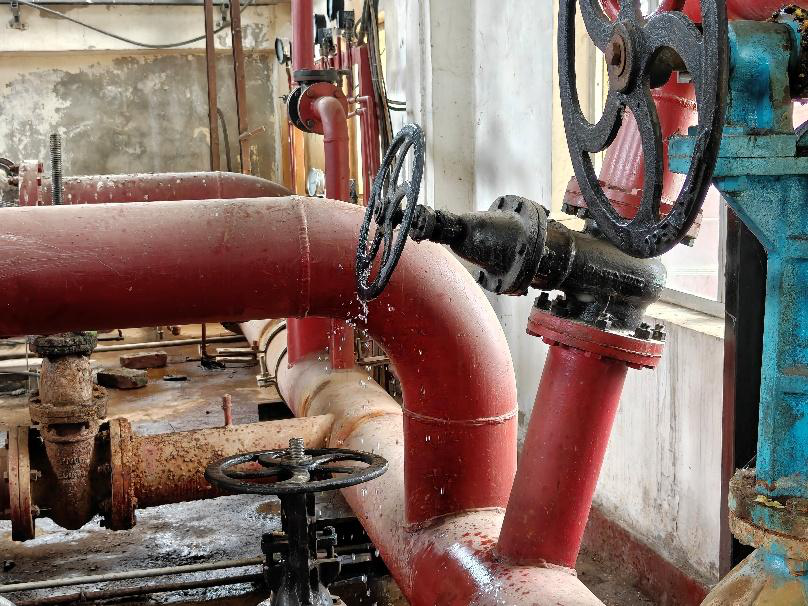
Elion Technologies & Consulting Pvt. Ltd. carried out fire pump performance testing at ONGC Tripura Power Company Ltd. (OTPC), Palatana, Tripura.
The facility is a 726.6 MW combined-cycle gas turbine power plant, comprising two 363.3 MW blocks.
The objective of the assignment was to assess the operating performance of the installed fire pumps and verify whether the pumps were capable of delivering the required flow and pressure under different operating conditions.
The fire pump testing covered performance at churn/no-flow, rated flow and maximum achievable flow conditions, together with recording of operating parameters.
Objective of the Fire Pump Test
The principal objective of the testing was to verify that the fire pumps could perform satisfactorily when required during a fire emergency.
The assessment considered:
- Pump performance under no-flow or churn conditions
- Performance at approximately 100% rated flow
- Performance at maximum achievable flow
- Water discharge pressure
- Electrical current and power consumption
- Continuous running performance
- General operational condition of the pumps
- Observations relating to leakage or other abnormalities
The report references NFPA 20, NFPA 25, IS 15301, NFPA 14 and NBC 2016 Part 4 – Fire & Life Safety as applicable technical references.
Fire Pump Testing Methodology
Elion’s testing team evaluated the pumps under different flow conditions to determine whether actual pump performance corresponded adequately with the rated operating characteristics.
The key operating points included:
Churn / No-Flow Condition The pump was operated with minimal or no flow to evaluate shut-off pressure and basic operating behaviour.
100% Rated Flow The pump was tested around its design-rated flow to verify that it could provide the expected fire-water demand.
Maximum Achievable Flow The pump was operated at the maximum practical flow available through the test arrangement to assess performance under higher-demand conditions.
Operating parameters such as: flow, pressure, current, power and running duration were recorded during testing.
Hydrant Main Pump Performance
One of the hydrant main pumps had the following rated characteristics:
Parameter | Value |
Rated Flow | 273 m³/hr |
Rated Head | 94.34 m |
Motor Rating | 110 kW |
During testing, the pump operated continuously for 10 minutes at each evaluated operating condition.
At approximately rated flow, the measured flow ranged from 267.4 to 278.4 m³/hr.
At the maximum achievable condition, the pump delivered up to 393.5 m³/hr, corresponding to approximately 144.13% of its rated flow capacity.
Additional Hydrant Pump Testing
Another hydrant main pump rated at 273 m³/hr was also tested.
At approximately 100% rated capacity, measured flow ranged between 263.1 and 279.7 m³/hr.
At maximum achievable flow, the pump reached approximately 353.4 m³/hr, representing about 129.45% of its rated capacity, while operating continuously for 10 minutes.
Spray Main Pump Performance
A spray-main fire pump with a rated capacity of 273 m³/hr was also assessed.
The pump delivered approximately:
- 248.1–289.7 m³/hr around rated flow
- Up to 378.3 m³/hr at maximum achievable flow
The maximum recorded flow represented approximately 138.5% of the rated pump capacity.
The pump operated continuously for the required 10-minute test duration.
Observations During Fire Pump Testing
During testing, the major pumps demonstrated satisfactory operational capability under the evaluated conditions.
Some minor operational observations were also recorded. These included gland-seal leakage on certain pumps and leakage from valves in portions of the test line. In some cases, gland-seal leakage was attended to by the plant team during Fire Pump Testing Cost in India .
These observations demonstrate why annual fire pump testing should evaluate not only flow performance but also the actual mechanical condition of the fire-water system while the pumps are operating.
Test Results
The overall fire pump testing established that the pumps were capable of delivering substantial flow while maintaining continuous operation during the specified test duration.
The report concluded that the fire pump testing was successfully completed and that the pumps were operating within the required performance parameters.
It also recorded that adequate water pressure and flow were available for the fire protection systems and that no significant issues affecting overall system readiness were identified.
Why Fire Pump Performance Testing Is Important for Power Plants
Power-generation facilities contain critical electrical, mechanical and process infrastructure where an effective fire-water system forms an important part of emergency preparedness.
Simply starting a fire pump periodically does not establish whether the pump can actually deliver its required flow.
A performance test helps determine:
- Whether rated fire-water flow can be achieved
- Whether pressure remains adequate as flow increases
- Whether the pump can run continuously under load
- Whether mechanical leakage is present
- Whether electrical loading remains satisfactory
- Whether valves and test arrangements operate correctly
- Whether deterioration in pump performance has occurred
This makes periodic fire pump flow and performance testing considerably more informative than a simple pump run test.
Standards Considered
The fire pump testing report referenced the following standards:
- NFPA 20 – Standard for the Installation of Stationary Pumps for Fire Protection
- NFPA 25 – Inspection, Testing and Maintenance of Water-Based Fire Protection Systems
- IS 15301 – Installation and Maintenance of Fire Fighting Pumps
- NFPA 14 – Standpipe and Hose Systems
National Building Code of India 2016, Part 4 – Fire & Life Safety
Equipment and Parameters Evaluated
Depending upon the pump and available test arrangement, Elion’s fire pump testing methodology can include evaluation of:
- Flow rate
- Suction pressure
- Discharge pressure
- Pump current
- Power consumption
- Running duration
- Churn performance
- Rated-flow performance
- Maximum-flow performance
- Abnormal vibration
- Noise
- Leakage
Pump and driver operating condition
Outcome
The testing provided the facility management with quantified information on the actual performance of the fire pumps rather than relying only on nameplate ratings or periodic start/stop checks.
For the pumps evaluated in this assignment, the measured performance demonstrated satisfactory operation across the tested flow conditions.
The assessment also identified minor maintenance observations that could be addressed to improve the continued reliability of the fire-water system.
About Elion Technologies & Consulting
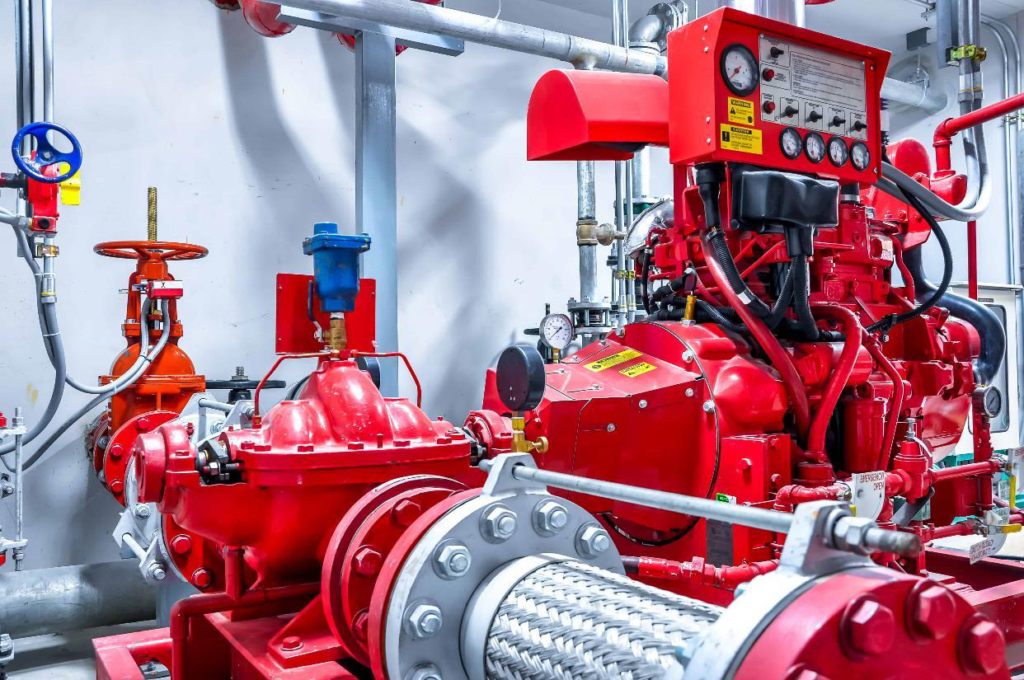
Elion Technologies & Consulting Pvt. Ltd. provides third-party fire pump testing and fire-safety engineering services for industrial, commercial and infrastructure facilities across India.
Our fire pump testing assignments can include:
- Annual fire pump performance testing
- Fire pump flow testing
- Hydrant pump testing
- Sprinkler pump testing
- Diesel fire pump testing
- Electric fire pump testing
- Jockey pump testing
- Churn testing
- Fire-water system evaluation
- Fire safety audits
Testing is carried out using suitable measurement instruments and actual operating data is documented in a detailed technical report.
FAQs
Q1. What is fire pump performance testing?
Fire pump performance testing measures the flow and pressure a fire pump actually produces at churn (no flow), at rated flow and at higher flow, then compares the readings with the manufacturer’s curve. It shows whether the pump can still deliver the fire-water duty it was designed for.
Q2. How much does fire pump performance testing cost in India?
For one or two pumps at an accessible metro site, an annual performance test typically costs about ₹8,000–₹18,000. A full annual inspection, testing and maintenance visit covering diesel, electric and jockey pumps is commonly ₹18,000–₹40,000. Large multi-pump industrial sites are quoted individually, based on pump count, flow-measurement method and report scope.
Q3. What is checked during an annual fire pump test?
The team records flow, suction and discharge pressure, motor current, power consumption and running time at churn, rated-flow and maximum-flow points. They also note vibration, noise, gland-seal leakage, valve leakage and the general condition of the pump and driver.
Q4. How often should fire pumps be tested in India?
NFPA 25 calls for periodic no-flow churn runs (weekly or monthly, depending on pump type and programme) and a full flow test every year. NBC 2016 Part 4 and IS 15301 require fire pumps to be maintained in working order, and fire NOC renewals and insurance surveys commonly ask for current test records.
Q5. What is the difference between a churn test and a flow test?
A churn test runs the pump with the discharge closed or minimally open to check shut-off pressure and basic running behaviour. A flow test measures the pump at rated flow and higher flow to confirm it delivers the required volume at adequate pressure. Churn alone does not prove fire-fighting capacity.
Q6. What if a fire pump cannot reach 150% of rated flow during the test?
Where the test header, piping or water supply limits the flow, the pump is tested at the maximum achievable flow and the readings are recorded. The result should state the limitation, and the pressure at that flow should be checked against the manufacturer’s curve. Metering or piping may need to be upgraded so the full 150% point can be verified.
Q7. What problems does a fire pump test usually reveal?
Common findings include gland-seal leakage, leaking valves on the test line, reduced flow or pressure from impeller wear or blocked strainers, high motor current, and abnormal vibration or noise. Most are low-cost to correct when found during a planned test, instead of during a fire.