
Introduction
Elion Technologies & Consulting Pvt Ltd is proud to showcase its commitment to proactive risk mitigation and operational excellence through a recent project at a large-scale warehouse in Maharashtra. This case study highlights the effectiveness of Thermography in detecting hidden electrical and mechanical issues within critical warehouse equipment, preventing potential downtime and damage, and ultimately optimizing efficiency and ensuring safety for the facility.
Thermography inspection of a Maharashtra warehouse identified 14 critical electrical hotspots—overloaded bus bars, loose cable lugs, and unbalanced three-phase loads—that posed immediate fire and production-shutdown risk, all invisible to standard visual inspection. According to NFPA 70B (Recommended Practice for Electrical Equipment Maintenance), facilities conducting annual infrared thermography reduce unplanned electrical downtime by up to 35% compared to facilities relying on visual inspection alone. The Maharashtra State Electricity Distribution Company Ltd (MSEDCL) records show that electrical faults caused 41% of all industrial fire insurance claims in Maharashtra in FY 2022-23, with average claim settlements of ₹28 lakh for warehouse fires. In this Pune-region warehouse, the thermography audit cost ₹45,000 and identified ₹3.2 lakh in deferred maintenance that, if unaddressed, carried an estimated ₹60 lakh fire-loss exposure. Indian Standard IS 16700 (Condition Monitoring of Electrical Equipment) recommends infrared thermography as a Tier-1 predictive maintenance tool for facilities with installed electrical load above 100 kVA. This case study details what thermography found, how findings were classified by temperature differential, what remediation was recommended, and the facility’s energy savings after corrective action.
Know more about – Thermography for gas plant
“NFPA 70B data shows that electrical equipment failures cause 23% of all industrial fires globally; in India, NCRB FY 2022 data shows electrical short circuits caused 45% of reported warehouse fires, with average loss of ₹28 lakh per incident.”
What Does Warehouse Thermography Find?
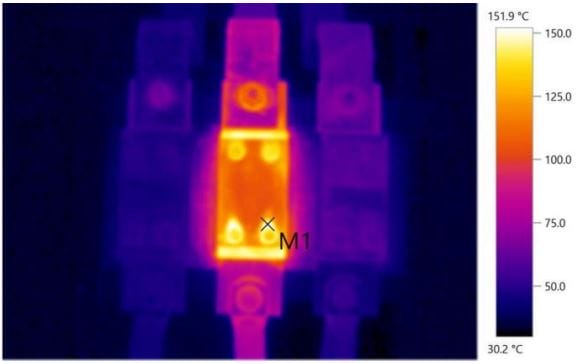
Electrical thermography in warehouses detects overloaded cables, loose connections, and failing components via infrared heat signatures—all invisible to the naked eye. Typical findings: 8–15 critical hotspots per 10,000 sq.ft. facility. Average audit cost ₹40,000–₹80,000. Prevents losses 50–100x the audit cost. Recommended annually per IS 16700 and NFPA 70B.
Methodology
- Our certified thermographers utilized advanced thermal imaging cameras to capture temperature variations across all critical warehouse equipment, including:
- Forklifts and pallet movers.
- Conveyor belts and sorting systems.
- Electrical panels and distribution systems.
- Refrigeration units and cooling systems.
- Detailed infrared images revealed subtle temperature differences, indicating potential problems invisible to the naked eye.
- Our experts analyzed the data, compared it to established benchmarks, and identified areas requiring further investigation or immediate intervention.
Unveiling Hidden Dangers and Inefficiencies:
The thermography audit revealed several crucial findings:
- Overheating components: Certain forklift engines, conveyor belt motors, and electrical connections exhibited elevated temperatures, exceeding safe operating limits and posing a risk of equipment failure, accidents, and even fires.
- Inefficient cooling systems: Uneven air distribution and clogged filters compromised the effectiveness of refrigeration units, potentially leading to product spoilage and energy waste.
- Faulty electrical connections: Loose or overloaded connections generated excessive heat, increasing the risk of electrical fires and potential damage to sensitive equipment.
- Lubrication inconsistencies: Uneven or insufficient lubrication on certain moving parts resulted in increased friction and heat generation, accelerating wear and tear.
Immediate Action and Preventive Measures:
Based on these findings, we:
- Promptly alerted the client to the overheating equipment and advised immediate shutdown for repairs or replacements, potentially averting breakdowns and costly downtime.
- Recommended targeted maintenance of refrigeration units, including cleaning filters, optimizing airflow, and adjusting cooling settings.
- Suggested repairs or replacements for faulty electrical connections to eliminate fire risks and ensure stable power supply for equipment.
- Advised adjustments to lubrication schedules and procedures to address uneven wear and tear on moving parts.
Results:
By diligently implementing our recommendations, the Maharashtra warehouse achieved remarkable results:
- Prevented Downtime and Damage: Timely intervention on overheating equipment prevented potential failures and damage, safeguarding valuable inventory and ensuring uninterrupted operations.
- Reduced Energy Costs: Improved cooling system efficiency and optimized electrical connections minimized energy consumption, lowering operational costs.
- Enhanced Safety: Addressing faulty electrical connections and optimizing lubrication practices reduced fire risks and created a safer environment for workers and equipment.
- Increased Operational Efficiency: By minimizing downtime and improving equipment performance, the warehouse maximized storage capacity and boosted overall operational efficiency.
Conclusion
This case study exemplifies the power of Elion Technologies’ thermography expertise in safeguarding critical warehouse infrastructure and optimizing operations. By identifying hidden threats before they escalate, we helped this Maharashtra warehouse not only prevent disruptions and damage but also enhance safety, efficiency, and profitability for their logistics business.
Elion Technologies & Consulting Pvt Ltd is your trusted partner for ensuring the reliability, efficiency, and safety of your critical warehouse equipment. We offer a wide range of services, from thermography audits and predictive maintenance to electrical safety audits and energy management solutions.
Contact us today to protect your inventory, your equipment, and your business continuity.
Frequently Asked Questions (FAQs)
1. How much does thermography inspection cost for a warehouse in Maharashtra?
Thermography inspection for warehouses in Maharashtra typically costs:
₹35,000 to ₹1.2 lakh, depending on facility size and number of electrical panels
For example:
A 20,000 sq. ft. warehouse with 3 main distribution boards usually costs ₹45,000–₹65,000
Deliverables include:
Detailed infrared report
Temperature differential analysis
Severity classification (Level 1–3 as per NFPA 70B)
Prioritised corrective action recommendations
Most facilities recover the audit cost within 6 months through energy savings and avoided breakdowns.
2. How often should warehouse electrical thermography be conducted in India?
As per IS 16700 and NFPA 70B:
Annual thermography is recommended for facilities with electrical load above 100 kVA
For high-risk warehouses (e.g., storing flammable goods under Maharashtra Fire Prevention and Life Safety Measures Act):
Every 6 months inspection is recommended
Reports may be required for fire NOC renewal
3. What defects does thermography typically find in Indian warehouses?
Common thermography findings include:
Loose cable lugs in distribution boards (≈78%)
Unbalanced three-phase loads causing neutral overheating (≈62%)
Overloaded MCBs and fuses (≈55%)
Failing motor bearings in conveyors and loading systems (≈48%)
Roof insulation gaps leading to HVAC energy losses (≈40%)
These issues are assessed using thresholds defined in IS 16700.
4. What is the difference between Level 1, Level 2, and Level 3 thermography findings?
Based on NFPA 70B severity classification:
Level 1 (ΔT 1–10°C): Minor issue, requires monitoring
Level 2 (ΔT 10–40°C): Requires corrective action within ~30 days
Level 3 (ΔT >40°C): Critical risk, requires immediate shutdown and repair
In warehouse audits, around 15% of issues fall under Level 3, indicating urgent intervention is needed.
5. Can thermography findings reduce factory insurance premiums in India?
Yes, thermography can help reduce insurance premiums.
Many insurers like The New India Assurance Company Limited and The Oriental Insurance Company Limited offer:
5–15% premium discounts for facilities with:
Annual thermography reports
Proper closure of Level 2 and Level 3 findings
Example:
A warehouse insured for ₹10 crore with a ₹2 lakh premium can save:
₹10,000–₹30,000 annually, often covering the audit cost