
Introduction
Industrial thermography audits use infrared cameras to detect temperature anomalies in electrical panels, motors, bearings, refractory linings, and process pipes — identifying failures days or weeks before they cause costly breakdowns or fires.
NFPA 70B (Recommended Practice for Electrical Equipment Maintenance) identifies thermographic inspection as the single most effective predictive maintenance tool for electrical systems, and research by the Electric Power Research Institute (EPRI) shows facilities using thermography programmes reduce electrical failures by 70-80% compared to time-based maintenance alone.
The Institution of Engineers India notes that unplanned industrial breakdowns cost Indian manufacturing ₹1.8-3.5 lakh per hour on average, making pre-failure detection the highest-ROI maintenance investment available.
A cement plant in Rajasthan used quarterly thermography audits to detect a failing roller bearing in a kiln drive motor 18 days before projected failure; scheduled replacement cost ₹3.8 lakh versus the ₹28 lakh cost of an unplanned kiln shutdown — a 7.4× return on the ₹45,000 audit cost.
A large distribution substation in Mumbai detected 4 overloaded transformer bushings (Δ T = 47°C above ambient) during a routine infrared scan; replacement before failure cost ₹12 lakh versus ₹1.8 crore for a catastrophic transformer failure and grid interruption liability.
Thermography audits in India are conducted per NFPA 70B, IS 13947 (Switchgear and Controlgear Standards), and IEC 60076 (Power Transformers) guidelines. Certified Level II thermographers (per ISO 18436-7 / ASNT SNT-TC-1A) are required for reports accepted by insurance companies and statutory inspectors. This blog explains 8 major industrial applications of thermography, the temperature differential thresholds that trigger corrective action, and the ₹ ROI each application delivers.
“Detecting a kiln motor failure 2 weeks early (preventing 4 hours downtime at ₹2.5L/hr) generates ₹10L savings against a ₹40,000 thermography scan — a 25:1 ROI.”
Industrial Thermography Audit Applications
The 8 primary industrial thermography applications are: (1) Electrical panel & switchgear scanning (2) Motor & bearing condition monitoring (3) Transformer bushing inspection (4) Refractory & kiln lining assessment (5) Steam trap survey (6) Roof & building envelope inspection (7) Process pipe insulation survey (8) PCB & electronic component testing. NFPA 70B recommends annual scans for all electrical systems.
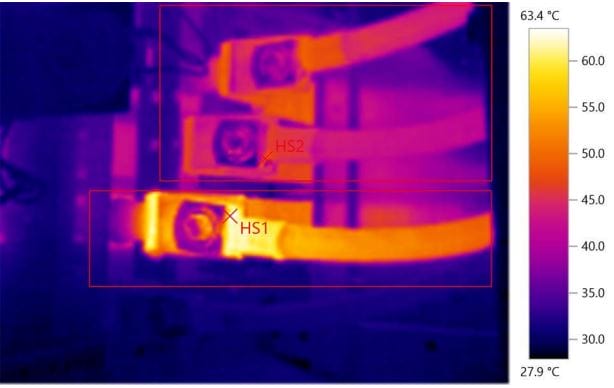
Electrical Systems: One of the primary applications of thermography audits in industrial settings is the inspection of electrical systems. By capturing thermal images of electrical panels, circuits, and components, thermographers can identify hot spots, loose connections, and other anomalies. This early detection helps prevent electrical fires, equipment damage, and costly downtime.
Mechanical Equipment: Thermography audits can also be used to inspect mechanical equipment such as motors, pumps, and bearings. By identifying abnormal temperature patterns, maintenance teams can schedule repairs or replacements before catastrophic failures occur. This proactive approach reduces maintenance costs and improves equipment reliability.
Steam and Pipe Systems: Steam and pipe systems are crucial in many industrial processes. Thermography audits can pinpoint leaks, blockages, and insulation issues within these systems. Detecting and rectifying these problems can lead to substantial energy savings and prevent potential safety hazards.
Building Envelope: Efficient insulation and climate control are essential in industrial facilities. Thermography audits can evaluate the building envelope for thermal leaks and insulation deficiencies. By addressing these issues, companies can reduce heating and cooling costs and create a more comfortable working environment.
Process Control: Thermography can play a role in process control by monitoring temperature variations in real-time. By utilizing infrared cameras and data analysis, industrial processes can be fine-tuned for maximum efficiency, reducing energy consumption and improving product quality.
Predictive Maintenance: Thermography audits are a key component of predictive maintenance programs. By regularly inspecting equipment and systems, companies can predict when maintenance is needed and avoid unplanned downtime. This proactive approach can lead to substantial cost savings.
Safety Compliance: Thermography audits are also invaluable for ensuring safety compliance in industrial settings. By identifying potential hazards and taking corrective actions, companies can create a safer work environment for their employees, reduce the risk of accidents, and meet regulatory requirements.
Quality Control: In industries where temperature plays a critical role, such as food processing or pharmaceuticals, thermography audits help maintain product quality and safety. By monitoring temperature-sensitive processes, companies can ensure their products meet stringent quality standards.
Conclusion
Elion Technologies and Consulting Private Limited is committed to helping industrial companies harness the power of thermography audits for improved safety, energy efficiency, and cost savings. With applications ranging from electrical system inspections to process control and quality assurance, thermography audits have become an indispensable tool for maintaining and enhancing industrial operations. Embracing this technology can lead to a safer, more efficient, and more profitable future for your industrial facility.
Contact Elion Technologies today to learn how thermography audits can benefit your organization.
Frequently Asked Questions (FAQs)
Q1: What are the main uses of thermography in Indian industrial plants?
A: The 8 primary applications are: electrical switchgear scanning, motor bearing monitoring, transformer bushing inspection, refractory lining assessment, steam trap surveys, building envelope insulation checks, process pipe surveys, and electronic component testing. Each detects specific failure modes weeks before breakdown.
Q2: How much does an industrial thermography audit cost in India?
A: Industrial thermography audits cost ₹25,000-₹1.5 lakh depending on facility size and equipment count. A Level II thermographer charges ₹3,000-8,000 per hour. For a medium plant with 200 scan points, expect ₹45,000-₹75,000 for a full report. ROI typically exceeds 10:1 versus unplanned failure costs.
Q3: How often should thermography audits be done in Indian industrial facilities?
A: NFPA 70B recommends annual thermographic inspection for all energised electrical systems. High-criticality equipment (transformers, switchgear, kiln drives) should be scanned quarterly. Continuous thermal monitoring via fixed IR cameras is recommended for unmanned critical assets.
Q4: What temperature rise indicates a problem in electrical equipment?
A: Per NFPA 70B and IEC guidelines: Δ T 1-10°C above ambient requires monitoring; Δ T 11-20°C is serious and requires prompt action within 30 days; Δ T 21-40°C is very serious requiring action within 7 days; Δ T >40°C is critical and requires immediate shutdown and repair.
Q5: Is thermography certification required for audit reports in India?
A: For reports accepted by insurance companies, loss surveyors, and statutory electrical inspectors, thermographers should hold Level II certification per ISO 18436-7 or ASNT SNT-TC-1A. Reports from uncertified operators may not be admissible as evidence in insurance claims or legal proceedings.
Q6: Can thermography detect roof insulation problems in industrial buildings?
A: Yes. Building envelope thermography scans identify missing insulation, moisture ingress, air leakage points, and roof membrane damage invisible to visual inspection. For a 10,000 sq.m. factory roof with 15% insulation failure, correcting identified gaps typically saves ₹2-4 lakh in annual HVAC/chiller costs.