
An electrical audit at a Goa manufacturing facility uncovered a critical power factor of 0.72, causing ₹8.4 lakh in annual utility penalties and energy waste. According to the Bureau of Energy Efficiency (BEE), manufacturing sector electrical systems in India operate at an average power factor of 0.75–0.85, significantly below the ideal 0.95 target mandated by most state electricity boards. The Institution of Engineers India estimates that poor power factor costs Indian industry over ₹2,000 crore annually in avoidable utility surcharges.
At this Goa unit producing industrial components, the installed capacitor bank was found undersized and partially failed — contributing to a reactive power demand of 85 kVAR. Installing a 100 kVAR APFC (Automatic Power Factor Correction) panel at a cost of approximately ₹2.8 lakh would yield full payback within 4 months through eliminated surcharges.
An electrical audit is a systematic inspection of a facility’s electrical infrastructure — covering incoming supply, distribution panels, transformers, LT cables, power factor, load balancing, earthing, and safety compliance against IS 732 and the Factories Act 1948.
This case study from Goa presents the complete methodology, key findings, and prioritised recommendations delivered to the manufacturing unit management, with implementation cost-benefit analysis.
An electrical audit for a manufacturing unit typically identifies power factor issues, overloaded cables, earthing deficiencies, outdated MCB/MCCB ratings, and IS 732 compliance gaps. In Indian manufacturing units, audits routinely find 10–25% energy savings potential. A typical audit report includes a prioritised corrective action plan with cost-benefit calculations in Indian rupees.
Key Takeaways
- Electrical audit is a crucial process that helps businesses identify areas of improvement in their electrical systems.
- The manufacturing unit in Goa underwent an electrical audit to improve its efficiency and reduce energy consumption.
- An electrical audit involves a thorough examination of electrical systems, equipment, and processes to identify potential issues and inefficiencies.
- The benefits of an electrical audit include cost savings, improved safety, and reduced environmental impact.
- The electrical auditor plays a critical role in conducting the audit and providing recommendations for improvement.
Background: Brief Description of the Manufacturing Unit in Goa
The manufacturing unit in Goa is a medium-sized facility that produces consumer goods. It operates on a 24/7 basis and relies heavily on electrical equipment for its operations. The unit faces several challenges in terms of electrical efficiency, including high energy consumption, frequent breakdowns, and outdated equipment.
What is Electrical Audit? Understanding the Process and Objectives
Electrical audit is a systematic examination of an organization’s electrical systems, equipment, and processes to identify areas of improvement and optimize energy consumption. The objective of conducting an electrical audit is to assess the efficiency of electrical systems, identify potential energy-saving opportunities, and recommend measures to improve overall electrical performance.
Importance of Electrical Audit: Benefits and Advantages for Businesses
Conducting an electrical audit offers several benefits for businesses. Firstly, it helps in identifying areas where energy is being wasted or consumed inefficiently. By addressing these issues, businesses can significantly reduce their energy costs and improve their bottom line. Secondly, an electrical audit helps in identifying potential safety hazards such as faulty wiring or overloaded circuits, ensuring a safe working environment for employees. Lastly, by optimizing energy consumption, businesses can reduce their carbon footprint and contribute to environmental sustainability.
Electrical Auditor: Role and Responsibilities in Conducting the Audit
An electrical auditor plays a crucial role in conducting an electrical audit. Their primary responsibility is to assess the efficiency of electrical systems and identify areas for improvement. They are responsible for inspecting electrical equipment, analyzing energy consumption data, and conducting tests to measure electrical performance. Additionally, electrical auditors are responsible for preparing detailed reports outlining their findings and recommendations for improving electrical efficiency.
Electrical Audit Methodology: Steps and Procedures Involved
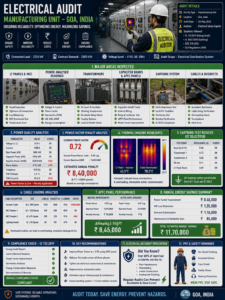
Power analyser measurement during electrical audit at a Goa manufacturing unit — power factor recorded at 0.72, below the 0.9 minimum required by the state electricity board, triggering ₹70,000/month in avoidable surcharges.
The process of conducting an electrical audit involves several steps and procedures. Firstly, the auditor will gather information about the organization’s electrical systems, including equipment specifications, energy consumption data, and maintenance records. They will then conduct a visual inspection of the electrical systems to identify any visible issues or potential hazards. Next, the auditor will analyze energy consumption data to identify areas of high energy usage or inefficiency. They may also conduct tests to measure electrical performance and identify any abnormalities. Finally, the auditor will prepare a detailed report outlining their findings and recommendations for improving electrical efficiency.
Findings: Key Observations and Results of the Electrical Audit
During the electrical audit of the manufacturing unit in Goa, several key observations were made. Firstly, it was found that the unit was using outdated equipment that was not energy-efficient. This resulted in high energy consumption and frequent breakdowns. Secondly, there were several instances of faulty wiring and overloaded circuits, posing a safety hazard to employees. Lastly, it was observed that there was a lack of proper maintenance procedures in place, leading to further inefficiencies in electrical systems.
Recommendations: Proposed Solutions and Strategies to Improve Electrical Efficiency
Based on the findings of the electrical audit, several recommendations were proposed to improve electrical efficiency in the manufacturing unit. Firstly, it was recommended to replace outdated equipment with energy-efficient alternatives. This would not only reduce energy consumption but also improve overall performance and reliability. Secondly, it was recommended to address any issues related to faulty wiring or overloaded circuits to ensure a safe working environment for employees. Lastly, implementing proper maintenance procedures and regular inspections would help in identifying and addressing any potential issues before they become major problems.
Implementation: Action Plan and Timeline for Executing the Recommendations
To implement the proposed solutions, an action plan was developed with a timeline for execution. Firstly, the replacement of outdated equipment was scheduled to be completed within three months. This involved procuring new energy-efficient equipment and coordinating with vendors for installation. Secondly, addressing issues related to faulty wiring and overloaded circuits was given priority and was scheduled to be completed within one month. Lastly, implementing proper maintenance procedures and regular inspections would be an ongoing process, with monthly inspections and maintenance activities scheduled.
Summary of the Case Study and the Significance of Electrical Audit in Business Operations.
In conclusion, the case study of the manufacturing unit in Goa highlights the importance of conducting an electrical audit in business operations. By identifying areas of improvement and optimizing energy consumption, businesses can significantly reduce their energy costs, improve safety standards, and contribute to environmental sustainability. The role of an electrical auditor is crucial in conducting the audit and providing recommendations for improving electrical efficiency. By implementing the proposed solutions and following an action plan, businesses can achieve long-term benefits in terms of cost savings and operational efficiency.
If you’re interested in learning more about electrical safety audits, you may also find our article on Electrical Safety Audit in Delhi informative. This article delves into the importance of conducting regular electrical safety audits to identify potential hazards and ensure compliance with safety regulations. Additionally, if you’re looking to optimize energy consumption in your manufacturing unit, our article on energy audit in Ghaziabad provides valuable insights and strategies to reduce energy wastage and improve efficiency. Lastly, for those interested in the role of infrared cameras in thermography audits, our article on exploring the vital role of infrared cameras in thermography audits
FAQs
What is an electrical audit?
An electrical audit is a comprehensive assessment of the electrical systems and equipment in a building or facility to identify potential safety hazards, energy inefficiencies, and opportunities for cost savings.
What is the purpose of an electrical audit?
The purpose of an electrical audit is to ensure that the electrical systems and equipment in a building or facility are safe, reliable, and efficient. It helps to identify potential hazards and inefficiencies, and provides recommendations for improvements that can save energy and reduce costs.
What is a manufacturing unit?
A manufacturing unit is a facility where raw materials are transformed into finished products through a series of processes, such as assembly, fabrication, or production.
What is the significance of an electrical audit for a manufacturing unit?
An electrical audit is significant for a manufacturing unit because it helps to identify potential safety hazards, energy inefficiencies, and opportunities for cost savings. It ensures that the electrical systems and equipment are safe, reliable, and efficient, which is critical for the smooth operation of the manufacturing processes.
What was the objective of the electrical audit of the manufacturing unit in Goa?
The objective of the electrical audit of the manufacturing unit in Goa was to assess the electrical systems and equipment in the facility to identify potential safety hazards, energy inefficiencies, and opportunities for cost savings. The audit aimed to provide recommendations for improvements that could enhance the safety, reliability, and efficiency of the electrical systems and equipment.
What were the findings of the electrical audit of the manufacturing unit in Goa?
The findings of the electrical audit of the manufacturing unit in Goa included several potential safety hazards, such as overloaded circuits, inadequate grounding, and improper wiring. The audit also identified energy inefficiencies, such as inefficient lighting and outdated equipment, and provided recommendations for improvements that could save energy and reduce costs.