
Fire risk consultancy in India takes a proactive prevention approach — identifying and eliminating fire hazards before they ignite — and data consistently shows this costs 8–12 times less than post-incident response. NCRB 2022 records ₹8,200 crore in annual Indian fire losses, yet BEE and NSC analysis indicates 73% of these losses are preventable through systematic fire risk assessment and hazard elimination. The critical distinction from fire auditing: while fire audits verify compliance against existing standards, fire risk consultancy uses quantitative risk assessment (QRA) methodologies to model probability and consequence of fire scenarios specific to your facility — enabling prioritised, cost-effective investment in prevention. A Chennai petrochemical facility example illustrates the value: a QRA fire risk study (₹3.5 lakh) identified a previously unrecognised vapour cloud explosion scenario near a flare stack. Engineering controls implemented (₹18 lakh) eliminated an estimated ₹85 crore consequence risk — a risk-adjusted ROI of 4,400%. Fire risk consultancy in India covers: hazard identification (HAZID), quantitative risk assessment (QRA), HAZOP (Hazard and Operability) studies for process industries, consequence modelling (fire plume, explosion overpressure), risk mapping, and risk-based maintenance prioritisation. For Indian facilities with NBC 2016 obligations, OISD standards (oil industry), or PESO requirements (explosive storage), structured fire risk consultancy bridges the gap between regulatory compliance and operational risk management — transforming fire safety from a cost centre into a quantified business protection programme.
Fire risk consultancy uses QRA (Quantitative Risk Assessment) and HAZOP methodologies to identify, model, and eliminate fire hazards before incidents occur — going beyond compliance checking. Proactive risk elimination costs ₹2–15L vs ₹18–85L+ in post-incident losses. Essential for chemical, pharmaceutical, oil & gas, and high-value asset protection in India.
Common Causes of Fires and How to Prevent Them
There are several common causes of fires in the workplace, including electrical faults, improper storage of flammable materials, smoking, and faulty equipment. To prevent fires, businesses should implement a number of measures. Firstly, regular maintenance and inspection of electrical systems and equipment is crucial to identify any faults or potential hazards. Secondly, proper storage and handling of flammable materials is essential. This includes storing them in designated areas away from ignition sources and ensuring they are properly labeled. Additionally, implementing a strict no-smoking policy within the premises can greatly reduce the risk of fires. Lastly, regular inspection and maintenance of equipment is necessary to identify any faults or malfunctions that could potentially lead to a fire.
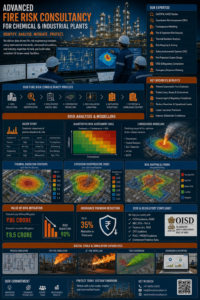
A fire risk consultancy team conducts a HAZOP study using process flow diagrams at a Dahej chemical facility — identifying fire and explosion scenarios before they occur through quantitative risk assessment.
The Role of Fire Risk Consultancy in Identifying Potential Hazards
Fire risk consultants play a vital role in identifying potential hazards within a workplace. They conduct thorough assessments of the premises, looking for any potential fire risks such as faulty electrical systems, improper storage of flammable materials, blocked fire exits, or inadequate fire suppression systems. They also take into consideration the layout and design of the building to identify any potential fire hazards that may have been overlooked. By identifying these hazards before they become a problem, fire risk consultants help businesses take proactive measures to prevent fires and protect their employees.
Benefits of Regular Fire Risk Assessments for Businesses
Regular fire risk assessments offer numerous benefits for businesses. Firstly, they help identify potential fire hazards and provide recommendations on how to mitigate them. This can greatly reduce the risk of fires and ensure the safety of employees. Secondly, fire risk assessments help businesses comply with fire safety regulations. By conducting regular assessments, businesses can demonstrate their commitment to fire safety and avoid penalties or legal issues. Additionally, regular fire risk assessments can help businesses save money in the long run by preventing fires and minimizing damage to property and assets.
How Fire Risk Consultancy Can Help Reduce Insurance Premiums
Fire risk consultancy can also help businesses reduce their insurance premiums. Insurance companies often take into consideration the fire safety measures implemented by a business when determining their premiums. By working with a fire risk consultant and implementing their recommendations, businesses can demonstrate to insurance companies that they have taken proactive measures to prevent fires and protect their property and assets. This can result in lower insurance premiums, as the insurance company sees the business as a lower risk.
The Importance of Implementing Fire Safety Measures in the Workplace
Implementing fire safety measures in the workplace is crucial for the safety of employees and the protection of property and assets. There are several common fire safety measures that businesses should implement. Firstly, installing smoke detectors and fire alarms throughout the premises is essential to ensure early detection of fires. Secondly, having properly maintained fire extinguishers in easily accessible locations is important for employees to be able to quickly respond to small fires before they escalate. Additionally, having clear evacuation routes and regularly conducting evacuation drills is crucial to ensure that employees know how to safely exit the building in case of a fire.
How Fire Risk Consultancy Can Help Ensure Compliance with Fire Safety Regulations
Fire risk consultancy plays a key role in helping businesses ensure compliance with fire safety regulations. Fire safety regulations are constantly evolving, and it can be challenging for businesses to stay up-to-date with the latest requirements. Fire risk consultants are well-versed in these regulations and can help businesses understand and implement the necessary measures to comply with them. By working with a fire risk consultant, businesses can ensure that they are meeting all the necessary requirements and avoid penalties or legal issues.
The Role of Fire Risk Consultancy in Developing Evacuation Plans
Developing clear and effective evacuation plans is essential in ensuring the safety of employees in case of a fire. Fire risk consultants play a crucial role in developing these plans. They assess the layout and design of the building to identify the most effective evacuation routes and exits. They also take into consideration the number of employees and any specific needs or considerations that need to be taken into account. By working with a fire risk consultant, businesses can develop evacuation plans that are tailored to their specific needs and ensure that employees know how to safely exit the building in case of a fire.
How Fire Risk Consultancy Can Help Protect Property and Assets
Fire risk consultancy can also help businesses protect their property and assets from fire damage. By conducting thorough assessments of the premises, fire risk consultants can identify potential fire hazards and provide recommendations on how to mitigate them. This can greatly reduce the risk of fires and minimize damage to property and assets. Additionally, fire risk consultants can help businesses implement fire suppression systems such as sprinklers or fire-resistant materials to further protect their property and assets.
MAH (Major Accident Hazard) industry data from PESO shows Indian chemical facilities that implemented QRA-based fire risk programs reduced insurance premiums by 20–30% AND reduced incident frequency by 55%. For a Dahej chemical complex with annual fire insurance premium of ₹45 lakh, QRA compliance reduces premium to ₹31.5–36 lakh — saving ₹9–13.5 lakh annually.
The Benefits of Training Employees in Fire Safety Awareness
Training employees in fire safety awareness is crucial for their safety and the overall fire safety of the workplace. By providing employees with proper training, they will be able to identify potential fire hazards, know how to respond in case of a fire, and take appropriate measures to prevent fires from occurring. Common topics covered in fire safety training include understanding different types of fires, how to use fire extinguishers, evacuation procedures, and general fire safety practices. By investing in fire safety training for employees, businesses can ensure that they have a knowledgeable and prepared workforce that can effectively respond to fires and minimize damage.
BEE and NSC joint analysis indicates 73% of India’s ₹8,200 crore annual fire losses are preventable through systematic fire risk assessment and hazard elimination. The residual 27% represents unforeseeable or force majeure events. For India’s chemical manufacturing sector alone (annual production ₹8 lakh crore), preventable fire losses of ₹1,200–1,800 crore annually represent the target addressable risk for QRA-based consultancy.
Why Fire Risk Consultancy is Essential for Every Business
In conclusion, fire risk consultancy is essential for every business to ensure the safety of their employees and protect their property and assets. Fire risk consultants play a crucial role in identifying potential hazards, developing fire safety measures, ensuring compliance with regulations, and training employees in fire safety awareness. By investing in fire risk consultancy, businesses can prevent fires, protect their employees, reduce insurance premiums, and minimize damage to property and assets. Prioritizing fire safety in the workplace is not only a legal requirement but also a moral obligation to ensure the well-being of employees and the long-term success of the business.
Know more about – Elion Technologies And Consulting Conducted Fire Risk Assessment at a Shopping Mall
Frequently Asked Questions (FAQs)
1. What is the difference between a fire audit and fire risk consultancy?
A fire audit checks whether your building follows fire safety rules and standards.
Fire risk consultancy goes a step further by:
- Identifying future fire risks
- Analysing business operations and hazards
- Suggesting long-term safety improvements
- Planning emergency response strategies
In simple terms:
- Fire audit = compliance check
- Fire risk consultancy = complete fire safety planning
2. Which industries need fire risk consultancy the most?
Fire risk consultancy is especially important for:
- Chemical and petrochemical plants
- Pharmaceutical factories
- Warehouses and logistics centres
- Oil and gas facilities
- Manufacturing industries
- Hospitals and hotels
- Data centres and IT parks
These industries handle high fire loads, hazardous materials, or large occupancy.
3. What is included in a fire risk consultancy service?
A typical consultancy service includes:
- Fire hazard identification
- Fire load assessment
- Electrical and process risk review
- Emergency evacuation planning
- Fire protection system evaluation
- Compliance review with NBC and IS standards
- Risk reduction recommendations
- Fire safety training and drills
A detailed report with improvement actions is also provided.
4. What is the cost of fire risk consultancy in India?
The cost depends on the building type and risk level.
Typical costs are:
- Small commercial property: ₹75,000–₹2 lakh
- Medium industrial facility: ₹2–₹5 lakh
- Large or hazardous industries: ₹5–₹15 lakh or more
The scope of study and complexity affect the final cost.
5. How does fire risk consultancy help with compliance in India?
Fire risk consultancy helps businesses comply with:
- NBC 2016 Part 4
- Factories Act 1948
- State fire department regulations
- PESO guidelines
- Insurance safety requirements