
Introduction
An airport oil dispensing unit in Dehradun plays a critical role in aviation fuel management, ensuring safe and efficient fuel supply for aircraft operations. Given the continuous operation of dispensing pumps, motors, and lighting systems, energy consumption is significant and directly impacts operational costs.
To improve energy efficiency, enhance operational reliability, and align with safety standards, the facility engaged ELION Technologies & Consulting Pvt. Ltd. to conduct a comprehensive energy audit. The objective was to identify inefficiencies, optimize energy usage, and implement cost-effective improvement measures.
Illumination Efficiency: Understanding Energy Audits
Energy audits are powerful tools that shed light on energy consumption patterns, identify inefficiencies, and propose strategies to optimize energy usage. In industries like aviation, where operations are energy-intensive, energy audits play a crucial role in minimizing energy wastage, reducing operational costs, and contributing to environmental sustainability.
The Energy Auditor’s Expertise: Guiding Toward Efficiency
Energy auditors possess specialized knowledge and skills to meticulously analyze energy systems and processes. They provide invaluable insights to organizations by identifying areas for improvement and suggesting solutions that align with best practices and industry standards.
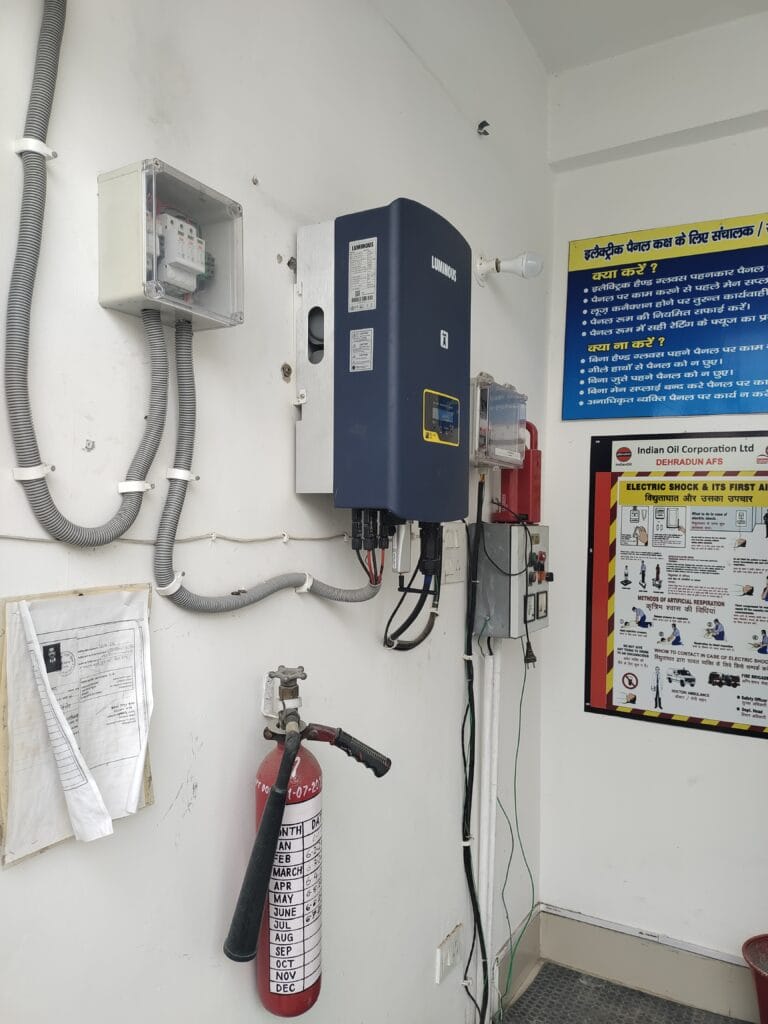
Audit Methodology & Baseline Analysis
ELION conducted a structured audit aligned with international standards and safety requirements for flammable liquid facilities.
1. Site Survey & Instrumentation
- Detailed site walkthrough and system mapping
- Use of portable power analyzers, clamp meters, and lux meters
- Measurement of voltage, current, load factor, and power factor
- Equipment runtime and loading pattern analysis
2. Systems Covered
- Fuel dispensing pumps and motors
- Electrical distribution panels
- Lighting systems (apron, storage, operational areas)
- Auxiliary systems and control panels
3. Standards Referenced
- ISO 50002 – Energy Audit Standard
- NFPA 30 – Flammable and Combustible Liquids Code
Energy Consumption Baseline
A system-wise baseline was established to identify major energy-consuming areas:
| System | Annual Consumption (kWh) | Cost (₹) | % Share |
|---|---|---|---|
| Dispensing Pumps | 900,000 | 72,00,000 | 45% |
| Motors & Drives | 400,000 | 32,00,000 | 20% |
| Lighting Systems | 300,000 | 24,00,000 | 15% |
| Auxiliary Systems | 250,000 | 20,00,000 | 12% |
| Others | 150,000 | 12,00,000 | 8% |
Key KPI
- Energy Consumption per KL of Fuel Dispensed: 0.70 kWh/KL
Energy Saving Measures
The audit identified multiple opportunities to improve efficiency:
| Measure | Savings (kWh/year) | Investment (₹) | Payback Period |
|---|---|---|---|
| Pump efficiency optimization | 95,000 | 6,50,000 | 9 months |
| Variable Frequency Drives (VFDs) | 80,000 | 8,00,000 | 12 months |
| LED lighting retrofit | 150,000 | 5,00,000 | 8 months |
| Power factor correction | 35,000 | 2,50,000 | 6 months |
| Automation & control optimization | 60,000 | 4,50,000 | 9 months |
Results & Impact
After implementation of key recommendations:
- Total Energy Savings: ~420,000 kWh annually
- Annual Cost Savings: ₹32–35 Lakhs
- Reduction in Energy Intensity: ~10–12%
- Improved reliability of dispensing systems
- Enhanced operational control and monitoring
Client Testimonial
“ELION’s energy audit helped us identify critical inefficiencies in our dispensing operations. The implemented measures significantly improved our energy performance while maintaining safety standards.”
— Airport Fuel Facility Manager
Compliance & Safety Considerations
Energy audits in oil dispensing units require strict adherence to safety standards:
- NFPA 30 compliance ensures safe handling of flammable liquids
- Electrical inspections conducted with intrinsic safety precautions
- Risk-aware auditing approach to avoid operational hazards
Following ISO 50002 ensures:
- Standardized audit methodology
- Reliable and traceable results
- Improved benchmarking and reporting
Why ELION for Energy Audits
- Proven experience in aviation fuel and oil & gas sector audits
- Expertise in high-risk environments (flammable facilities)
- Certified auditors with advanced tools
- ROI-driven, implementation-focused approach
FAQs
What is an energy audit for an oil dispensing unit?
It is a structured assessment of energy usage across pumps, motors, and systems to identify efficiency improvements.
How to reduce energy consumption in aviation fuel units?
By optimizing pumps, installing VFDs, improving lighting efficiency, and enhancing control systems.
Which standards apply to such audits?
ISO 50002 and NFPA 30 are key standards for energy and safety compliance.
What are typical saving opportunities?
Pump optimization, lighting upgrades, automation, and power factor correction.
How is ROI calculated in energy audits?
ROI is calculated based on investment cost versus annual savings, typically expressed as payback period.
Conclusion
Energy audits are essential tools for organizations seeking to optimize energy consumption, reduce costs, and embrace sustainability. As demonstrated in this case study, an energy audit conducted by professionals like those at Elion Technologies and Consulting Private Limited can unlock substantial energy-saving potential and elevate an organization’s overall performance.
If your organization is looking to optimize energy usage and reduce its environmental impact, contact us at Elion Technologies and Consulting Private Limited. Our dedicated team of energy auditors is ready to tailor solutions that align with your unique needs and goals.