
Introduction
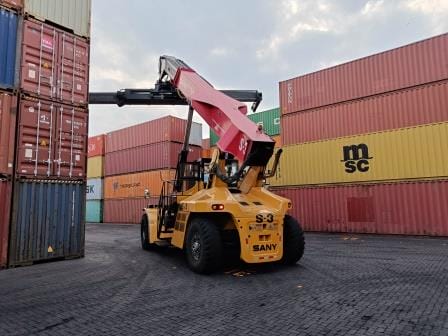
A government-operated container transportation company in New Delhi plays a critical role in logistics and supply chain operations, managing high volumes of cargo movement across terminals, warehouses, and transport routes.
Given the nature of operations—heavy vehicle movement, container handling, and storage of diverse materials—the risk of accidents, operational disruptions, and regulatory non-compliance was significant. To strengthen occupational health and safety (OHS) and align with regulatory requirements, the organization engaged ELION Technologies & Consulting Pvt. Ltd. to conduct a comprehensive hazard audit and risk assessment.
Risk Assessment Methodology
ELION adopted a structured and standards-driven approach combining HAZID (Hazard Identification) and HAZOP (Hazard and Operability Study) techniques.
1. Scope of Assessment
- Container loading/unloading zones
- Forklift and material handling operations
- Warehousing and storage areas
- Internal transportation routes
- Fuel storage and maintenance areas
2. HAZID & HAZOP Approach
- Systematic identification of hazards across operational nodes
- Deviation analysis (e.g., overload, misalignment, human error)
- Evaluation of process inefficiencies and unsafe conditions
- Identification of failure scenarios and their consequences
3. Risk Matrix Framework
A qualitative risk matrix was used to prioritize hazards based on likelihood and severity:
| Severity \ Likelihood | Low | Medium | High |
|---|---|---|---|
| Minor | Low | Low | Medium |
| Moderate | Low | Medium | High |
| Major | Medium | High | Critical |
4. Standards & Regulations Referenced
- OISD Guidelines (Oil Industry Safety Directorate)
- IS 14489 – Occupational Safety and Health Audit
- Factories Act, 1948 – Safety provisions and compliance requirements
Hazard Identification & Risk Matrix
The audit identified several critical hazards across operations:
| Hazard | Likelihood | Severity | Risk Rating | Recommended Control Measures |
|---|---|---|---|---|
| Forklift collision | High | Major | Critical | Traffic management plan, operator training, segregation of pedestrian paths |
| Container collapse | Medium | Major | High | Proper stacking procedures, load limits, inspection protocols |
| Chemical spill | Low | Major | High | Spill containment kits, SOPs, emergency drills |
| Fire hazard (fuel area) | Medium | Major | High | Fire detection systems, extinguishers, periodic inspection |
| Manual handling injuries | High | Moderate | High | Ergonomic training, mechanical aids, PPE usage |
Regulatory Compliance Review
The audit also evaluated compliance against statutory and safety standards.
Key Gaps Identified
- Inadequate safety signage and hazard communication
- Gaps in emergency preparedness and mock drills
- Poor housekeeping in storage zones
- Incomplete safety documentation and SOPs
Corrective Actions Implemented
- Installation of standardized safety signage
- Development of emergency response plans and drills
- Improved housekeeping protocols
- Documentation alignment with regulatory requirements
Outcomes & Improvements
Implementation of ELION’s recommendations led to measurable improvements:
- Reduction in workplace incidents by ~35%
- Improved compliance score during internal audits
- Enhanced employee awareness and safety culture
- Better preparedness for emergency scenarios
Why ELION for Hazard Audits
- Proven expertise in logistics, transport, and industrial sectors
- Certified safety professionals trained in HAZID & HAZOP
- Strong understanding of Indian regulatory frameworks
- Practical, implementable recommendations with ROI focus
Conclusion & Call to Action
Hazard audits are essential for organizations involved in transportation and logistics, where operational risks are high and safety is critical.
By proactively identifying risks and implementing corrective measures, companies can ensure compliance, protect personnel, and improve operational efficiency.
👉 Schedule your Hazard Audit with ELION today
- Explore our Hazard Audit Services
- Read more on Risk Assessment & Safety Compliance Blogs
FAQs
What is a hazard audit?
A hazard audit is a systematic process of identifying, evaluating, and controlling workplace hazards to improve safety and ensure regulatory compliance.
How do hazard audits help transport companies?
They help identify risks in loading, unloading, vehicle movement, and storage operations, reducing accidents and improving efficiency.
Which standards apply to hazard audits in India?
Common standards include OISD guidelines, IS 14489, and safety provisions under the Factories Act, 1948.
What are common hazards in container transportation?
Forklift accidents, container collapse, fire hazards, chemical spills, and manual handling injuries are among the most common risks.
How can these hazards be mitigated?
Through engineering controls, employee training, PPE usage, proper SOPs, and emergency preparedness plans.