
A BEE certified energy auditor is a professional accredited by India’s Bureau of Energy Efficiency who systematically evaluates your home or business’s energy consumption and identifies specific measures to reduce electricity and fuel bills by 20–40%. According to the Bureau of Energy Efficiency’s Annual Report 2022–23, India’s residential sector consumes 22% of total national electricity — and BEE data shows that energy audits consistently identify savings of 15–35% in residential buildings without requiring major capital investment. The payback period for residential energy audit recommendations averages 18 months across Indian homes audited under BEE’s Perform, Achieve and Trade (PAT) framework.
A middle-class family in Bengaluru with a monthly electricity bill of ₹6,500 engaged a BEE certified auditor in 2022. The audit identified: a 15-year-old refrigerator consuming 60% more power than a 5-star rated replacement, inadequate roof insulation increasing air conditioning load by 35%, and a water heater set 12°C above the recommended temperature. Implementing all recommendations cost ₹42,000 — and reduced the monthly electricity bill to ₹3,800 within 3 months, recovering costs within 14 months.
BEE certified energy auditors bring credentials that uncertified consultants cannot: they have passed the National Certification Examination for Energy Managers and Auditors conducted by BEE, hold a valid BEE accreditation number, and are trained in IS 14887 (energy management systems) methodology. For residential clients in India, the difference between a BEE certified auditor and an unqualified energy consultant is the difference between a medically qualified diagnosis and a neighbour’s advice.
BEE certified energy auditors are professionals accredited by India’s Bureau of Energy Efficiency after passing the National Certification Examination. They audit homes and businesses, identifying 20–40% energy savings through equipment efficiency improvements, insulation, and behaviour change. Residential audit cost: ₹8,000–25,000. Required for designated consumers under the Energy Conservation Act 2001. Savings average ₹15,000–90,000/year for Indian households.
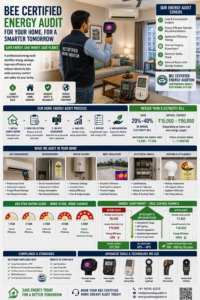
A BEE certified energy auditor uses thermal imaging to identify heat ingress through poorly insulated roofs — one of the highest-impact findings in Indian residential energy audits, responsible for 25–35% excess air conditioning load and ₹5,000–15,000 in annual unnecessary electricity expenditure.
The Importance of Energy Auditing in Achieving a Greener Lifestyle
Energy auditing plays a crucial role in reducing our carbon footprint and transitioning to a more sustainable way of living. By identifying areas of energy waste, energy auditors can help individuals and businesses make informed decisions about energy efficiency upgrades. This can include installing insulation, sealing air leaks, upgrading to energy-efficient appliances, and implementing renewable energy solutions.
One of the key benefits of energy auditing is its positive impact on the environment. By reducing energy consumption, we can decrease our reliance on fossil fuels, which are major contributors to greenhouse gas emissions. This, in turn, helps mitigate climate change and preserve our planet for future generations. Additionally, energy auditing can also have significant financial benefits. By implementing energy efficiency measures, individuals and businesses can save money on their energy bills in the long run.
How Bee-Certified Energy Auditors Can Help You Save Money on Energy Bills
Bee-Certified Energy Auditors are trained to identify areas of energy waste in homes and buildings. They use specialized equipment such as thermal imaging cameras to detect air leaks and insulation gaps. By conducting a comprehensive assessment, they can provide homeowners with a detailed report that outlines specific recommendations for reducing energy consumption and saving money on bills.
Some common tips for reducing energy consumption include:
1. Upgrading to energy-efficient appliances: Energy auditors can help homeowners identify outdated appliances that consume excessive amounts of electricity. By replacing these appliances with more efficient models, homeowners can significantly reduce their energy consumption.
2. Sealing air leaks: Air leaks in windows, doors, and other areas of the home can lead to significant energy loss. Energy auditors can identify these leaks and recommend sealing them with weatherstripping or caulking.
3. Insulating the home: Proper insulation is essential for maintaining a comfortable indoor temperature and reducing energy waste. Energy auditors can assess the insulation levels in the home and recommend adding insulation where necessary.
Understanding Your Energy Consumption Patterns with the Help of Bee-Certified Energy Auditors
Bee-Certified Energy Auditors can help homeowners understand their energy usage patterns by analyzing historical energy bills and conducting on-site inspections. By understanding how and when energy is being consumed, homeowners can make more informed decisions about energy efficiency upgrades and lifestyle changes.
Understanding energy consumption patterns has several benefits. Firstly, it allows homeowners to identify areas of high energy usage and prioritize energy-saving measures accordingly. For example, if a homeowner notices that their electricity consumption spikes during certain hours of the day, they may choose to adjust their usage habits or invest in smart home technology to optimize energy efficiency during those times.
Secondly, understanding energy consumption patterns can help homeowners set realistic goals for reducing their energy consumption. By tracking their progress over time, homeowners can see the impact of their efforts and make adjustments as needed.
Identifying Energy-Wasting Habits and Appliances in Your Home
Bee-Certified Energy Auditors are trained to identify energy-wasting habits and appliances in homes. They can conduct a thorough inspection of the property, looking for signs of excessive energy consumption such as outdated appliances, inefficient lighting, or poor insulation.
By identifying these energy-wasting habits and appliances, homeowners can make targeted changes to reduce their energy consumption. For example, if an auditor identifies that a homeowner leaves lights on in unoccupied rooms or keeps the thermostat set too high or too low, they can provide recommendations for adjusting these habits to save energy.
Additionally, energy auditors can also provide tips for reducing energy waste in the home. This can include simple changes such as turning off lights when not in use, unplugging electronics when not in use, and using natural lighting whenever possible.
Tips for Making Your Home More Energy-Efficient with the Help of Bee-Certified Energy Auditors
Bee-Certified Energy Auditors can provide homeowners with valuable tips for making their homes more energy-efficient. These tips can range from simple changes in behavior to more significant upgrades and renovations.
Some common tips for making homes more energy-efficient include:
1. Installing programmable thermostats: Programmable thermostats allow homeowners to set specific temperature schedules, ensuring that heating and cooling systems are only running when necessary.
2. Upgrading to LED lighting: LED lights are much more energy-efficient than traditional incandescent bulbs. By replacing outdated light fixtures with LED bulbs, homeowners can significantly reduce their energy consumption.
3. Adding insulation: Proper insulation is essential for maintaining a comfortable indoor temperature and reducing energy waste. Energy auditors can assess the insulation levels in the home and recommend adding insulation where necessary.
How Bee-Certified Energy Auditors Can Help You Choose the Right Renewable Energy Options
Bee-Certified Energy Auditors can help homeowners choose the right renewable energy options for their homes. They can assess the property’s solar potential, evaluate the feasibility of installing solar panels, and provide recommendations for other renewable energy solutions such as wind turbines or geothermal systems.
Choosing the right renewable energy options is crucial for maximizing energy savings and reducing reliance on fossil fuels. By working with an energy auditor, homeowners can make informed decisions about which renewable energy technologies are most suitable for their specific needs and budget.
Renewable energy offers several benefits, both for the environment and personal finances. Firstly, renewable energy sources such as solar and wind power produce clean electricity, reducing greenhouse gas emissions and mitigating climate change. Secondly, by generating their own electricity, homeowners can reduce or eliminate their dependence on the grid, resulting in significant savings on energy bills.
The Role of Bee-Certified Energy Auditors in Reducing Your Carbon Footprint
Bee-Certified Energy Auditors play a crucial role in reducing our carbon footprint. By identifying areas of energy waste and providing recommendations for improvement, they help individuals and businesses reduce their energy consumption and reliance on fossil fuels.
Reducing our carbon footprint is essential for mitigating climate change and preserving our planet for future generations. By implementing energy efficiency measures and transitioning to renewable energy sources, we can significantly reduce greenhouse gas emissions and contribute to a more sustainable future.
Additionally, reducing our carbon footprint can also have financial benefits. By reducing energy consumption, individuals and businesses can save money on their energy bills in the long run. Furthermore, by embracing sustainable practices, businesses can enhance their reputation and attract environmentally conscious customers.
Bee-Certified Energy Auditors and the Benefits of Smart Home Technology
Bee-Certified Energy Auditors can help homeowners incorporate smart home technology into their homes. Smart home technology allows homeowners to control and monitor various aspects of their homes remotely, optimizing energy efficiency and personal convenience.
By working with an energy auditor, homeowners can identify which smart home technologies are most suitable for their needs and budget. This can include smart thermostats, which allow homeowners to control their heating and cooling systems remotely, or smart lighting systems that automatically adjust lighting levels based on occupancy.
Smart home technology offers several benefits for energy efficiency and personal convenience. By optimizing energy usage based on occupancy and preferences, homeowners can reduce energy waste and save money on their bills. Additionally, smart home technology also offers convenience features such as voice control or smartphone integration, making it easier for homeowners to manage their homes efficiently.
How Bee-Certified Energy Auditors Can Help You Qualify for Energy Efficiency Rebates and Incentives
Bee-Certified Energy Auditors can help homeowners qualify for energy efficiency rebates and incentives. Many utility companies and government agencies offer financial incentives for implementing energy efficiency measures or installing renewable energy systems.
By working with an energy auditor, homeowners can ensure that their upgrades and installations meet the necessary requirements to qualify for these incentives. This can include providing documentation of energy audits, energy performance certificates, or proof of installation of energy-efficient appliances.
Qualifying for energy efficiency rebates and incentives can have significant financial benefits. In addition to the long-term savings on energy bills, homeowners can also receive upfront financial assistance to offset the costs of energy efficiency upgrades or renewable energy installations.
Embracing a Greener Lifestyle with the Help of Bee-Certified Energy Auditors
In conclusion, Bee-Certified Energy Auditors play a vital role in helping individuals and businesses achieve a greener lifestyle. By conducting thorough assessments and providing recommendations for improvement, they help reduce energy waste, save money on bills, and reduce our carbon footprint.
Embracing a greener lifestyle is not only beneficial for the environment but also for personal finances. By implementing energy efficiency measures, transitioning to renewable energy sources, and incorporating smart home technology, individuals and businesses can significantly reduce their energy consumption and save money in the long run.
Working with Bee-Certified Energy Auditors is a valuable investment that can lead to long-term benefits for both the environment and personal finances. By taking proactive steps towards energy efficiency, we can contribute to a more sustainable future and create a healthier planet for future generations.
Know more about – Importance of Energy Audit in Industry