
An electrical fire safety audit for an electronics manufacturer identifies overloaded circuits, faulty earthing, and fire suppression gaps before they become costly disasters. According to the National Crime Records Bureau (NCRB), industrial fires caused over 7,400 deaths and ₹2,200 crore in property damage across India in 2022 alone. BEE data further indicates that electrical faults account for nearly 40% of all factory fires in manufacturing zones such as Gurugram’s IMT Manesar corridor.
In one documented case from a Pune-based electronics plant, a single arc-fault event in an unshielded control panel caused ₹62 lakh in equipment damage and halted production for 11 days—costing an additional ₹40 lakh in lost contracts. A pre-incident electrical fire safety audit had been recommended but deferred, underscoring the real cost of delay.
Gurugram’s electronics manufacturing belt—home to precision component suppliers for automotive, telecom, and consumer electronics—operates at power densities far exceeding conventional factories. High-frequency switchgear, capacitor banks, and server-grade UPS systems create distinct fire risk profiles that standard audits often miss. A sector-specific audit combining IS 732 electrical checks, NBC 2016 fire compartmentalization reviews, and NFPA 70E arc-flash assessments delivers the depth these facilities genuinely need.
An electrical fire safety audit for electronics plants covers arc-flash risk, cable tray fire barriers, UPS room ventilation, earthing integrity, and suppression system coverage. Conducted per IS 732, NBC 2016, and NFPA 70E, it typically identifies 15–30 actionable hazards in a 50,000 sq.ft facility and takes 2–3 days.
Importance of Electrical Auditing for Electronic Component Manufacturers
Electrical auditing is crucial for electronic component manufacturers to ensure the safety of their facilities and employees. Manufacturing processes involving electronic components often require high voltage equipment and complex electrical systems. Without regular audits, potential hazards such as faulty wiring, overloaded circuits, or outdated equipment may go unnoticed, increasing the risk of electrical fires.
The consequences of not conducting regular electrical audits can be severe. In addition to the potential loss of life and property damage, electrical fires can lead to significant financial losses due to downtime, repairs, and legal liabilities. Moreover, non-compliance with electrical safety standards can result in fines and penalties from regulatory authorities. Therefore, it is imperative for electronic component manufacturers to prioritize electrical auditing as part of their safety protocols.
Elion auditor inspecting switchgear and cable routing inside an electronics component facility, Gurugram — electrical fire safety audit in progress.
Elion’s Expertise in Electrical Auditing: A Brief Profile of the Electrical Auditor
Elion’s electrical auditor is a highly qualified professional with extensive experience in the field of electrical safety. They possess a deep understanding of the unique challenges faced by electronic component manufacturers and are well-versed in industry standards and regulations.
The auditor holds relevant certifications and qualifications in electrical engineering and fire safety. They have a proven track record of conducting successful electrical audits for various manufacturing facilities, including those in the electronic component industry. Their expertise allows them to identify potential hazards, assess risks, and provide comprehensive recommendations to improve electrical safety measures.
Understanding Electrical Auditing: A Comprehensive Guide
Electrical auditing is a systematic process that involves the evaluation of electrical systems, equipment, and practices within a manufacturing facility. The objective is to identify potential hazards, assess risks, and ensure compliance with electrical safety standards. The audit is conducted by a qualified electrical auditor who follows a structured approach to assess the facility’s electrical systems.
There are different types of electrical audits, each with its own objectives. Some common types include compliance audits, which focus on ensuring adherence to electrical safety standards and regulations, and risk assessments, which identify potential hazards and evaluate their likelihood and impact. The auditor will typically conduct a thorough inspection of the facility’s electrical systems, including wiring, circuit breakers, grounding systems, and equipment.
The key components of an electrical audit report include a detailed assessment of the facility’s electrical systems, identification of potential hazards and risks, recommendations for improvement, and a prioritized action plan. The report serves as a roadmap for implementing necessary changes to enhance electrical safety measures.
Elion’s Electrical Fire Safety Audit Process: Step-by-Step Procedure
Elion’s electrical fire safety audit process follows a step-by-step procedure to ensure a comprehensive evaluation of the facility’s electrical systems. The process includes the following steps:
1. Initial Consultation: The auditor meets with the facility management to understand their specific requirements and objectives for the audit. This helps in tailoring the audit process to address the unique needs of the facility.
2. Site Visit and Inspection: The auditor conducts a thorough inspection of the facility’s electrical systems, including wiring, circuit breakers, grounding systems, and equipment. They identify potential hazards and assess risks associated with the current setup.
3. Documentation Review: The auditor reviews relevant documentation such as electrical drawings, maintenance records, and safety procedures to gain a comprehensive understanding of the facility’s electrical systems and practices.
4. Risk Assessment: The auditor evaluates the identified hazards and assesses their likelihood and potential impact. This helps in prioritizing the recommendations and developing an action plan.
5. Recommendations and Action Plan: The auditor provides a detailed report outlining the findings of the audit, along with recommendations for improving electrical safety measures. The report includes a prioritized action plan to guide the facility management in implementing the necessary changes.
6. Follow-up and Support: Elion provides ongoing support to the facility management to ensure the successful implementation of the recommended changes. This may include training programs, assistance with compliance, and periodic follow-up audits to monitor progress.
Benefits of Electrical Auditing: Why Electronic Component Manufacturers Should Consider It
Conducting regular electrical audits offers numerous benefits for electronic component manufacturers. Firstly, it helps improve safety standards within the facility, reducing the risk of electrical fires and ensuring the well-being of employees. By identifying potential hazards and implementing necessary changes, manufacturers can create a safer working environment.
Secondly, electrical auditing helps reduce downtime caused by electrical failures or fires. By proactively identifying and addressing potential issues, manufacturers can prevent costly disruptions to their operations. This leads to increased productivity and efficiency.
Furthermore, regular electrical audits help manufacturers comply with industry standards and regulations. Compliance is not only a legal requirement but also essential for maintaining a good reputation in the industry. Non-compliance can result in fines, penalties, and even legal liabilities.
Electrical Safety Measures: Key Recommendations from Elion’s Audit Report
Elion’s audit report may include several key recommendations to improve electrical safety measures in a manufacturing facility. These recommendations are tailored to address the specific hazards identified during the audit process. Some common recommendations may include:
1. Upgrading outdated electrical equipment: The auditor may recommend replacing old or faulty equipment with newer, more reliable models to reduce the risk of electrical failures.
2. Improving wiring and grounding systems: The auditor may suggest upgrading wiring systems to ensure they can handle the electrical load and improving grounding systems to prevent electrical shocks.
3. Implementing regular maintenance and inspection schedules: The auditor may recommend establishing a routine maintenance and inspection schedule to identify and address potential issues before they escalate.
4. Enhancing employee training and awareness: The auditor may suggest conducting training programs to educate employees about electrical safety practices and procedures.
5. Implementing emergency response plans: The auditor may recommend developing and implementing emergency response plans to ensure a swift and effective response in the event of an electrical fire or failure.
Compliance with Electrical Safety Standards: A Critical Requirement for Electronic Component Manufacturers
Compliance with electrical safety standards is a critical requirement for electronic component manufacturers. Adhering to these standards ensures the safety of employees, protects the facility from potential hazards, and helps maintain a good reputation in the industry.
Non-compliance with electrical safety standards can have severe consequences. Regulatory authorities may impose fines and penalties, which can be substantial depending on the severity of the violation. Moreover, non-compliance can lead to legal liabilities if an electrical fire or failure causes harm to employees or damages neighboring properties.
By conducting regular electrical audits, manufacturers can identify areas of non-compliance and take corrective actions to ensure compliance with industry standards. This not only mitigates the risk of legal and financial consequences but also demonstrates a commitment to safety and responsible business practices.
Case Study: How Elion’s Electrical Fire Safety Audit Helped Improve Safety Standards for a Gurugram-based Manufacturer
A Gurugram-based electronic component manufacturer recently benefited from Elion’s electrical fire safety audit. The audit identified several potential hazards, including outdated equipment, inadequate wiring systems, and insufficient employee training on electrical safety practices.
Based on the audit findings, Elion provided a detailed report outlining recommendations for improving safety standards. The recommendations included upgrading outdated equipment, improving wiring and grounding systems, implementing regular maintenance schedules, and conducting employee training programs.
The manufacturer implemented the recommendations by replacing outdated equipment, upgrading wiring systems, and establishing a routine maintenance schedule. They also conducted training programs to educate employees about electrical safety practices and procedures. As a result, the manufacturer experienced a significant improvement in safety standards, with a reduced risk of electrical fires and failures.
The Need for Regular Electrical Auditing to Ensure Safety and Compliance in the Electronic Manufacturing Industry
In conclusion, regular electrical auditing is crucial for electronic component manufacturers to ensure the safety of their facilities and comply with industry standards. Elion’s expertise in electrical fire safety audits makes them an ideal partner for manufacturers looking to enhance their safety measures.
By conducting comprehensive electrical audits, manufacturers can identify potential hazards, assess risks, and implement necessary changes to prevent electrical fires and failures. This not only improves safety standards but also reduces downtime, increases productivity, and ensures compliance with electrical safety standards.
Electronic component manufacturers should consider Elion’s electrical fire safety audit as an essential part of their safety protocols. By prioritizing electrical auditing, manufacturers can create a safer working environment, protect their employees and assets, and maintain a good reputation in the industry.
Elion, a leading provider of electrical safety solutions, recently conducted a successful Electrical Fire Safety Audit for an electronic component manufacturer in Gurugram, Haryana. This audit ensured that the manufacturer’s electrical systems were compliant with safety standards and effectively protected against fire hazards. To learn more about Elion’s expertise in safety audits, you can read their related article on safety audits in Tamil Nadu. Additionally, Elion has also conducted a comprehensive boiler audit in New Delhi, India, which you can find more information about in their article – unlocking efficiency through boiler audits.
FAQs
How much does an electrical fire safety audit cost for an electronics plant in India?
The cost of an electrical fire safety audit depends on facility size, electrical infrastructure, and audit scope. Electronics manufacturing plants with multiple electrical panels, UPS systems, server rooms, production equipment, and switchgear networks generally require a more detailed assessment. The investment is often justified through reduced fire risk, improved compliance, lower insurance exposure, and prevention of costly production interruptions.
What standards govern electrical fire safety audits for electronics manufacturers in India?
Electrical fire safety audits are typically conducted in accordance with applicable Indian Standards, fire safety regulations, electrical safety codes, and factory safety requirements. Key focus areas include electrical installations, earthing systems, fire protection measures, emergency preparedness, and safe operation of electrical equipment within manufacturing environments.
How often should an electronics manufacturing plant conduct an electrical fire safety audit?
Most electronics manufacturing facilities should conduct a comprehensive electrical fire safety audit annually. Additional inspections are recommended whenever major electrical modifications, facility expansions, equipment upgrades, or process changes occur that may impact electrical safety or fire risk.
What are the most common hazards found during an electrical fire safety audit in electronics factories?
Common findings include overloaded electrical circuits, inadequate earthing, overheating cable connections, damaged insulation, improperly routed cables, missing fire-stopping around cable penetrations, insufficient protection systems, overloaded UPS rooms, lack of arc-flash warning labels, and inadequate preventive maintenance of electrical assets.
What penalties apply if an electronics factory fails a fire safety audit inspection in Haryana?
Failure to address serious fire safety deficiencies may result in regulatory notices, financial penalties, operational restrictions, delays in approvals, increased insurance risks, and potential legal liabilities. Regulatory authorities may require corrective actions within specified timelines before continued operation or certification approvals.
Why are electrical fire safety audits particularly important for electronics manufacturing facilities?
Electronics manufacturing plants often contain high-density electrical systems, sensitive production equipment, automated machinery, testing laboratories, UPS installations, and server infrastructure. Electrical faults can lead to fire incidents, production losses, equipment damage, data loss, and costly downtime, making regular audits essential.
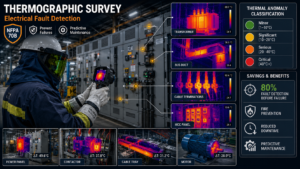
Does an electrical fire safety audit include thermographic inspections?
Yes. Many professional electrical fire safety audits include infrared thermographic inspections to identify overheating components, loose connections, overloaded circuits, and developing electrical faults before they become fire hazards or cause equipment failure.
Can an electrical fire safety audit help reduce insurance risks?
Yes. Regular audits demonstrate proactive risk management and help identify potential fire hazards before losses occur. Well-documented inspection and corrective action records may support insurance assessments and improve overall risk profiles.
What systems are typically inspected during an electrical fire safety audit?
The audit generally covers transformers, HT/LT panels, MCCs, UPS systems, DG backup systems, distribution boards, cable networks, earthing systems, fire alarm interfaces, emergency power systems, and other critical electrical infrastructure within the facility.
What deliverables should be included in an electrical fire safety audit report?
A professional audit report should include an executive summary, detailed observations, photographs, risk classifications, compliance assessment, thermal imaging findings (if applicable), identified hazards, recommended corrective actions, prioritization of risks, and an implementation roadmap for improving electrical fire safety.